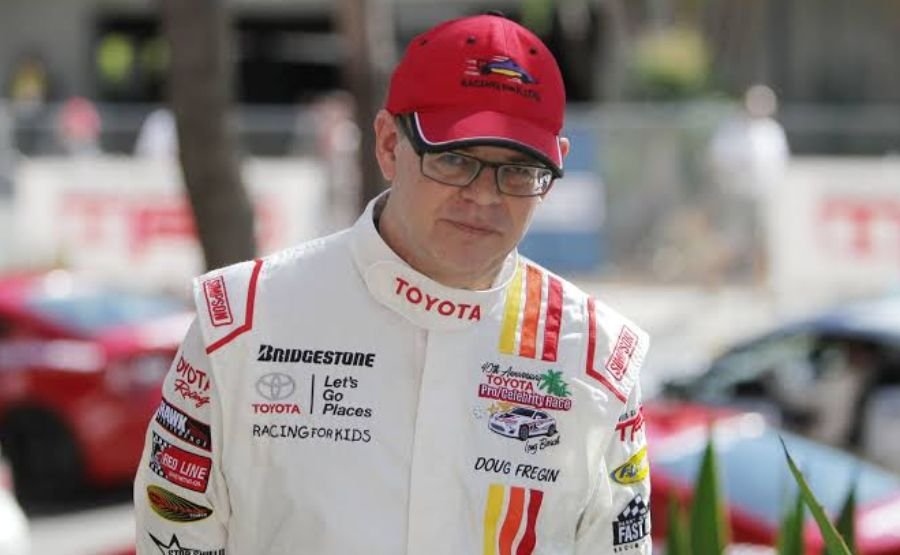
Douglas Fregin Net Worth: How the BlackBerry Co-Founder Built His Fortune
Quick Bio
| Detail | Info |
| Full Name | Douglas Fregin |
| Born | December 1, 1963, Windsor, Ontario, Canada |
| Nationality | Canadian |
| What He Does | Engineer, entrepreneur, venture capitalist, philanthropist, co-founder of Research In Motion (RIM) and Quantum Valley Investments |
| Biggest Accomplishments | Co-founded RIM in 1984 with Mike Lazaridis, helping build the company that gave the world the BlackBerry; served as VP of Operations through BlackBerry’s entire peak era; won a Technical Emmy Award in 1994; received the Queen Elizabeth II Diamond Jubilee Medal; appointed Member of the Order of Canada; co-founded Quantum Valley Investments in 2013 |
| Key Facts | He has never given a taped interview — ever; he sold his entire stake in RIM shortly before the iPhone arrived, protecting most of his wealth; he currently runs a vocational school in rural Uganda and quietly funds quantum physics research in Waterloo, Ontario |
Why People Keep Searching His Name
There’s something almost magnetic about a billionaire who refuses to talk.
Most people with Douglas Fregin’s resume would have a podcast by now. A memoir. A TED Talk. An X account with hot takes about AI. Fregin has none of that. He’s never sat down for a recorded interview — not once in his entire public life. The director of the 2023 BlackBerry film, who actually played Fregin on screen, admitted openly that he had to piece the character together almost entirely from secondhand descriptions because there was simply no primary source material to work with. A co-founder of one of the most important technology companies of the past fifty years, and the man himself is essentially a ghost.
That combination — serious wealth, genuine historical importance, total silence — is catnip for the internet.
And then 2023 happened. A film came out. People watched it, loved it, Googled the real people behind it, and landed on Doug Fregin’s Wikipedia page wondering why they’d never heard of him before. The answer, of course, is that he preferred it that way.
See also “Dave Galafassi: The Drummer Who Married Famous, Lived Quietly, and Left Loudly“
Two Boys in Windsor, Ontario
Windsor sits right at the bottom of Ontario, pressed up against the American border with Detroit just across the river. It’s a blue-collar city, an automotive city — the kind of place where fathers work on assembly lines and kids grow up with a strong sense of how things get built.
Douglas Fregin was born there in December 1963. He grew up tinkering. The details of his family life are, appropriately for a man this private, not something that’s been published widely. What the record does give us is that somewhere in the neighborhoods of Windsor, a young Doug became close friends with a boy named Mike Lazaridis — a kid Having Greek parents from Istanbul, a father who was employed at a Chrysler plant, and an already intense interest in science and technology that most people found slightly alarming.
The two of them were inseparable from grade school onward. They spent time in basements building things. Rockets. Radios. Electronic experiments that probably singed the occasional eyebrow. They won their local science fair together. Windsor wasn’t exactly Silicon Valley, but for two engineering-brained kids in the late 1970s, it turned out to be just the right kind of place to get curious and get practical.

School Years and the Fork in the Road
When Mike Lazaridis went to the University of Waterloo to study electrical engineering, Doug Fregin went to the University of Windsor — their hometown school — to study the same subject. Different campuses, same discipline, same lifelong friendship maintained across the short distance.
This is where their paths technically diverged, and then immediately converged again anyway.
Lazaridis was still a student at Waterloo — about two months shy of finishing his degree — when he landed a $600,000 contract from General Motors. That contract was the reason he dropped out. That contract became the seed that grew into RIM. And there was never any doubt as to who his partner would be when it came time to start building the business.
Doug Fregin, fresh from Windsor, became the other half of Research In Motion the day it was founded in 1984. He was twenty years old.
How a Company Got Built on a Friendship and a Dream
RIM’s early days were nothing like the polished origin stories of companies that get celebrated in business school case studies. The company started as a technology consulting and development shop — they were figuring things out, taking contracts, building whatever needed building. The glamour wasn’t there yet. Neither was the money.
Fregin’s role from the very beginning was on the engineering and operations side. He wasn’t the visionary spokesperson or the aggressive deal-closer — those roles belonged to Lazaridis and, later, Jim Balsillie, the Harvard-trained businessman who bought his way into RIM as co-CEO in 1992 with a $125,000 investment. Fregin was the person who figured out how to actually make the technology work, who understood circuit boards at the component level, who built the manufacturing and operations infrastructure that allowed RIM to scale when the moment finally arrived.
One of the things that doesn’t get discussed enough about the early RIM period is that before BlackBerry, before the smartphone revolution, Fregin and Lazaridis invented something genuinely remarkable for an entirely different industry. They developed a device that could read the digital keycodes embedded in film stock — the DigiSync Film KeyKode Reader — which allowed film editors to sync up digital edits with the original camera negative with unprecedented precision. Hollywood noticed. In 1994, along with partners at Eastman Kodak and the National Film Board of Canada, RIM received a Technology and Engineering Emmy Award for that work. A few years later, in 1998 or 1999, the same technology earned a technical Academy Award.
Let that sink in for a second. Doug Fregin co-won an Emmy Award before he was forty. Most people have no idea.
The BlackBerry Years — When Everything Changed
The pager business was where RIM found its footing in the mid-1990s. Two-way messaging, wireless communication, the beginning of what would become the always-connected professional culture. And then came the device that changed everything: the BlackBerry, launched in 1999.
The BlackBerry didn’t just give people a way to send email from a small handheld device. It rewired how corporate America and corporate everywhere-else thought about communication. If you were a lawyer, a banker, an executive, a politician, a journalist of a certain seniority — you had a BlackBerry. The little red LED blink became the universal symbol of professional captivity. The nickname “CrackBerry” entered the actual dictionary.
Fregin served as Vice President of Operations through all of it. The day-to-day infrastructure of one of the fastest-growing technology companies in the world ran through his domain. Manufacturing. Supply chain. Hardware development. The physical reality of building millions of devices and getting them to users around the planet — that was his territory.
At RIM’s peak, the company commanded something close to half of the entire smartphone market. It was a Canadian technology company sitting atop the global communications industry. The kind of thing that wasn’t supposed to happen to a company founded in Windsor, Ontario, by two twenty-year-olds with a government grant.
The Exit That Turned Out to Be Genius
In May 2007, Douglas Fregin retired from RIM. He was forty-three years old.
The timing — whether it was deliberate, intuitive, or coincidental — turned out to be extraordinary. The iPhone launched in January 2007. Fregin left in May 2007. When he walked out, he owned roughly two percent of RIM. At that moment, that stake was worth approximately $1.3 billion. And then he sold it.
He sold while the stock was still riding high. Before the market began to understand the true significance of the iPhone, he sold. He sold before the devastating years of decline that would follow — the years when RIM tried touchscreens, tried pivots, tried everything, and watched its market share collapse from nearly half the smartphone market to effectively nothing.
Mike Lazaridis stayed. Jim Balsillie stayed. They both departed in 2012 with significantly diminished fortunes compared to what they’d held at the peak. Doug Fregin left in 2007 and captured the value. He didn’t plan it as a market-timing masterstroke — by all accounts, he was simply done. He’d built something, it was running, and he was ready for the next chapter. But the financial outcome was remarkable either way.
The Private Life He’s Fought Very Hard to Keep Private
Here is the full list of things Douglas Fregin has shared publicly about his personal life: almost nothing.
He has never done a recorded interview. There’s no confirmed information about a spouse or partner in the public record. No children have been publicly acknowledged. His lifestyle, his home, his daily existence — essentially all of it sits behind a wall of chosen privacy that very few people at his wealth and profile level manage to maintain in the social media age.
What we do know is that he and Mike Lazaridis have maintained an extraordinary friendship for over fifty years. They went to different universities, built a company together for over two decades, and then — instead of retreating into separate quiet retirements — they co-founded another company together in 2013. That’s not a business relationship. That’s something much rarer.
The 2023 film BlackBerry depicted Fregin as a lovable, headband-wearing, movie-night-organizing eccentric — the cultural glue holding RIM’s nerd kingdom together against the forces of corporate seriousness. Fregin himself didn’t attend the premiere. He didn’t watch a private screening. He issued no comment. Director Matt Johnson, who played him in the film, said the most honest thing anyone has said about Fregin in a long time: “Doug is a true cipher, he has never done a taped interview.” Johnson built the character from YouTube videos by a former RIM employee and educated guesswork. It’s the only version of Doug Fregin that exists in the public record.
The Hard Part — Watching Something You Built Fall Apart
Fregin had the financial wisdom to exit before the decline. But there’s a different kind of loss that money can’t fully protect you from.
He spent twenty-three years of his life building RIM. His engineering fingerprints were on every BlackBerry device that was ever manufactured. The operations infrastructure he helped design was what made it possible for the company to serve tens of millions of customers across the planet. And then, over the five years after he left, he watched all of it come undone.
The iPhone arrived. Then Android. RIM tried touchscreens that didn’t work well. It tried software pivots. It tried everything. The company eventually rebranded as BlackBerry Limited, abandoned hardware entirely, and transformed into a cybersecurity firm. The brand still exists, but the device — the thing Doug Fregin spent twenty-three years building — is gone.
There’s no public record of how Fregin processed any of that. He didn’t write about it. He didn’t give interviews about it. What he did, apparently, was get back to work.
Quantum Valley and the Second Act Nobody Expected
In March 2013, Fregin and Lazaridis co-founded Quantum Valley Investments in Waterloo, Ontario. The idea was to take the same energy that had built BlackBerry and apply it to commercializing quantum computing and quantum information science — a field that was, at the time, still largely confined to academic research.
The bet was that quantum computing was going to be the next genuinely transformative technology platform, and that Waterloo — already home to the University of Waterloo’s Institute for Quantum Computing and the Perimeter Institute for Theoretical Physics, both of which Lazaridis had personally funded — was positioned to be the global center of it.
They called it the Quantum Valley, deliberately echoing Silicon Valley. The ambition was real. They brought serious money, serious connections, and serious engineering intuition to a field that most investors weren’t paying attention to yet. Fregin became a Managing Partner and has stayed actively involved in identifying and funding companies working on quantum breakthroughs.
The Africa Work Nobody Talks About
This is the piece of Douglas Fregin’s story that gets the least attention and probably deserves the most.
He devotes significant personal time and money to charitable projects in Africa. The most concrete of these is the establishment and ongoing operation of a vocational school in rural Uganda — a school that trains young people in practical skills, giving them pathways into the workforce that wouldn’t otherwise exist. He’s not doing this as a photo opportunity. He’s not doing it for a press release. He is, according to the official bios that exist for him at Quantum Valley, spending a meaningful portion of his life on this work.
He’s also donated to the Nanotechnology Initiative at the University of Waterloo, the Quantum-Nano Centre, and the Perimeter Institute for Theoretical Physics — all institutions aimed at keeping Canada at the cutting edge of science.
Money — Just the Honest Picture
Celebrity Net Worth puts Douglas Fregin’s current net worth at approximately one billion dollars. That estimate reflects the value he captured when he sold his RIM stake around 2007, plus subsequent investment returns, minus whatever he’s given away and spent since.
Canadian Business once pegged his fortune at $651 million during a peak year assessment. Forbes has had him listed as a billionaire. The range of estimates sits somewhere between $600 million and $1.5 billion depending on the year and methodology.
It’s evident that he made most of his money at the perfect time by selling BlackBerry stock prior to the crash rather than enduring the downturn. way his co-founders did. He hasn’t created later businesses that went public or had proven profits. Quantum Valley Investments is privately held. His philanthropic commitments are substantial. The current real number is genuinely unknown, but the floor is solidly in the hundreds of millions.
Where He Stands Right Now
Douglas Fregin is in his early sixties, still based in the Waterloo, Ontario region, and by every available indication — still working, still building, and still completely unwilling to discuss any of it publicly.
He co-manages Quantum Valley Investments with Lazaridis, sits on the board of Quantum Valley Ideas Lab, which was co-founded in 2016, and continues his work in Africa. The University of Waterloo awarded him an honorary Doctorate of Engineering in 2022, calling him someone who has been “spearheading technical innovations for more than 35 years.” He accepted that in his usual style: no transcript of a speech is widely available.
The Order of Canada, the Queen Elizabeth II Diamond Jubilee Medal, the Emmy Award — the formal recognition has accumulated. The man collecting it stays out of sight.
Final Words
What makes Douglas Fregin genuinely unusual is not the money, the awards, or even the engineering accomplishments — impressive as all three are. It’s the completeness of the choice he’s made about how to exist in the world.
In an era that rewards performance, that turns founders into brands, that treats personal visibility as a form of success in itself, Fregin has done the opposite. He created something remarkable, realized its worth at the appropriate time, left without giving a farewell tour, and focused his efforts on quantum physics and a Ugandan vocational school.
He never asked for the fame that came with BlackBerry. He got some anyway. He’s been quietly handing it back ever since.
There’s a version of the story where that’s eccentric or reclusive. Knowing precisely what you care about and not getting sidetracked by what you don’t is, in my opinion, more akin to clarity.
FAQs
1. Who is Douglas Fregin?
He’s a Canadian engineer and entrepreneur who co-founded Research In Motion — the company that made BlackBerry phones — alongside his childhood friend Mike Lazaridis in 1984. He served as VP of Operations until 2007, then co-founded Quantum Valley Investments in 2013 to back quantum computing companies. He is also a noted philanthropist focused on Africa and Canadian scientific research.
2. What is Douglas Fregin’s net worth?
Estimates range from around $600 million to over $1 billion, with most sources settling on approximately $1 billion. He made the bulk of his wealth by selling his roughly 2% stake in RIM around the time of his retirement in 2007 — when that stake was worth approximately $1.3 billion — before BlackBerry’s catastrophic market decline.
3. Did Douglas Fregin get rich from BlackBerry?
Yes, massively so — and crucially, he got out at the peak. He sold his entire stake in RIM around 2007 while shares were still riding high, just as the iPhone was launching. The value that his longer-staying co-founders had created was mostly lost.
4. Why did Douglas Fregin leave RIM in 2007?
He worked for the business he co-founded for 23 years before retiring. No official reason was ever given, and Fregin has never spoken about it publicly. The timing happened to coincide almost exactly with the iPhone launch, but there’s no public evidence it was a deliberate strategic exit driven by concern about Apple.
5. Has Douglas Fregin ever given an interview?
No. According to BlackBerry film director Matt Johnson, who played Fregin in the 2023 movie, Fregin has never done a taped interview of any kind. He has no public social media presence. Johnson described him as “a real cipher.”
6. Who played Douglas Fregin in the BlackBerry movie?
Matt Johnson, the Canadian filmmaker who also wrote and directed the film. Johnson has acknowledged he had to construct Fregin’s personality largely from secondhand accounts because there was essentially no primary source material to draw from.
7. What is Quantum Valley Investments?
It’s a venture capital fund that Fregin and Lazaridis co-founded in Waterloo, Ontario in March 2013. It focuses on identifying and funding companies commercializing breakthroughs in quantum computing, quantum physics, and related fields. Fregin serves as Managing Partner.
8. What awards has Douglas Fregin received?
He’s received a 1994 Technical Emmy Award (shared with Kodak and the National Film Board of Canada for the development of a KeyCode Reader for film), the Queen Elizabeth II Diamond Jubilee Medal, and was appointed a Member of the Order of Canada in 2016. The University of Waterloo awarded him an honorary Doctorate of Engineering in 2022.
9. What is Douglas Fregin doing in Africa?
He devotes significant personal time and funding to charitable projects across Africa, most notably the establishment and ongoing operation of a vocational training school in rural Uganda. He’s also donated to other development initiatives across the continent.
10. Are Doug Fregin and Mike Lazaridis still friends?
By all available evidence, absolutely yes. They’ve been close since elementary school in Windsor, Ontario, built a company together for over two decades, and then voluntarily co-founded another company together in retirement. That’s one of the longer documented friendships in Canadian business history.
11. Where does Douglas Fregin live?
He appears to be based in the Waterloo, Ontario region of Canada, where Quantum Valley Investments operates. He hasn’t publicly disclosed his home address or personal living arrangements.
12. How much did Douglas Fregin own of RIM when he left?
Approximately 2% of the company. When RIM went public in 1997, he owned closer to 5%. By 2007 that had diluted to around 2%, but the company’s massive growth meant that 2% was worth approximately $1.3 billion at the time of his departure.
Explore new ideas and rising trends with Trend Rise.





One Comment