Is Phil Wickham Married? Inside His Marriage, Wife, and Family Life
Quick Bio
| Detail | Info |
| Full Name | Philip David Wickham |
| Born | April 5, 1984 — San Diego, California |
| Nationality | American |
| What He Does | Contemporary Christian singer, songwriter, worship leader |
| Biggest Accomplishments | “This Is Amazing Grace” went Platinum and topped the 2014 Christian Airplay chart; “Battle Belongs,” “Living Hope,” and “Hymn of Heaven” became global church worship standards; over two decades of recording and touring |
| Other Key Facts | Married to Mallory Plotnik since November 2008; four kids — Penelope, Mabel, Lottie, and Henry; nearly lost his singing voice to vocal cord surgery in 2014 and came back stronger than before |
Why People Still Can’t Stop Talking About Him
Here’s the thing about Phil Wickham. He’s not a superstar in the mainstream sense. He doesn’t sell out arenas for a general crowd. He doesn’t have a viral moment on a late-night show. And yet, on any given Sunday morning, there’s a fair chance a church somewhere on the planet — probably more like a few thousand churches — is singing a song he wrote.
That’s a specific and unusual kind of fame. The worship world operates on a different currency than pop music. The measure isn’t streams or downloads, it’s whether a congregation can lift their voices to something and feel it. Phil has spent his entire adult life chasing that. And over and over again, he’s landed it.
People are also drawn to his story because it has real texture to it. A kid from San Diego who started leading worship at thirteen. An early career full of albums that got critical love but didn’t break through the ceiling. Then finally a massive hit — and almost in the same week, a medical crisis that threatened to end everything. That arc is genuinely compelling.
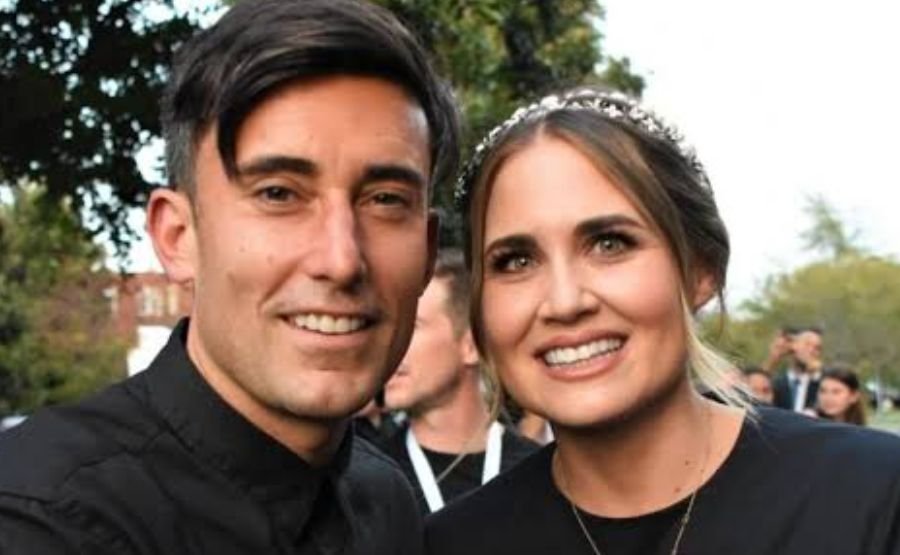
And then there’s the marriage question, which is actually what brings a lot of people to search his name. He and his wife Mallory have quietly been one of the more stable and supportive partnerships in Christian music, and people are curious about who she is and what their life together actually looks like.
See also “Lisa Velez Husband: Who Is He? Inside Her Marriage, Love Life, and Family Story“
Childhood: A Kid Who Grew Up Inside the Music
Phil was born in San Diego in 1984, and he didn’t have to look far to find music — it was already everywhere in his house. His parents, John and Lisa Wickham, were deeply involved in worship ministry. This wasn’t a background detail. It was the entire texture of the household. Church wasn’t something the family attended on Sundays; it was more like the atmosphere they all breathed in.
He has two siblings — a brother named Evan and a sister named Jillian. The Wickham kids grew up in Vista, California, a city just north of San Diego. Evan went on to have his own music career in the Christian space too, which tells you something about how thoroughly music ran through that family.
Phil started singing in church when he was young, the way a lot of kids in devout households do. But it became clear pretty quickly that this wasn’t just participation for him. He had something. By thirteen years old — thirteen — he was already leading worship for the youth group at Maranatha Chapel. That’s not a kid dipping his toes in. That’s someone who had already decided this was what he was here to do.
School Years and the Foundations Being Laid
Phil went through school in Vista and eventually graduated from Calvary Christian School in 2002. He was eighteen, just out of high school, and already thinking seriously about music as a full-time path. He didn’t take a long detour through college trying to figure himself out. The direction was clear.
What’s interesting is that his musical formation was almost entirely inside the church context. He wasn’t sneaking off to rock shows or diving into secular influences that he later had to reconcile with his faith. The worship stage was where he cut his teeth, and it stayed the center of everything he made.
That singular focus could have been limiting. It wasn’t. It gave him a depth in a specific lane that most artists — even Christian artists — don’t develop. He wasn’t trying to bridge two worlds. He was going all the way into one.
By the time he graduated, he had been doing this for five years already. That’s a lot of reps.
How the Career Actually Started — and Why It Wasn’t Overnight
A year after finishing school, at nineteen years old, Phil put out his debut album. It was called Give You My World, released in 2003. He recorded it independently, self-produced, using what was essentially a home studio setup. It didn’t shake the industry. It didn’t get played on every Christian radio station. But it existed, and it circulated, and it showed people what he could do.
Enough people heard it that he landed a record deal with Simple Records. His second album — just titled Phil Wickham, self-titled — came out in 2006, and then Cannons followed in 2007. That one is interesting because it came partly out of an unlikely inspiration: C.S. Lewis’s writings and the sound of actual cannon fire. Not typical pop songwriting territory, but Phil was never going for typical.
He kept releasing albums. Heaven & Earth in 2009. Response in 2011. Each one built a loyal audience. Christian radio gave him decent airplay with songs like “Grace” and “At Your Name.” He was on tour, playing shows, developing a following. He had a real career.
But he hadn’t broken through. Not really. Not in the way where you write one song and suddenly it’s everywhere.
That came later — and the timing of it is almost impossibly dramatic.
The Breakthrough That Almost Didn’t Happen
The Ascension came out in 2013, and it contained a song called “This Is Amazing Grace.” Phil didn’t even write it alone — he co-wrote it with a friend named Josh Farro. There’s a great story in there where Phil essentially handed the song over, not sure what to do with it, and it ended up recorded as a Bethel Music song first. He listened to it on that recording and it hit him differently than he expected.
When his own version dropped, it changed everything. The song went to number one on the Christian Airplay chart and stayed in the conversation for the entire year — ending up as the most-played song on Christian radio in 2014. It earned RIAA Platinum certification. Churches picked it up. Worship sets everywhere included it. It became the kind of song that outlasts its moment.
And then, in what is either cosmic timing or a very difficult test depending on how you look at it — the week that song hit number one, Phil was diagnosed with a polyp on his vocal cord.
Surgery was scheduled for April 28, 2014. He had to cancel shows. He had to stop talking. Afterward, doctors prescribed him a full month of silence. Not singing quietly. Complete silence. For someone whose entire identity was built around his voice, this was not a small thing. He’s talked about how the possibility that he might not sing again — that his career might just end at the moment of its biggest success — broke him open in a significant way.
But the healing was faster than expected. His vocal cords responded remarkably well. By the time he came back, something had shifted. Not just physically — creatively and spiritually too. The brush with losing everything seemed to pull something deeper out of him.

Mallory: The Person Beside Him Through All of It
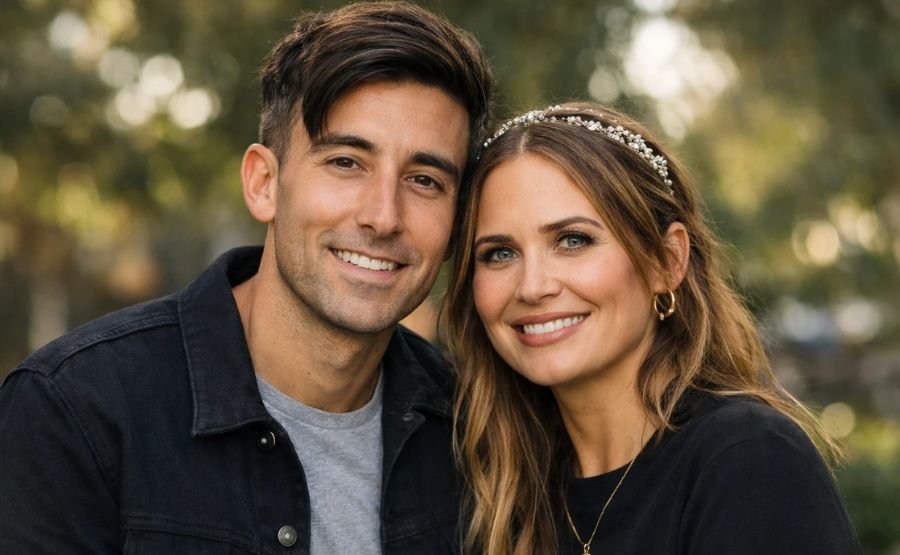
Phil married Mallory Plotnik on November 2, 2008. She’s a California native, and she was there well before the platinum records and the packed worship events — she came into his life during the grinding middle years when Phil was just a guy touring churches and releasing albums that felt important but hadn’t cracked anything wide open yet.
Mallory has stayed largely out of the public eye. That’s been a consistent choice, not a circumstance. Phil will mention her in interviews, talk about how central she is to his life, but she doesn’t show up at industry events or maintain a public platform of her own. She’s been described as a devoted mother who has prioritized their home life while Phil does the work of touring and releasing music.
They have four children together. Penelope came first, in 2011. Then Mabel in 2013. Lottie in 2015. And Henry, the youngest and only son, in 2017. The family lives in the San Diego area, which means Phil never really left home — he built his career out of the same general geography where he grew up.
There’s something kind of grounding about that. A lot of artists leave their hometown and become someone different in a new city. Phil stayed, put roots down, kept the family close to where everything began.
The Hard Times — and What the Silence Taught Him
The vocal cord surgery was genuinely the lowest moment of his career, possibly of his adult life to that point. It wasn’t just the fear of not singing again — it was the identity crisis underneath that fear. He’d been doing this since he was thirteen. If he couldn’t sing, who was he?
He’s talked in interviews about how that enforced silence — doctors said don’t speak, not a word, for weeks — became something like a gift in retrospect. It made him sit with questions he’d been too busy touring to ask. It stripped the doing away and left just the being. And out of that period, he came back with a different sense of why he was making music.
Children of God in 2016 reflected that shift. Then Living Hope in 2018 gave him another huge worship anthem in the title track. And Hymn of Heaven in 2021 continued that run, with “Battle Belongs” becoming the kind of song that plays in churches around the world and soundtracked a lot of people’s pandemic years in a meaningful way.
He also appeared in the 2019 film Breakthrough — not as an actor but in a worship leader capacity — and in the 2025 film David.
What His Financial Life Looks Like
Phil’s net worth gets estimated around six million dollars by most sources that track such things, which is a reasonable figure for someone with his career. It comes from a combination of sources: record sales and streaming royalties across a catalog that now spans more than ten studio albums, touring and live worship events, licensing of songs that churches around the world use in services, and songwriting credits on tracks that generate ongoing income.
“This Is Amazing Grace” alone — with Platinum certification and years of radio play and church use — would carry significant ongoing value as intellectual property. When you write the song that half of evangelical America sings on Sundays, that’s not a one-time payday.
He’s not wealthy in the way a mainstream pop star might be. But for a man who records worship music out of San Diego and lives close to where he grew up, six million dollars built over twenty-plus years of consistent, faithful work represents something real. He’s not chasing that number either, which probably shows.
Where He Is Right Now
As of late 2026, Phil Wickham is still doing exactly what he was doing at thirteen, just with a bigger stage and a longer body of work behind him. He’s recording, touring, leading worship at events, and showing up every time a church needs someone who can walk a room into a genuine moment of collective singing.
The collaboration “It Really Is Amazing Grace” with Crowder came out in January 2026 and hit number one on the Christian Airplay chart — a direct callback to the song that changed his career, almost as if he was circling back with something to add now that he’s lived another decade.
He attends Light Church in Encinitas, California. Small congregation. He goes there as a person, not just as a performer.
The four kids are growing up. Mallory is still there. The San Diego roots are still there. Everything that mattered to him in the early years still seems to matter.
Final Words
What makes Phil Wickham unusual isn’t the platinum certification or the worship anthems or even the remarkable story of recovering his voice. It’s the consistency. He started doing this at thirteen. He’s never really done anything else. He could have chased a crossover career after “This Is Amazing Grace” opened doors that way. He didn’t.
There’s a kind of quiet stubbornness in staying in one lane for thirty-plus years when you could probably have done other things. In Phil’s case, the lane is genuinely narrow — he makes music for people to sing to God — and he has gone as deep into that lane as anyone working today.
The vocal cord crisis is the pivot point of his story because it forced him to confront whether he was doing this for himself or for something bigger. He came out of it saying the latter. And the music after that surgery does have a different quality. Something surrendered in it. Whether you share his faith or not, you can hear the difference.
FAQs
1. Is Phil Wickham married?
Yes. He’s been married to Mallory Plotnik since November 2, 2008. They’re still together and live in the San Diego area with their four children.
2. Who is Phil Wickham’s wife?
Her name is Mallory Plotnik — she goes by Mallory Wickham now. She’s a private person who doesn’t maintain a public profile, but Phil mentions her regularly as a central figure in his life and work.
3. How many kids does Phil Wickham have?
Four. Penelope, Mabel, and Lottie are his three daughters; Henry is his son. They were born between 2011 and 2017.
4. Was Phil Wickham married before Mallory?
No. Mallory is his first and only wife. Some low-quality sites have invented a “first wife” story — those are not accurate. He and Mallory have been together since 2008, full stop.
5. What is Phil Wickham’s most famous song?
“This Is Amazing Grace” is probably his biggest single — it topped the Christian Airplay chart in 2014 and went Platinum. “Battle Belongs,” “Living Hope,” and “Hymn of Heaven” are also enormous in church worship circles.
6. What happened to Phil Wickham’s voice?
In April 2014 — the same week “This Is Amazing Grace” hit number one — he was diagnosed with a polyp on his vocal cord. Surgery removed it, and doctors put him on a month of complete silence. He was genuinely unsure if he’d sing again. He healed faster than expected and came back.
7. Where is Phil Wickham from?
San Diego, California, specifically Vista. He was born there, grew up there, and still lives in the San Diego area today. He never really left.
8. What church does Phil Wickham go to?
He attends Light Church in Encinitas, California — a small chapel, not a megachurch. He goes as a regular member, not as a featured worship leader.
9. What is Phil Wickham’s net worth?
Estimates put it around six million dollars, accumulated over more than two decades of albums, touring, songwriting royalties, and licensing income.
10. When did Phil Wickham start singing?
He started leading worship at age thirteen at Maranatha Chapel in California. His professional recording career began with his debut album in 2003, when he was nineteen.
11. Does Phil Wickham have siblings?
Yes. His brother Evan Wickham and sister Jillian Wickham. Evan also works in Christian music, which gives you a sense of how deeply musical the whole Wickham family is.
12. What has Phil Wickham released recently?
In January 2026 he released “It Really Is Amazing Grace” as a collaboration with Crowder. It hit number one on the Christian Airplay chart — his biggest chart moment in years and a meaningful bookend to the song that made his name more than a decade ago.
Explore new ideas and rising trends with Trend Rise.



One Comment