Tyria Moore: The Witness Who Vanished Into Silence
Quick Bio
| Detail | Info |
| Full Name | Tyria Jolene Moore |
| Born | Approximately 1962 — Cadiz, Ohio, USA |
| Nationality | American |
| What She Did | Worked as a motel housekeeper in Florida; became a key prosecution witness in the 1992 murder trial of Aileen Wuornos |
| Biggest Accomplishments | Cooperated with investigators to secure a recorded confession from Wuornos in exchange for full immunity from prosecution; testified for the prosecution on the fourth day of the 1992 trial, providing seventy-five minutes of testimony; successfully rebuilt a private life after the trial |
| Other Key Facts | Was approximately twenty-four years old when she met Wuornos in 1986; maintained she had no knowledge of or involvement in any of the murders at the time they occurred; believed to be living in Pennsylvania after the trial, with unconfirmed reports she entered the witness protection program; has refused all media contact since a 1992 Dateline NBC appearance |
Why People Keep Looking Her Up
Tyria Moore never wanted to be known. That’s probably the first thing worth saying about her. She wasn’t someone who craved the spotlight, who sought fame through connection to something notorious, or who parlayed a terrible chapter of her life into any kind of media career. She was a young woman from Ohio who went to Florida, fell in love with someone who turned out to be capable of things she couldn’t have imagined, and then spent the rest of her life trying to disappear from the story she’d been pulled into.
And yet people keep searching her name. Because the Aileen Wuornos case — one of the most documented American true crime stories of the last forty years — keeps resurfacing. Every new documentary, every streaming series, every anniversary retrospective brings new audiences who want to understand the full picture. And Tyria is part of that picture whether she wants to be or not.
What makes her genuinely complicated — more complicated than the villain or the victim framing that true crime tends toward — is that she’s neither of those things cleanly. She was a person who loved someone and was shocked by what that person did, and then made a choice that saved herself and helped convict a killer, and that choice has been interpreted differently by different people for three decades.
See also “Melissa Lee Gatlin: The Woman Who Chose the Quiet Life — And What It Cost Her“
Cadiz, Ohio: Where She Started
Tyria Moore grew up in Cadiz, Ohio, a small city in Harrison County in the eastern part of the state. Cadiz is the kind of town most Americans have never heard of — a few thousand people, situated in coal country, with the rhythms of a small American community that has seen better economic days. It’s the birthplace of Clark Gable, which is the fact that usually surfaces when anyone tries to place it on a map.
By accounts that have surfaced through trial coverage and documentary reporting, her family was middle-class — steady, working, the kind of household that expected its children to contribute and get on with things. She wasn’t from a troubled background in the way that stories about people who end up in terrible situations sometimes require. She was simply a young woman from a small Ohio town who eventually, like many young people from small Ohio towns, decided she wanted something different somewhere else.
The specific details of her childhood — her parents’ names, whether she had siblings, what school she attended, what she wanted to do with her life at eighteen — are not part of the public record. She has never spoken about her early years publicly, and the only biographical detail from her Ohio years that has consistently appeared in reporting is that her family background was described as middle-class and that she came from Cadiz specifically.
The Move to Florida and the Work She Took
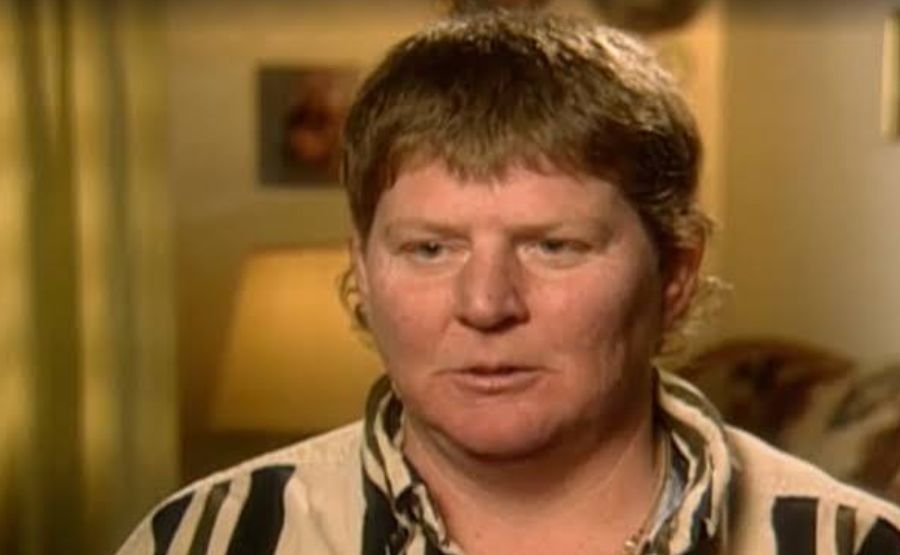
At some point in the mid-1980s, Tyria ended up in Florida — specifically in the Daytona Beach area of Volusia County, on the state’s central Atlantic coast. How she got there and exactly when aren’t documented. What is documented is what she was doing when she met Aileen Wuornos: she was working as a motel maid. Housekeeper. The kind of job that pays by the hour, keeps you on your feet all day, and doesn’t come with much in the way of security or advancement.
She was in her early twenties. She wasn’t famous. She wasn’t connected to anything that would later be in textbooks or documentaries. She was just a young woman doing work that was available, in a state that was far from where she’d grown up.
In June 1986, she was at a bar called the Zodiac, in South Daytona, on an ordinary evening. And that’s where everything in her life shifted.
Aileen Wuornos: The Relationship That Changed Everything
Aileen Wuornos was thirty years old when she and Tyria met that night at the Zodiac. She was going by the name “Lee.” She was loud, magnetic, intense — someone who commanded a room and made you feel like the most important person in it when her attention landed on you. Tyria was twenty-four.
They became a couple quickly. What Aileen described as love — she called Tyria her wife, spoke about her with genuine tenderness, talked about her as the thing she was most afraid of losing — seems by the accounts of people who knew them to have been real, at least in Aileen’s experience of it. What Tyria felt is something only she knows, and she has spoken about it only rarely and carefully.
Tyria eventually left her motel job. Aileen supported them both through sex work on the highways and interstates of Florida. This is a fact that later became a source of some public judgment toward Tyria — the implication that she benefited from something she should have asked more questions about. The counterargument, which Tyria made in her own testimony, is that she didn’t know where the money was coming from, that she took Aileen at her word, and that she didn’t approve of the sex work in any case.
They moved around. Different motels, different addresses, the kind of itinerant life that low-income couples in Florida often live when work is seasonal and money is unsteady.
What She Understood and When
This is the most contested part of Tyria Moore’s story, and it’s worth handling carefully.
In November 1989, Aileen Wuornos killed Richard Mallory, a fifty-one-year-old electronics store owner, on a stretch of highway in Volusia County. She came home afterward and told Tyria what she had done. Tyria testified that Aileen described having shot a man — but told her it was self-defense, that he had attacked her, that she’d had no choice. Tyria said she believed her.
What would you do with that? Your partner comes home and tells you she killed someone in self-defense. You’re a young woman from Ohio with no criminal record, no experience with violence, no framework for what to do with information like that. Tyria testified that she believed the self-defense account. She testified that she was scared.
Over the following months, Aileen killed again. And again. Six more times, over the span of roughly a year. She kept coming home. She kept telling Tyria things. The exact nature of those conversations — how much detail was shared, how explicit Aileen was, how much Tyria understood about what was happening — became the central subject of prosecution questions in 1992.
Tyria maintained throughout that she didn’t know the killings were murders rather than self-defense until she saw media coverage in late 1990 that made her suspect otherwise.
July 1990: The Car Crash That Unraveled Everything
In July 1990, Aileen and Tyria crashed an orange Pontiac Sunbird while drunk. The car belonged to Peter Siems, a missionary from New Jersey who had gone missing in June. A witness saw two women climb out of the wrecked car and drive away in another vehicle. That witness provided descriptions.
Investigators were already looking at a pattern of murders along Florida interstates involving men who’d been known to pick up hitchhikers or sex workers. The composite drawings from the Siems witness started connecting dots. By late 1990, investigators had enough to identify Aileen Wuornos as a suspect and to know that she had a female companion.
Tyria saw a news report in December 1990 showing drawings of two women wanted in connection with the Siems vehicle. She recognized herself. She went back to Ohio. She moved in with her sister in Pennsylvania. She didn’t call anyone. She just left.
The Phone Calls and the Confession
In January 1991, Aileen Wuornos was arrested at a bar called the Last Resort in Port Orange, Florida. Within days, investigators had tracked down Tyria Moore.
What law enforcement offered her was straightforward and transactional: full immunity from prosecution in exchange for cooperation. She wasn’t charged with anything. She was a potential witness, and they wanted to use her.
They asked her to make a series of phone calls to Aileen, who was now in custody. Aileen didn’t know the calls were recorded. Over several days, Tyria called and talked to her — gentle, careful conversations in which Tyria expressed fear that she might be implicated, that her life was being destroyed, that she needed Aileen to help her by telling the truth.
Aileen’s response, documented in those recordings and replayed in documentaries ever since, was to reassure Tyria. She said she wasn’t going to let Tyria go to jail. She said she was going to tell the truth to protect Tyria from being blamed. Within those conversations, she confessed. She did it because she loved Tyria and didn’t want Tyria to suffer.
That phone call secured the confession that investigators needed. Tyria cooperated fully.
The Trial: Seventy-Five Minutes on the Stand
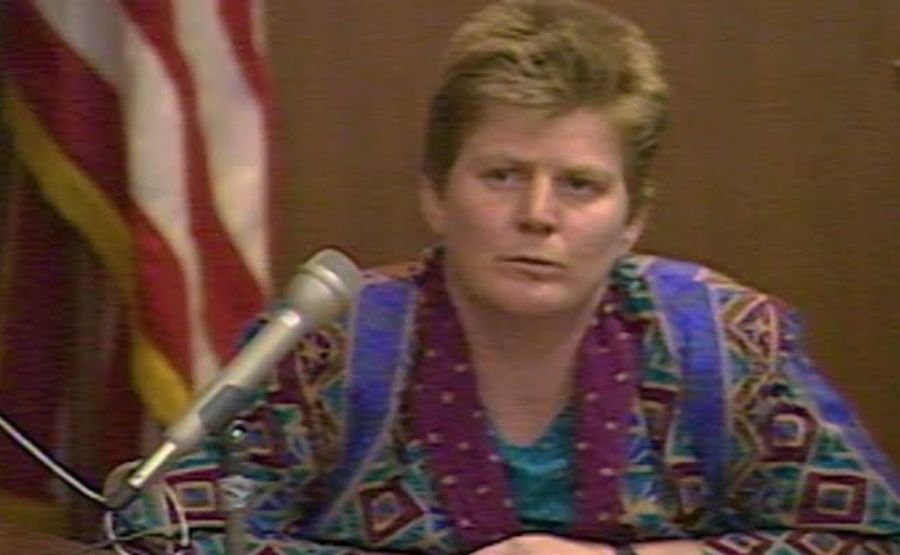
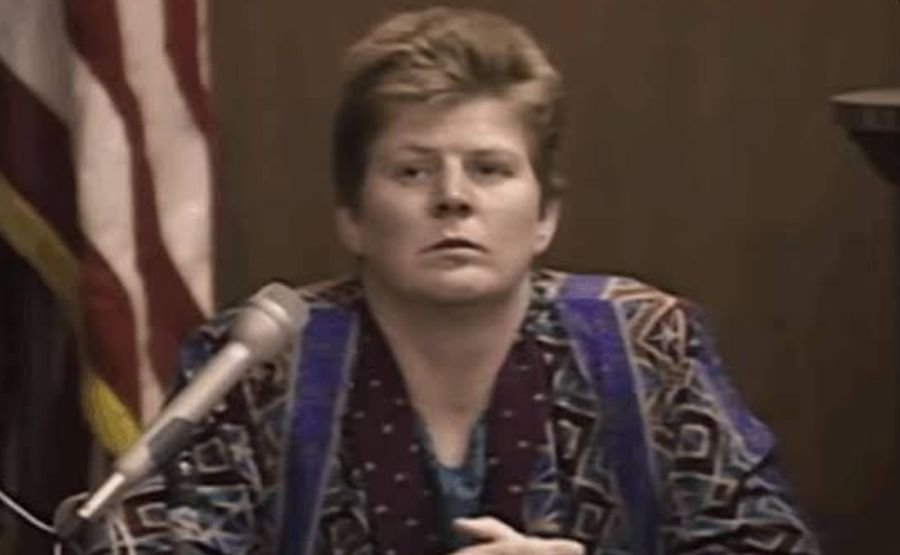
The 1992 trial for the murder of Richard Mallory was the first and most significant of Aileen Wuornos’s prosecutions. Tyria took the stand on the fourth day. She testified for seventy-five minutes.
She told the jury what Aileen had told her about the murders during their years together. She contradicted Aileen’s claim that Mallory had raped her before she killed him — specifically, Tyria testified that Aileen never mentioned a sexual assault. That testimony directly undercut Aileen’s self-defense argument.
What it felt like to sit in that witness box and testify against the person who had called her his wife, who had confessed out of love for her, who had said repeatedly “I’m not going to let you go to jail” — Tyria has never described this at length publicly. The Dateline NBC interview in August 1992 is the only extended public account she gave.
She said she was scared. She said she didn’t want to testify. She said she told the truth because she didn’t feel she had a choice.
Aileen Wuornos was convicted and received six death sentences across her various prosecutions. She was executed by lethal injection in Florida on October 9, 2002.
After: Disappearing on Purpose
After the trial, Tyria Moore disappeared from public life as completely as a person can in the modern information age.
Reports in the early 1990s placed her living in Pennsylvania — staying with her sister, rebuilding something resembling a normal existence. Some sources have said she entered the witness protection program, though this has never been officially confirmed. She declined every subsequent media request. When Nick Broomfield made his documentaries about Wuornos, Tyria wasn’t in them. When Charlize Theron won an Oscar playing Aileen in Monster (2003) — with Christina Ricci playing a fictionalized version of Tyria called Selby Wall — Tyria said nothing publicly. When Aileen was executed, she said nothing publicly.
Aileen Wuornos told investigators and documentarians that Tyria had not contacted her after 1992. Not once. Whether that’s true, whether they had private contact, whether Tyria watched the execution coverage — none of that is in the record.
The Financial Picture and Where She Stands
Tyria Moore’s finances are genuinely unknown. She received immunity, not money, from her cooperation with prosecutors. She did not sell her story to a publisher or sign a television deal. Whether she received any payment for the 1992 Dateline interview is not documented.
Any net worth figure you find online is invented. She is believed to be living a private, working life somewhere in the eastern United States — Pennsylvania is the most consistently cited location across credible sources. She is, if the birth year estimates are correct, in her early sixties.
She has outlasted the woman whose story made her famous. She has remained silent through every documentary, every adaptation, every anniversary. In thirty-plus years, she has chosen privacy so consistently that it has essentially become her identity to the outside world.
Final Words
Tyria Moore is one of the harder biographical subjects to write about fairly, because the easy framings are all wrong. She’s not a villain — she wasn’t charged with anything and the evidence that she participated in any crime is not in the record. She’s not a hero — she cooperated with prosecutors out of self-preservation as much as justice. She’s not a victim — she had agency throughout, and she used it, even if the choices available to her were limited.
What she is, mostly, is a person who got caught in a gravitational field she didn’t create and couldn’t escape. She loved someone who turned out to be capable of terrible things. She made a choice about self-preservation that also served the prosecution’s purposes. She has lived with both of those facts for more than thirty years.
The silence she’s maintained isn’t nothing. In a culture that rewards disclosure — that pays for confessional memoirs and therapy-inflected podcasts and where-are-they-now segments — she has simply refused. She hasn’t monetized the story. She hasn’t sought understanding or sympathy. She has just been quiet.
That kind of privacy, sustained for decades in the face of constant media attention to the case around her, requires a specific kind of will. It’s the only thing about Tyria Moore that belongs entirely to her.
FAQs
1. Who is Tyria Moore?
She is an American woman who was the girlfriend of serial killer Aileen Wuornos from 1986 to approximately 1990. She cooperated with Florida law enforcement investigators in 1991, helping to secure a recorded confession from Wuornos, and testified for the prosecution at Wuornos’s 1992 murder trial.
2. Where did Tyria Moore grow up?
She grew up in Cadiz, Ohio, a small city in Harrison County in eastern Ohio. Her family was described as middle-class. She later relocated to Florida, where she met Wuornos.
3. How did she and Aileen Wuornos meet?
They met in June 1986 at a bar called the Zodiac in South Daytona, Florida. Tyria was twenty-four. Aileen was thirty and was using the name “Lee.” They became a couple quickly and lived together for approximately four years.
4. Did Tyria Moore know about the murders while they were happening?
This was the central question of the trial. She testified that she believed Aileen’s early accounts of self-defense and did not understand the full picture until she saw news coverage in late 1990. Prosecutors accepted this account in exchange for her cooperation. She never faced any criminal charges.
5. Why did she testify against Wuornos?
She received full immunity from prosecution in exchange for cooperating with investigators. She also made a series of recorded phone calls to Wuornos in custody that elicited a confession. She testified on the prosecution’s behalf at the 1992 trial, providing seventy-five minutes of testimony.
6. What specifically did she testify to?
She described conversations in which Wuornos had discussed the killings. Crucially, she testified that Wuornos never told her Richard Mallory had sexually assaulted her — directly contradicting Wuornos’s self-defense claim. Her testimony was considered significant in the jury’s decision to convict.
7. Did Aileen Wuornos say anything about Tyria during the investigation?
Yes. In the recorded phone calls, Wuornos said repeatedly that she didn’t want Tyria to face any trouble for things she had done. Wuornos stated that safeguarding Tyria was her top priority. She later said in documentary footage that she loved Tyria deeply.
8. Did Tyria Moore attend Wuornos’s execution?
Not publicly documented. On October 9, 2002, Aileen Wuornos was put to death via fatal injection in Florida. Tyria made no public statement before or after.
9. Is the character Selby Wall in the film Monster based on Tyria?
Yes. In the 2003 film starring Charlize Theron as Aileen Wuornos, Christina Ricci plays a character named Selby Wall who is clearly based on Tyria Moore. The filmmakers changed the name. Tyria did not participate in the production and has not publicly commented on the film.
10. Did she enter witness protection?
Unconfirmed. Multiple sources have reported this, but it has never been officially confirmed by law enforcement or by Tyria herself. She may simply have chosen to live privately.
11. Where is Tyria Moore now?
The most consistently cited location in credible sources is Pennsylvania, where she relocated after the trial, initially staying with her sister. Her current circumstances and location are genuinely unknown. She has maintained total privacy since 1992.
12. What is her net worth?
Unknown and not reliably estimated. She received immunity, not financial compensation, for her cooperation. She has not sold her story or participated in any commercial projects related to the case. Any net worth figure on celebrity websites is invented.
Explore new ideas and rising trends with Trend Rise.
One Comment