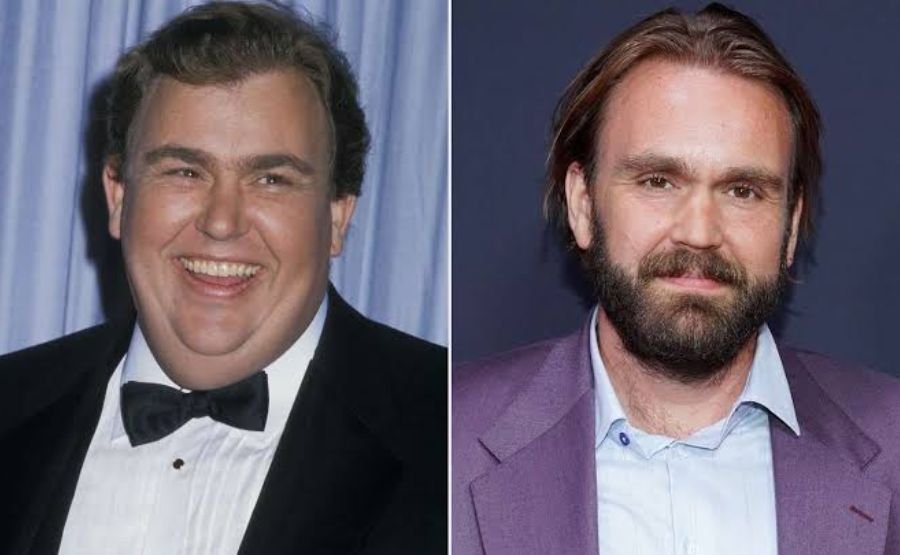
John Candy: The Big Heart Behind the Laugh
Quick Bio
| Detail | Info |
| Full Name | John Franklin Candy |
| Born | October 31, 1950 — Newmarket, Ontario, Canada |
| Died | Durango, Mexico, March 4, 1994 (age 43) |
| Nationality | Canadian |
| What He Did | Actor, comedian, screenwriter, producer, voice actor |
| Biggest Accomplishments | Planes, Trains and Automobiles (1987), Uncle Buck (1989), Cool Runnings (1993); SCTV cast member; two Emmy Award wins for SCTV’s writing |
| Other Key Facts | Standing 6’2″ and instantly identifiable, this part-owner of the Toronto Argonauts of the Canadian Football League passed away while filming Wagons East, one of comedy’s greatest “what ifs.” |
Why People Are Still Enthralled by Him
There’s something about John Candy that just doesn’t fade. You turn on a movie from the late ’80s and there he is — big laugh, bigger heart, filling the screen with something that’s hard to name but impossible to miss. He wasn’t cool in the typical Hollywood way. He wasn’t slick. He was warm, rumpled, and somehow made you feel like everything was going to be fine even when the movie’s plot said otherwise.
Part of why people keep coming back to him is precisely because he left too soon. Forty-three years old. Gone in the middle of a shoot. The door just closed mid-sentence, and we’ve been wondering ever since what the rest of the story would have looked like. There were projects lined up. There was a career clearly expanding. And then, nothing.
But the other part — honestly the bigger part — is that his work holds up. Not in a sentimental, “oh that was sweet back then” type of manner. Watch Planes, Trains and Automobiles today and tell me it doesn’t land just as hard. Watch Uncle Buck and see if the charisma doesn’t still pop right through the screen. He made human decency feel funny, which is genuinely one of the hardest things to pull off in comedy.
See also “Tyria Moore: The Witness Who Vanished Into Silence“
A Kid Who Grew Up With Loss
John grew up in Newmarket, Ontario, a small place outside Toronto that would’ve been quiet and pretty ordinary in the early 1950s. When John was only five years old, his father, Sidney Candy, passed away after a heart attack. Five years old. That fact never disappears when you look at his story — both because of how young he was when it happened and because of the cruel echo it would have at the end of his own life.
His mother, Evangeline, was of Polish descent, his father of English-Canadian roots. The family was working-class and Catholic. After his dad died, it was just Evangeline holding things together, raising John in a modest East York neighborhood in Toronto. There was no wealth, no showbiz connections, no obvious path to Hollywood. Just a big, funny kid who loved to make people around him smile.
He was actually a pretty good athlete growing up — football was his thing — and he played seriously enough that it wasn’t just a hobby. That physical energy, that comfort in his own large frame, showed up later in everything he did on screen. He never tried to hide or minimize himself. He inhabited his body with a confidence that came naturally.
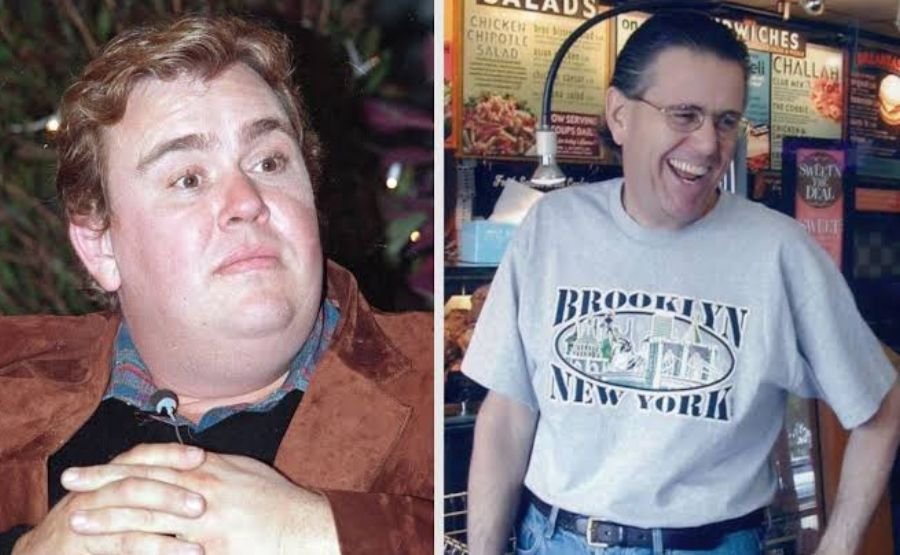
School, Football, and a Slow Pivot to Comedy
John attended Neil McNeil Catholic High School in Toronto, where the football kept him busy and grounded. He could play competitively, and for a while, the sport was maybe his most distinctive character.
He eventually made his way to Centennial College and later McMaster University — though he didn’t stick around for a degree. What pulled him away was comedy. Specifically, it was the Toronto branch of The Second City that started to draw him in. For anyone who doesn’t know it, Second City was (and still is) one of the most important comedy training grounds in North America. People like Bill Murray, Dan Aykroyd, Gilda Radner — they all came through that system. When Candy got there, he was young and hungry and immediately at home.
The shift from “football player with a personality” to “committed comedic performer” happened somewhere in those early Toronto years. He joined Second City’s Toronto company officially in 1972. From there, things moved with a kind of inevitability.
Starting Out: The Grind Before the Glow
Like pretty much everyone who ends up famous, John Candy had a stretch where the work was real but the recognition was minimal. He picked up small TV roles on Canadian productions — shows that have been mostly forgotten now, the kind of gigs you take because they’re there and you’re building. There was a show called Dr. Zonk and the Zunkins, which gives you a sense of the level. Not glamorous.
But the Second City stage was where he was sharpening himself. Improv forces you to be quick, generous with your scene partners, and comfortable looking completely ridiculous. Candy had all three of those qualities in abundance. He wasn’t someone who needed to control every moment or be the smartest person in the room. He could make someone else’s joke land better just by reacting to it right. That generosity — you can feel it in everything he did professionally.
The big break arrived when Second City Television, known as SCTV, launched in 1976. It was a sketch comedy show, shot first in Edmonton and then Toronto, that eventually found a huge audience across North America. And Candy was one of its anchors.
SCTV, Hollywood, and the Moment Everything Changed
SCTV is genuinely important in the history of North American comedy, and Candy’s role in it gets undersold sometimes because the movies came later and were bigger. But watch the old SCTV clips and you see a performer absolutely in his element. He created characters that were distinct and layered — Johnny LaRue, the sleazy TV host with dreams too big for his talent. Doctor Tongue, the melodramatic horror director. William B., the cheerfully dim talk-show sidekick. Each one felt inhabited, not just performed.
In 1981 and 1982, the program received two Emmy Awards for writing. It was genuinely good television. And while Candy was becoming a fan favorite on the small screen, Hollywood was starting to notice.
He popped up in a small role in The Blues Brothers in 1980, playing a corrections officer. He was in Steven Spielberg’s 1941. These weren’t leads, but they were glimpses — and people noticed. On screen, he had a unique quality. Bigger than life, but never fake. Warm without being saccharine.
Then came the John Hughes era, and everything shifted.
Planes, Trains and Automobiles in 1987 is the one. Candy plays Del Griffith, a shower curtain ring salesman who attaches himself to Steve Martin’s uptight advertising executive on a disastrous journey home for Thanksgiving. The movie is laugh-out-loud funny for the first hour, and then the ending hits you like a door to the face. Candy’s performance in that final scene is one of the best pieces of screen acting you’ll find anywhere. No jokes. Just a man. It’s quiet and perfect and completely devastating.
Uncle Buck (1989) showed another version of what he could do — reckless uncle who’s somehow exactly the right person at exactly the right moment. It proved that he could handle a movie by himself and made him a fortune.
The Private Side of a Public Man
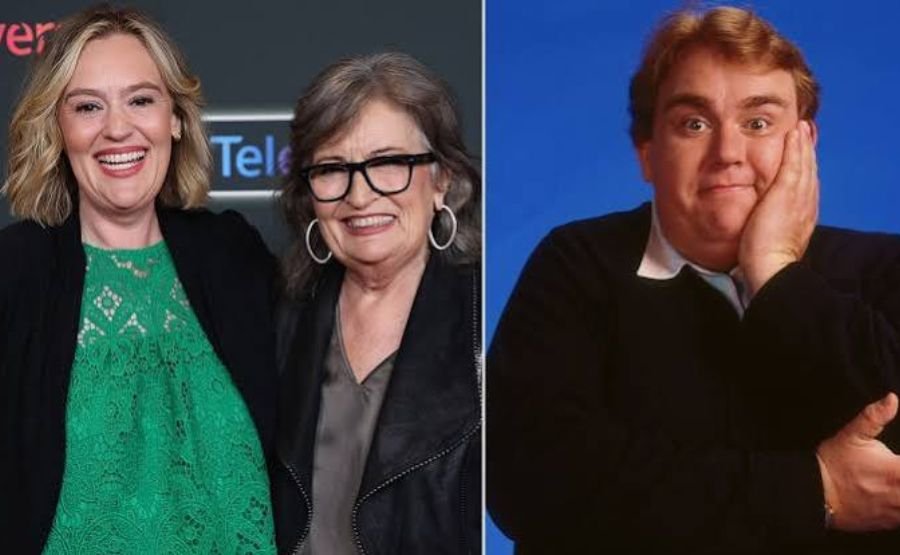
John Candy married Rosemary Hobor in 1979. They had two children — Jennifer, born in 1980, and Christopher, born in 1984. By all accounts, family was genuinely the thing that mattered most to him. He talked about it constantly. He structured his life around being present for his kids when he could.
He also had a serious love for sports that went beyond fandom. In 1991, he and some partners bought the Toronto Argonauts of the Canadian Football League. Owning a sports team was a dream, and he poured real money and real emotion into it. The Argonauts won the Grey Cup in 1991 — which must have been one of the great highs of his life. But team ownership turned out to be financially draining, and the dream didn’t come without a cost.
He was, by many reports, one of the most generous people in his industry. Not in a performative way. He’d show up for friends, help people who were struggling, cover costs without making a thing of it. People who worked with him talk about that generosity without being prompted, which tells you something.
The Weight He Carried
It wouldn’t be honest to talk about John Candy without mentioning that he struggled with his weight and health throughout his adult life. He was a big man — well over 300 pounds at various points — and the entertainment industry of the ’80s wasn’t exactly gentle about it. He talked in interviews about the pressure he felt, the diets that didn’t stick, the exhaustion of being both proud of who he was and aware that he was carrying risk.
There was also the financial stress of the Argonauts ownership, which turned into something of a drain rather than the fun he’d imagined. By the early ’90s, he’d had to sell the team. That disappointment landed hard.
His schedule was brutal and relentless. In the last years of his life, he was working constantly — partly out of passion, partly out of the need to maintain the financial life he’d built. That combination of overwork, health challenges, and stress was a combustible mix that everyone around him seemed to sense but nobody could fully interrupt.
The Money: What He Had and What It Meant
At the time of his death in 1994, John Candy’s net worth sat at roughly $15 million. That sounds like a lot — and it is — but it was also the beginning of what should have been his most financially powerful decade. He was only just hitting his commercial peak when he died.
He earned serious money from his film work, particularly the Hughes era. Cool Runnings (1993), the beloved film about the Jamaican bobsled team at the Olympics, was released just months before he died and was a genuine global hit. His salary had grown substantially from those early SCTV days.
The Argonauts ownership ate into things, and he had a large lifestyle to maintain — houses, staff, family obligations. He wasn’t reckless with money, but he was generous with it, which isn’t the same thing as careful with it. His estate went to his wife and children after his death. No scandalous financial story there — just a man who lived fully and died before he could see the full return on a career that was still climbing.
Where Things Stand Today — His Ongoing Legacy
John Candy has been gone for over thirty years now. His children have grown up. Rosemary has largely stayed out of the public eye since his death, which seems consistent with what you’d expect from someone who clearly valued private life.
What’s interesting is how his reputation has only grown in the decades since 1994. He’s not a figure people look back on with the fondness of nostalgia alone. Film students talk about his dramatic range. Comedians cite him as an influence. The Planes, Trains finale gets shared online constantly — new audiences discovering it and being blindsided by how much it gets to them.
His son Christopher has worked in the entertainment world. His daughter Jennifer has made her own path. The family legacy continues quietly.
And every Halloween, someone somewhere watches Uncle Buck or puts on Cool Runnings or stumbles into Planes, Trains for the first time, and then they go looking to find out more about the big, warm Canadian man at the center of it. That is the appearance of a true legacy.
Final Words
What makes John Candy genuinely different from most people who achieve his level of fame is the absence of a dark side to find. Look hard at most careers and you turn up something — ego battles, cruelty to collaborators, a private self that contradicts the public image. With Candy, people keep looking and keep coming up empty. What you see is what was apparently there.
That’s rare. It’s also a little heartbreaking, because you realize that what we lost wasn’t just talent. We lost decency operating at a high level in a world that doesn’t reward decency nearly enough. He was funny because he was human first. He made you laugh and then made you feel. That’s the whole trick, and not everyone has it.
He was 43. He had a lot of movie left in him.
FAQs
1. How did John Candy die?
He suffered a fatal heart attack on March 4, 1994, while filming Wagons East in Durango, Mexico. He was found in his hotel room. He was 43.
2. Was it confirmed as a heart attack?
It was presumed to be a heart attack, though the cause was never officially confirmed through a public autopsy report. Given his family history and health situation, a cardiac event was the widely accepted explanation.
3. Did John Candy know his health was at risk?
Almost certainly, yes. He had a family history of heart disease — his father died of a heart attack at 35. He’d struggled with his weight for years and was under significant stress during the Wagons East shoot.
4. What was John Candy’s most famous movie?
Most people point to Planes, Trains and Automobiles (1987) as his masterpiece. Uncle Buck (1989) and Cool Runnings (1993) are close behind in terms of cultural staying power.
5. Was John Candy Canadian?
Yes, fully and proudly. He was born in Newmarket, Ontario, built his career through Toronto’s comedy scene, and remained closely tied to Canada even as Hollywood came calling.
6. Did he have children?
Yes — two. Jennifer, born in 1980, and Christopher, born in 1984. Both were teenagers when he died.
7. Who was his wife?
Rosemary Hobor. They married in 1979 and were together until his death. She has remained largely private in the decades since.
8. Was John Candy rich when he died?
He had an estimated net worth of around $15 million in 1994 — solid, but modest compared to what another decade of work would likely have produced.
9. Did he own a sports team?
Yes — the Toronto Argonauts of the CFL, which he co-purchased in 1991. The team won the Grey Cup that same year. He later sold his stake as the financial losses mounted.
10. What was SCTV?
Second City Television — a sketch comedy show that grew out of Toronto’s Second City troupe in the late 1970s. It was a massive deal in North American comedy and launched or elevated multiple major careers, including Candy’s, Eugene Levy’s, Martin Short’s, and Catherine O’Hara’s.
11. Was Wagons East ever finished?
Yes. The production was completed using a stunt double and some creative camera work. It was released in 1994, a few months after his death. It was not well received, but it was dedicated to his memory.
12. Why do people still love him so much?
Honestly? Because he made you feel good without manipulating you. His warmth on TV appeared to be the real thing rather than a display of kindness. That kind of authenticity ages extremely well.
Explore new ideas and rising trends with Trend Rise.



One Comment