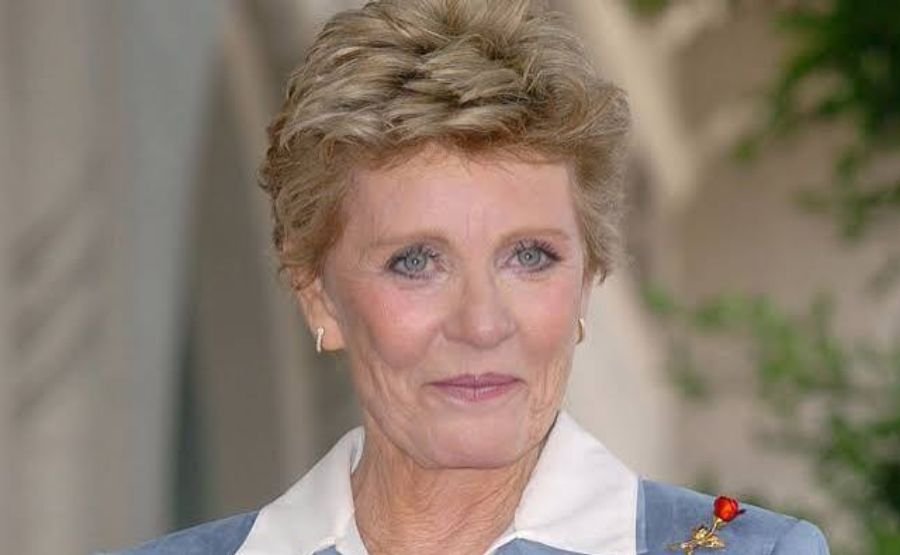
Is Patty Duke Alive? The Truth About Her Life, Death, and Lasting Legacy
First, the Answer You Came Here For
Patty Duke is not alive. She died at Coeur d’Alene, Idaho, on March 29, 2016. She was 69 years old. The cause of death was sepsis, brought on by a ruptured intestine. Her family confirmed it the same morning, and within hours, tributes were pouring in from across Hollywood and the mental health community. She left behind three sons, a four-decade career, and a legacy that still feels very much alive.
Quick Bio
| Detail | Info |
| Full Name | Anna Marie Duke (professionally Patty Duke; later Anna Duke-Pearce) |
| Born | December 14, 1946, New York City’s Elmhurst, Queens |
| Died | March 29, 2016, Coeur d’Alene, Idaho (age 69) |
| Nationality | American |
| What She Did | Actress, author, mental health advocate, union president |
| Biggest Accomplishments | Academy Award for Best Supporting Actress at age 16 (The Miracle Worker, 1963) — the youngest winner of that award at the time; starred in and created The Patty Duke Show (1963–1966); served as president of the Screen Actors Guild 1985–1988; wrote the landmark mental health memoir Call Me Anna (1987); won multiple Emmy Awards and Golden Globes |
| Other Key Facts | Diagnosed with bipolar disorder in 1982 and became one of the first celebrities to speak openly about it; was given alcohol and drugs as a child by her own managers; mother of actor Sean Astin (The Lord of the Rings, The Goonies) |
Why We’re Still Talking About Her
There’s something about Patty Duke that refuses to go quietly into the archives. Part of it is the sheer drama of her story — child star, Oscar winner, sitcom queen, manic episodes, four marriages, scandal, recovery, advocacy, and then a death that felt cruelly sudden given how far she’d come. But I think the deeper reason is what she chose to do with her pain.
She didn’t have to write the book. She didn’t have to go on television and tell millions of people she’d been living with undiagnosed bipolar disorder for most of her adult life. She didn’t have to stand up and say, in plain language, that mental illness had a name and that people shouldn’t be ashamed of it. She chose all of that. And in the mid-1980s and early ’90s, that was genuinely radical for a celebrity to do. The conversation she helped start is still going.
See also “Marjorie Bach Young: Rare Photos, Early Life, Family, and the Story Before Fame“
A Childhood Nobody Would Choose
Her real name was Anna Marie Duke, and she started life in the Elmhurst neighborhood of Queens, New York, in 1946. Third child. Working-class Catholic household. Her father, John Patrick Duke, drove a cab and did handyman work. Her mother, Frances, was a cashier. By most accounts the home was not a happy place. Her father drank heavily — alcohol was a ruling presence in the house. Her mother dealt with severe clinical depression and swings of violence that made the environment unpredictable at best and frightening at worst.
When Anna was around six, her mother finally pushed her father out of the home for good. That left Frances struggling alone with three kids and very little stability. The apartment was a pressure cooker.
Two years later, when Anna was about eight, something happened that was presented to her as an opportunity but was, in hindsight, one of the defining traumas of her life. Her older brother Raymond had gotten into acting, taken on by a pair of talent managers named John and Ethel Ross. The Rosses noticed Raymond’s little sister and decided they wanted her too.
Frances agreed. Anna went with them.
Handed Over — and Renamed
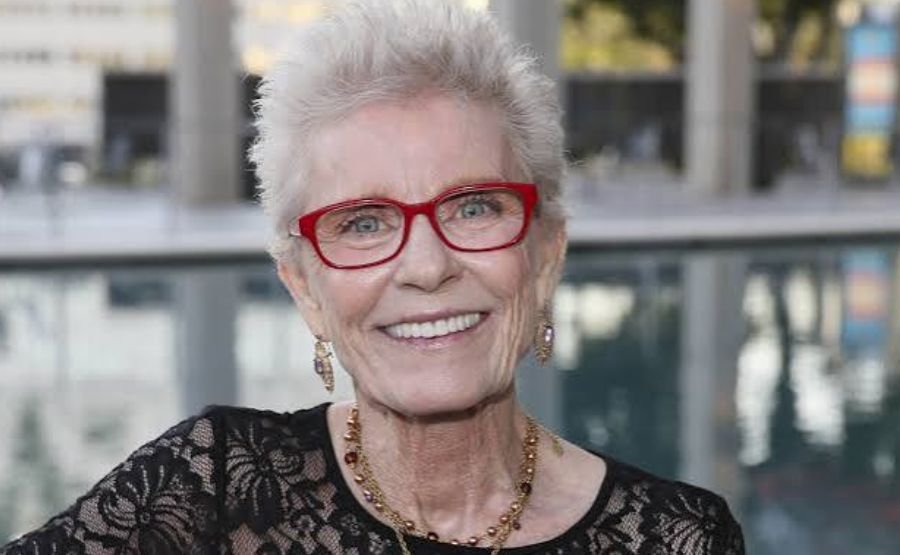
The Rosses didn’t just manage Anna. They effectively took her over. She moved into their world, spent enormous amounts of time under their roof, and was subjected to the kind of control that would today be recognized immediately as predatory and abusive.
The first thing they did was erase her. They told her Anna Marie was gone. She was Patty now. They set to work on her Queens accent, drilling it out of her. They shaped her into what they wanted her to be — a perky, sellable child performer with a brand-new name. They controlled her schedule, her image, and eventually her earnings.
What came out later — in her memoir, in interviews, in congressional testimony — was far darker. The Rosses gave her alcohol. They gave her prescription drugs. There were accounts of sexual abuse. They manipulated her emotionally and isolated her from her mother. And when she started earning real money, they took the lion’s share of it. By some estimates they diverted approximately a million dollars of her income over the years.
Meanwhile, a little girl named Anna Marie was somewhere underneath all that. Confused, compliant, desperate to please the people who now controlled every part of her life.
The Miracle and the Sitcom
Despite all of it — or maybe in some twisted way because of the intense pressure she was under — Patty became extraordinary at her craft.
She was twelve when she appeared on a TV quiz show called The $64,000 Challenge and won $32,000. Her category was popular music — a detail that, knowing the Rosses were feeding her answers, lands with a thud. John Ross took his management cut from her winnings and the whole affair later came up in a congressional inquiry into quiz show rigging.
But then came Broadway. And then came The Miracle Worker.
She played Helen Keller — blind, deaf, locked inside herself, fighting to connect with the world — in the stage production, and when the 1962 film version went into production, she got the role again. She was sixteen when she walked onto that Academy Awards stage and collected the Oscar for Best Supporting Actress. Youngest person to win that category at that point in the award’s history. Anne Bancroft, who played Anne Sullivan opposite her, won Best Actress the same night. It remains one of those rare moments where both leads of a film were recognized at the highest level.
The following year, Sidney Sheldon — the same writer who would later become famous for airport novels — created a TV show specifically for her. The Patty Duke Show cast her in the dual roles of Patty Lane, an all-American Brooklyn teenager, and her worldly identical cousin Cathy, visiting from Scotland. Two girls, completely opposite personalities, same face. The theme song was inescapable.
Here’s the irony that Patty herself came to find somewhat bitter: the creators had unwittingly, accidentally captured something true about her. Sidney Sheldon noticed she had two very distinct sides to her personality and built the show around that duality. What he didn’t know at the time — what nobody knew yet — was that she had bipolar disorder, and that those contrasting sides weren’t just a character quirk. They were her actual neurological reality.
The show ran three seasons, ended in 1966, and Patty Duke the brand was firmly established in American pop culture.
The Years That Got Messy
After the sitcom ended, she pushed toward adult roles. Valley of the Dolls in 1967 is the most notable — a trashy, lurid, beloved Hollywood film about showbiz women and their various destructions. She played Neely O’Hara, a star whose talent is slowly consumed by pill addiction. The movie was critically dismissed but has since become a camp classic.
Her personal life in those years was, to put it charitably, chaotic. Around 1970, she found herself romantically tangled up with three different men essentially simultaneously — Desi Arnaz Jr. (son of Lucille Ball and Desi Arnaz), actor John Astin, and a concert promoter named Michael Tell. She discovered she was pregnant and, in what she later described as a panicked decision during a manic episode, married Michael Tell. The marriage lasted thirteen days. It was annulled.
The son she was carrying — Sean — would grow up to become one of the most recognizable actors of his generation, famous for playing Samwise Gamgee in The Lord of the Rings and Mikey’s brother in The Goonies. For a long time there was genuine uncertainty about who Sean’s biological father was. Sean was raised by John Astin as his own, although it was ultimately determined that Desi Arnaz Jr. was the father.
She married John Astin in 1972. They had a son together, Mackenzie, who later appeared on The Facts of Life. They were together for thirteen years.
The Diagnosis That Changed Everything
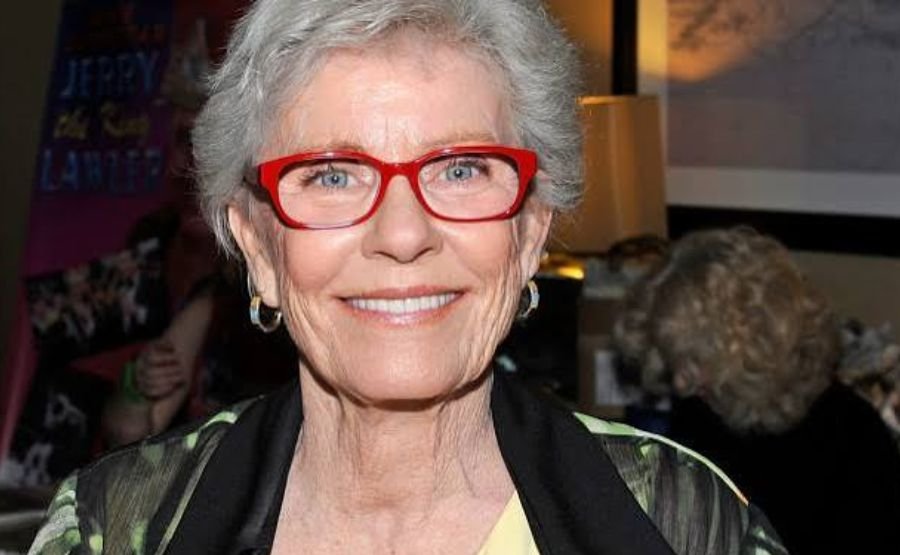
In 1982, something finally clicked into place. Patty was formally diagnosed with bipolar disorder.
She was 35. She had spent her entire adult life lurching between states — the highs that felt like invincibility and the lows that felt like drowning — without understanding what was actually happening inside her. The alcohol she’d been given as a child by the Rosses had made everything worse. The chaos of her marriages, the manic decisions, the professional instability — it all had a name now.
Getting the diagnosis, and starting proper treatment with lithium, was genuinely stabilizing for her. In literature and in interviews, she describes it as a form of liberty. For the first time she could look back at her own history and understand why things had gone the way they did.
In 1985, she was elected president of the Screen Actors Guild, becoming only the second woman to hold that position. It was a significant professional moment, a recognition that she was a serious voice in the industry beyond her work as a performer.
And then in 1987, she wrote Call Me Anna.
The memoir was a reckoning. It named what the Rosses had done to her. It described the bipolar disorder, the years of being medicated and misunderstood, the marriages, the professional struggles. It was unflinching and personal in a way that celebrity memoirs very rarely were at the time. It became a bestseller. It became a TV movie, which she produced and starred in herself. And it made her, almost overnight, one of the most prominent mental health advocates in the country.
Marriage, Finally, That Stuck
On the set of a TV movie in 1985, she met Michael Pearce. He was a military man — a drill sergeant, specifically — and by all accounts exactly the kind of grounding, steady presence that her life had never really had before. They married in 1986 and stayed together until her death thirty years later. She adopted a son with him, Kevin Pearce.
She spent her final decades in Coeur d’Alene, Idaho, a small city in the Idaho Panhandle, far removed from Hollywood. She continued to act — TV movies, guest appearances, the occasional film — but the frantic pace of early stardom was behind her. She was genuinely content in a way she’d never been before, by most accounts. She had horses. She had her family around her. She had her advocacy work.
The End
On March 29, 2016, early in the morning, Patty Duke died. The cause was sepsis brought on by a ruptured intestine. She was 69 years old. Her family’s statement described her as a wife, a mother, a grandmother, a friend, a mental health advocate, and a cultural icon.
All of those things were accurate. But the order felt right too — they put wife and mother before cultural icon. That was who she had worked hardest to become.
Her son Sean urged people to donate to the Patty Duke Mental Health Initiative in her memory. Tributes came from everywhere. A wreath was placed on her Hollywood Walk of Fame star that same afternoon.
Money — What She Left Behind
Patty Duke’s net worth at the time of her death is estimated to have been around $10 million. That’s a reasonable figure for someone with her career span, her Emmy wins, her memoir earnings, her SAG leadership, and decades of TV work. But it’s worth noting that she should have had substantially more. The Rosses diverted an estimated million dollars of her childhood earnings, and the financial instability of her young adult years — the manic decisions, the marriages, the periods of professional chaos — took their own toll. She wasn’t poor when she died, but she had started from exploitation and built back from scratch in more ways than one.
What She Left Behind
Her legacy has three distinct tracks and they’re all still running.
First, the performances. The Miracle Worker holds up. If you watch it today, the rawness of her portrayal of Helen Keller — the animal frustration, the eventual breakthrough — is still stunning. She was sixteen and she was operating on a level that most actors twice her age couldn’t touch.
Second, The Patty Duke Show, which is now pure nostalgia — a time capsule of early-’60s America, bubbly and innocent, beloved by a certain generation.
Third, and maybe most importantly, the advocacy. She stood up publicly for people with mental illness when the stigma was enormous and celebrity culture was not remotely interested in that kind of vulnerability. She didn’t position herself as a survivor selling hope. She was specific and honest and sometimes uncomfortable. That honesty cost her something and helped a lot of people.
Final Words
Here’s what I keep coming back to with Patty Duke: she never had a childhood. Not really. She had a traumatic home, followed by managers who erased her name and her identity and handed her a new one, followed by decades of untreated illness and the wreckage it created. And yet somehow, by her fifties and sixties, she had assembled a life that actually looked like peace. Not perfect — but real and warm and hers.
The thing that makes her different from other tragic child-star stories is that she got to the part where she looked back and understood it. She wrote the book. She named the people. She named the illness. She used the platform she’d been handed — even if it had been handed to her through exploitation — to try to make things a little less dark for other people.
That’s not nothing. That’s actually quite a lot.
FAQs
1. Is Patty Duke still alive?
No. She died on March 29, 2016, in Coeur d’Alene, Idaho, at the age of 69. Sepsis from an intestinal rupture was the culprit.
2. What is Patty Duke’s real name?
She was born Anna Marie Duke on December 14, 1946, in Queens, New York. Her managers renamed her “Patty” when she was around eight to make her more marketable as a child actress. Later in life she went by Anna Duke-Pearce.
3. What is she best known for?
Her Oscar-winning performance as Helen Keller in the 1962 film The Miracle Worker, and her television sitcom The Patty Duke Show (1963–1966), in which she played identical cousins with opposite personalities.
4. How old was she when she won the Oscar?
She was 16, making her the youngest winner of the Academy Award for Best Supporting Actress at that time in the award’s history.
5. What was her mental health condition?
Bipolar disorder, formally diagnosed in 1982 when she was 35. She had lived with the condition undiagnosed for her entire adult life, and the alcohol and drugs she was given as a child by her managers had made the effects worse.
6. Who are her children?
She had three sons. Sean Astin (actor, known for The Lord of the Rings and The Goonies), whose biological father is Desi Arnaz Jr. but who was raised by John Astin. Mackenzie Astin (actor, The Facts of Life), whose father is John Astin. And Kevin Pearce, whom she and her fourth husband Michael Pearce adopted.
7. Who was she married to?
She had four marriages. Michael Tell (1970, annulled after 13 days), Michael Pearce (1986 till her death in 2016), John Astin (1972–1985), and Harry Falk (1965–1969). The marriage to Pearce lasted 30 years and was the stable center of her later life.
8. What did the Rosses do to her?
John and Ethel Ross were her childhood managers who effectively took over her care from age eight. They renamed her, suppressed her natural accent, controlled her finances, gave her alcohol and prescription drugs, subjected her to abuse, and diverted roughly a million dollars of her earnings. She exposed their conduct in her 1987 memoir.
9. Did she write any books?
Yes — most notably Call Me Anna (1987), her bestselling autobiography that detailed her childhood exploitation, her bipolar disorder, and her path toward stability. In 1990, it was made into a television film. She wrote additional books on mental health topics.
10. What did she do beyond acting?
She served as president of the Screen Actors Guild from 1985 to 1988, one of only two women to hold that role at that point. For the final thirty years of her life, she was a well-known and vocal mental health champion.
11. What was her net worth when she died?
Estimates put it at around $10 million, built over decades of acting, producing, writing, and public speaking. She should have had much more, but the financial instability of her early adulthood and the abuse she endured as a child greatly diminished what she amassed.
12. Where did she live in her later years?
She spent the last roughly 25 years of her life in Coeur d’Alene, Idaho, a small city in the northern part of the state. She lived there with her husband Michael Pearce, far from the Hollywood machine that had defined her youth, and by all accounts was genuinely happy there.
Explore new ideas and rising trends with Trend Rise.

One Comment