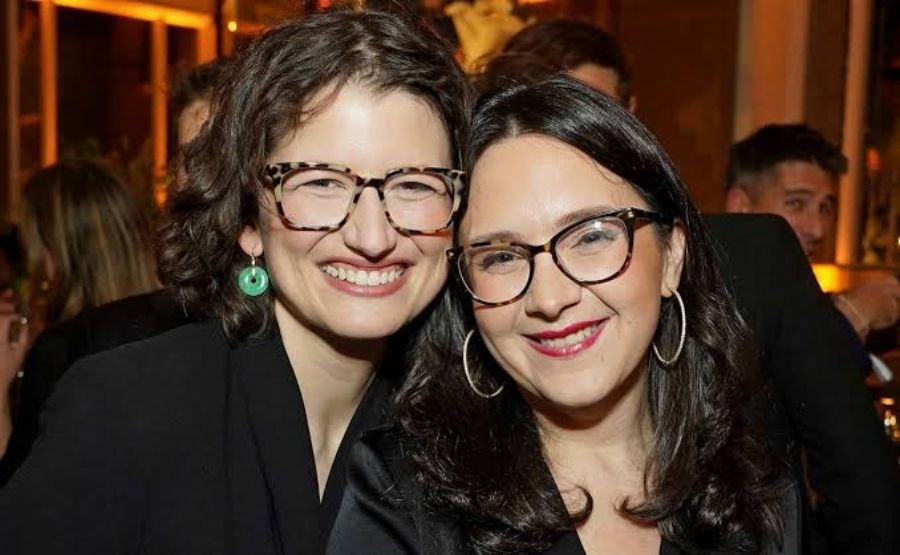
Bari Weiss Family: Parents, Siblings, Husband, and the Story Behind Her Family Life
Quick Bio
| Detail | Info |
| Full Name | Bari Weiss |
| Born | March 25, 1984 — Pittsburgh, Pennsylvania |
| Nationality | American |
| What She Does | Journalist, editor, author, podcaster, media entrepreneur; Editor-in-Chief of CBS News |
| Biggest Accomplishments | Founded The Free Press (acquired by Paramount Skydance for ~$150 million in 2025); authored How to Fight Anti-Semitism (National Jewish Book Award, 2019); famous public resignation from the New York Times in 2020 |
| Key Facts | Grew up in Pittsburgh’s Squirrel Hill neighborhood; had her bat mitzvah at Tree of Life Synagogue; openly bisexual; married to journalist Nellie Bowles; eldest of four sisters |
Why People Can’t Stop Talking About Her
Let me be honest with you — not everyone loves Bari Weiss. That’s actually the first thing worth saying. She’s the kind of person who makes journalists on both sides of the political divide uncomfortable, and she kind of wears that as a badge of honor.
What makes her interesting isn’t a single article or controversy. It’s the whole arc. She went from being a kid in Pittsburgh who argued about Israel at Shabbat dinner, to getting into a famous fight with Palestinian studies professors at Columbia, to landing at the New York Times, to quitting that job in a resignation letter so scorching it went viral within minutes, to building her own media company essentially from scratch, and then selling that company for nine figures while also getting handed the keys to one of America’s most storied broadcast news networks. That’s a lot of ground to cover in about four decades of living.
Her family is deeply woven into that story in ways that are both obvious and surprising. They weren’t just background noise. They shaped almost everything.
See also “Dixie Brubaker: Her Life, Family, and Story Beyond Her Marriage to Dinesh D’Souza“
A Pittsburgh Childhood That Left Marks
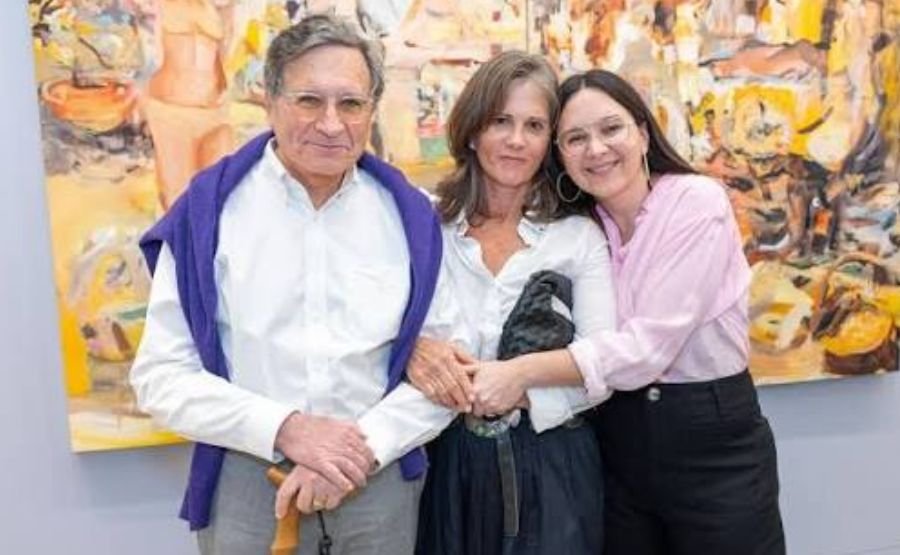
The Weiss family is very Pittsburgh. Lou Weiss, her father, ran Weisshouse — a home furnishings and flooring company that had been in the family since 1943. Her mom Amy came from a different world professionally; she worked as a cosmetics buyer at Kaufmann’s, a Pittsburgh department store, before eventually joining Lou at the business. They were a working Jewish family with deep roots in the community, the kind of people who showed up, who contributed, who belonged.
They belonged, specifically, in Squirrel Hill. If you don’t know Pittsburgh, Squirrel Hill is the heart of its Jewish community — dense with synagogues, Jewish day schools, delis, and families who’ve been there for generations. The Weisses weren’t on the fringe of any of this. They were embedded in it. And they were religious in a pluralistic, wide-tent kind of way — the family had ties to Reform, Conservative, and Orthodox congregations simultaneously, which is actually unusual even in an observant Jewish household. That exposure to different branches of the same tradition probably planted something in Bari early about how people who share core values can still argue fiercely about everything else.
Shabbat at the Weiss house was a big deal. People showed up. Politics got discussed. Voices got raised sometimes. Lou and Amy apparently held genuinely different political positions on certain things, and the kids were expected to engage with that rather than tune it out. Bari is the oldest of four sisters — the others being Casey, Suzy Lee, and Molly — and as the firstborn she seems to have absorbed a certain seriousness about ideas and argument that her parents actively encouraged. Her parents reportedly paid her five dollars to read a book and write a small report about it. That’s a very particular kind of home.
She went to Pittsburgh’s Community Day School, a Jewish day school, before moving on to Shady Side Academy, which is one of the more prestigious private prep schools in the Pittsburgh area. She was clearly sharp. She was also deeply connected to the neighborhood and the congregation she’d grown up in — including Tree of Life Synagogue, where she had her bat mitzvah.
College: Where Things Got Complicated
Bari went to Columbia University in New York City, majoring in history, and she graduated in 2007. Those years were genuinely formative in ways that go beyond just the classroom.
She got involved in student journalism early, founding a magazine at Columbia called The Current that covered politics, culture, and Jewish affairs. That’s a 21-year-old identifying a gap and filling it. But what really put her on the map — and made her controversial for the first time — was her role in what became known as the Columbia Unbecoming controversy.
There was a documentary film circulating that accused certain Middle Eastern Studies professors at Columbia — particularly a Palestinian-American scholar named Joseph Massad — of intimidating and silencing Jewish and pro-Israel students. Bari was one of the students who spoke out, loudly, and she filed complaints with the university. A committee was eventually convened. Most of the formal allegations were dismissed or not acted on. But the controversy itself generated national headlines and made Bari known, at 20 years old, as someone willing to pick a very loud, very public fight.
She also, during her Columbia years, had an on-and-off romantic relationship with a classmate who would later become extremely famous: Kate McKinnon, the comedian who would go on to be a beloved cast member on Saturday Night Live. The two have never made a big deal about this publicly, but it’s been reported and neither has denied it.
Getting Started in Journalism
After Columbia, Weiss got a Wall Street Journal Bartley Fellowship — a prestigious one-year program — and also spent time in Jerusalem as a Dorot Fellow, which sent young Jewish American leaders to Israel for a year of study and engagement. She freelanced for Haaretz and The Forward, two major Jewish publications, during this period.
Then from 2011 to 2013 she became a senior news and politics editor at Tablet, a conservative American Jewish magazine. It was good training — a place where she could develop a clear, assertive editorial voice and cover the issues she cared most about. But it was a relatively small audience.
The Wall Street Journal came next. She worked there as an op-ed and book review editor from 2013 until 2017, working under deputy editorial page editor Bret Stephens. When Stephens left the Journal for the New York Times in 2017, she followed him.
The New York Times Years and the Explosive Exit
Here’s where the story gets really interesting. The Times hired Weiss in 2017 specifically as part of an effort to bring in voices from outside the coastal liberal mainstream — to broaden the opinion section after the shock of Trump’s election, when a lot of people at legacy media outlets were doing a lot of soul-searching about whether they had been covering half the country. Weiss was meant to represent something: a younger, Jewish, contrarian-but-not-right-wing perspective on culture and politics.
And she delivered, in the sense that she wrote pieces that got read and argued about. She wrote about the “Intellectual Dark Web” — a loosely connected group of heterodox thinkers including people like Jordan Peterson, Sam Harris, and Joe Rogan — and gave that phenomenon a name that stuck. She wrote about antisemitism. She wrote about cancel culture. She weighed in on the #MeToo moment in ways that generated real disagreement. She was visible. She was arguing for something.
But behind the scenes, it was apparently rough. She has described being mocked and criticized relentlessly by colleagues, including on Slack channels. She says she was called a Nazi on internal platforms. She says management praised her privately but didn’t protect her publicly. When the Times’s editorial page editor James Bennet resigned in June 2020 after a staff revolt over publishing a Tom Cotton op-ed, the cultural atmosphere inside the building became untenable for Weiss.
On July 14, 2020, she posted her resignation letter directly to her own website — addressed to publisher A.G. Sulzberger by name. It was long, specific, and ferocious. The most quoted line was something to the effect that Twitter had become the paper’s real editor, even though Twitter wasn’t on the masthead. She accused the Times of abandoning the curiosity and risk-taking that good journalism requires. She accused colleagues of bullying her into silence. She filed claims of hostile work environment and discrimination.
It spread everywhere within hours. Conservatives cheered. Many liberals rolled their eyes. Some former colleagues pushed back hard. But even people who disagreed with Weiss’s politics had to admit the letter was a serious piece of writing about what was happening inside American newsrooms.

What She Built After Leaving
Here’s the part of the story that’s maybe the most impressive, depending on how you look at it. A lot of journalists who make high-profile exits from major publications end up fading. Weiss didn’t.
She launched a Substack newsletter called Common Sense in early 2021. Then she turned it into a full media company, rebranded as The Free Press. She brought on her wife — journalist Nellie Bowles, who had been a tech reporter at the Times — as a co-founder and a key voice at the publication. She hired other writers. She built a subscriber base. The podcast Honestly with Bari Weiss developed a large following. By 2024, The Free Press had reportedly raised $15 million in investment at a $100 million valuation and had over a million total subscribers.
Then in late 2025, Paramount Skydance announced it was acquiring The Free Press for a reported $150 million and naming Weiss editor-in-chief of CBS News — a legacy broadcast institution with an enormous reach. That’s a genuinely striking turn of events for someone who four years earlier had been a recently unemployed newsletter writer.
Her Personal Life
Bari was briefly married to a man — Jason Kass, an environmental engineer — from 2013 until around 2016. They divorced. She’s openly bisexual and has discussed it publicly, including on The View, where she stated it plainly when asked.
Around 2018 she began dating Nellie Bowles. They married in 2021, and the couple have two children together. By all accounts their relationship is both personal and professional — they built The Free Press together, and Bowles writes for it regularly. They seem to be the kind of couple where the line between partnership in life and partnership in work is very blurry, which some people thrive on.
Bari has spoken about her family — parents Lou and Amy, her three sisters — with real affection. Her younger sister Suzy Lee Weiss made her own headlines at one point with an op-ed in the Wall Street Journal about college admissions, which generated its own storm of attention and controversy. The Weisses are clearly a family that produces opinionated people willing to put their opinions in public.
The Hard Times
The Tree of Life massacre in October 2018 hit Bari in a deeply personal way that’s hard to overstate. Eleven people were killed at the synagogue where she had her bat mitzvah, in the neighborhood where she grew up, in her hometown. She wrote about it. She talked about it in public. Her 2019 book How to Fight Anti-Semitism was substantially shaped by that event — it won the National Jewish Book Award and was nominated for other honors. It’s a personal book, not just a political one, and it comes from genuine grief and fear.
The internal battles at the Times took a toll too. Being publicly criticized by hundreds of your own colleagues, having your name dragged online, being called things you find deeply offensive by people you work with — that’s not abstract. It’s psychologically wearing in a way that isn’t always visible from the outside.
And running an independent media company is hard, full stop. The Free Press had to build its audience without the institutional backing of a major publication, which means subscription revenue, which means constantly making the case that what you’re offering is worth someone’s money every month.
Where the Money Stands
Estimates of Bari Weiss’s net worth vary pretty widely — from lower estimates around $10 million to Celebrity Net Worth’s figure of $50 million. Given the $150 million acquisition of The Free Press, with Weiss as a founder and presumably significant equity holder, the higher estimates seem plausible, though the exact terms of the deal haven’t been disclosed publicly. Her CBS News salary hasn’t been made public either. What’s safe to say is that she went from being a salaried journalist at a newspaper to building something that sold for nine figures, and that’s a financially meaningful shift by any measure.
Where She Stands Today
As of late 2026, Bari Weiss is the editor-in-chief of CBS News — a role that didn’t exist before she was appointed to it. She’s managing a major broadcast news operation at a moment when the entire legacy media industry is in turbulent, uncertain territory. The Free Press continues to operate as a distinct publication within the Paramount structure. She’s 42 years old. She has two young children. She’s been one of the most debated figures in American media for the better part of a decade.
Final Words
What’s genuinely interesting about Bari Weiss is that she’s hard to fit into a tidy box, and that’s probably intentional. She’s a Jewish woman from Pittsburgh who is openly bisexual, married to another woman, and also the person conservatives most cheered when she left the New York Times. She’s someone who talks about free speech and heterodox thinking who also started a new media company that has its own editorial identity and point of view. She criticizes institutional groupthink but she’s now running one of the most institutional media organizations in the country.
You might find that contradictory. Or you might find it genuinely complicated in the way most interesting people are. Either way, her family — the Squirrel Hill roots, the Shabbat dinners full of argument, the parents who paid her to read, the synagogue she grew up in that was later the site of a massacre — is threaded through all of it in ways that make her more understandable than the caricatures on either side of the debate about her suggest.
FAQs
1. Where did Bari Weiss grow up?
She grew up in Pittsburgh, Pennsylvania, specifically in the Squirrel Hill neighborhood, which is the center of Pittsburgh’s Jewish community.
2. Who are her parents?
Her father is Lou Weiss and her mother is Amy Weiss. Lou ran a home furnishings and flooring company called Weisshouse; Amy was a cosmetics buyer who eventually joined the family business.
3. Does she have siblings?
Yes, she’s the oldest of four sisters. Her sisters are Casey, Suzy Lee, and Molly Weiss. Suzy Lee became briefly famous in her own right for a viral Wall Street Journal op-ed about college admissions.
4. Is Bari Weiss married?
Yes. She’s married to journalist Nellie Bowles. They wed in 2021 and have two children together. Before this, Bari was briefly married to environmental engineer Jason Kass from 2013 to roughly 2016.
5. What is Bari Weiss’s sexual orientation?
She’s openly bisexual and has said so publicly multiple times, including on The View.
6. Why did she leave the New York Times?
She resigned in July 2020, citing what she described as a hostile work environment, bullying from colleagues on internal platforms, and a broader cultural shift at the paper toward prioritizing Twitter’s opinion over editorial independence. The resignation letter she published online became nationally discussed within hours.
7. What is The Free Press?
It’s the media company Weiss founded in 2021, initially as a Substack newsletter called Common Sense. It grew into a full publication with reporters, editors, a podcast, and events. In 2025 it was acquired by Paramount Skydance for around $150 million.
8. What does she do now?
She’s the editor-in-chief of CBS News, appointed in late 2025 following the acquisition. The Free Press continues operating under the Paramount umbrella.
9. What did the Tree of Life shooting mean to her personally?
The 2018 mass shooting at Tree of Life Synagogue in Pittsburgh was devastating for her personally — she had her bat mitzvah there and grew up knowing the community. Her 2019 book How to Fight Anti-Semitism was directly shaped by that grief. She knew some of the victims.
10. What is Bari Weiss’s estimated net worth?
Estimates range considerably — some put it around $10 million based on her journalism career alone, while others estimate $50 million after accounting for her likely equity stake in The Free Press following its $150 million acquisition. No exact figure has been confirmed.
11. What books has she written?
Her most notable book is How to Fight Anti-Semitism, published in 2019, which won the National Jewish Book Award.
12. Did Bari Weiss date Kate McKinnon?
According to multiple reports, yes — they had an on-and-off relationship while both attending Columbia University. Neither has made a major public statement about it, but it’s been reported and not denied.
Explore new ideas and rising trends with Trend Rise.

One Comment