Caroline Smedvig: The Life, Family, and Love Story of James Taylor’s Wife
Quick Bio
| Detail | Info |
| Full Name | Caroline Elisabeth Hessberg (later Smedvig, now commonly known as Kim Taylor) |
| Born | May 31, 1953, Albany, New York, USA |
| Nationality | American |
| What She Does | Former journalist; former Director of Public Relations and Marketing, Boston Symphony Orchestra (1980–2004); current BSO trustee; backup vocalist |
| Biggest Accomplishments | Spending nearly a quarter century steering the communications and public image of one of America’s most prestigious orchestras; building a stable, long-running marriage with James Taylor — his third, and by far his longest |
| Other Key Facts | Graduated Albany Academy for Girls (1971) and Smith College, Northampton (1975); previously married to acclaimed classical trumpeter Rolf Thorstein Smedvig; mother of twin sons Rufus and Henry, born via surrogate in April 2001; John Williams gave her away at her wedding |
Why People Keep Looking Her Up
Here is the central irony of Caroline Smedvig’s public existence. She spent nearly twenty-five years in a profession built entirely around making other people visible — managing the image and communications of a major American cultural institution — and yet she herself has remained almost invisible to the wider world.
That changes the moment people learn she’s married to James Taylor.
James Taylor is the kind of artist whose songs feel genuinely personal to whoever is listening. Fire and Rain. Carolina in My Mind. Sweet Baby James. Decades of music that people attach to important moments in their own lives. When a figure that beloved has a wife, people want to understand her — who she is, where she came from, how she fits into the larger story.
What they find when they look is someone whose life is actually worth examining entirely apart from that famous connection. A woman who built a real career. Who navigated a previous marriage, a divorce, and years of rebuilding before she found her way into a partnership that has now lasted more than twenty-five years. Who became a mother in her late forties through a path that required courage, medicine, and the generosity of a friend willing to carry her children.
There’s substance here. A lot of it.
See also “Lisa Wiehoff: The Woman Who Chose the Quiet Life Behind Baseball’s Biggest Legend“
Albany, New York: Where the Story Starts
Caroline was born on May 31, 1953, in Albany, New York — the capital of a state that sometimes forgets it has an interior beyond the city that never sleeps. Albany is a different world from Manhattan, rooted in government, law, and old Northeastern civic culture.
Albert Hessberg II, her father, practiced law. Her mother was Elisabeth Fitzsimons Goold. She grew up with two brothers — Albert III and Philip — in an educated, professional household where words, ideas, and civic life were probably woven into everyday conversation. That background explains more about her future career than it might initially seem.
A daughter raised in a lawyer’s home in Albany learns something about how institutions work, about language as a tool, about the difference between what is said and what is meant. Those are exactly the skills that make a great communications professional.
The family was rooted enough in Albany that Caroline attended the Albany Academy for Girls — a long-established private school in the city — graduating in 1971. It’s the kind of school with high expectations and an atmosphere of serious intellectual engagement, and Caroline absorbed both.
Smith College and the Education That Shaped Everything
After Albany Academy, Caroline made the journey to Northampton, Massachusetts, to attend Smith College. This is worth pausing on. Smith is one of the original Seven Sisters schools — a historically women’s college with a fierce academic culture and a long tradition of producing women who go on to do consequential things. It is not a finishing school. It is a place that trains you to think.
Caroline graduated from Smith in 1975 with a bachelor’s degree. The precise subject of her studies isn’t publicly confirmed, but everything that followed — the journalism career, the communications pivot, the decades at a cultural institution — points toward someone educated in language, the humanities, and the arts.
While she was still an undergraduate, she had already started doing real professional work. She picked up part-time reporting with the Knickerbocker News, Albany’s local paper. That detail tells you something important: she wasn’t waiting for someone to hand her a career. She was building it in real time, alongside her studies.
After graduation, she expanded that work, writing for the Springfield Daily News in Massachusetts — an afternoon paper with a solid regional reputation. Journalism was the first chapter.
The BSO, 1980: The Career That Defined Her
By 1980, Caroline had moved away from straight reporting and into something that suited her particular combination of skills even better — public relations for the arts. She joined the Boston Symphony Orchestra that year as a publicist, and that decision would anchor the next quarter century of her professional life.
The BSO is not a minor institution. Founded in 1881, it is one of the five major American orchestras — genuinely world-class, internationally recognized, musically rigorous to a degree that only a handful of organizations in the country can match. Getting any position there carries weight. Building a career there that stretches across two and a half decades means you were doing something very right.
Caroline rose from publicist to Director of Public Relations and Marketing. In that role, she was responsible for how one of America’s most storied orchestras presented itself to the world — through the press, through promotional campaigns, through the careful management of an institutional reputation that had been built over a hundred years and needed constant, thoughtful tending.
Boston’s classical music scene in the 1980s and 1990s was rich and complex. The BSO occupied Symphony Hall, one of the finest acoustical venues on earth. The Boston Pops — the orchestra’s more popular-facing sibling operation — was led for years by John Williams, the film composer whose work is about as famous as music can get. Caroline was operating at the center of all of this, every day, shaping the narrative around an organization she clearly cared deeply about.
It was not always a smooth ride — institutional PR never is. But she stayed for twenty-four years, which says everything about both her commitment and her competence.
A First Marriage, and What It Left Behind
Somewhere in the transition from journalism to BSO life, Caroline’s personal story took a complicated turn. In December 1980 — the same year she joined the orchestra — she married Rolf Thorstein Smedvig.
Rolf Smedvig was a musician of real distinction. He was the principal trumpeter of the Boston Symphony Orchestra, a founding member of the celebrated Empire Brass Quintet, and by all accounts a performer of extraordinary technical skill and musical sensitivity. He was also born in September 1952, making him almost exactly a year older than Caroline — roughly the same generation, the same world, the same orbit.
They met in that shared world of the BSO and married the year Caroline came on board in her new role. It made a certain kind of sense. Two serious arts professionals, both dedicated to the institution they’d chosen as their home.
The marriage didn’t last. Sources are not specific about how many years it held together before they parted ways, but the consensus is that it was a few years, not a long stretch. Caroline kept the name Smedvig after the divorce — which is why she’s known by it still, even after two subsequent surname changes.
Rolf went on to marry Kelly Holub. He continued his remarkable musical career for decades, performing, recording, teaching, and leading ensembles, until his sudden death in April 2015 at the age of sixty-two. Even separated by decades and multiple lives lived apart, that world remains small.

Meeting James Taylor: A Boston Pops Concert and a Two-Year Wait
The meeting that changed everything happened in 1993, inside Symphony Hall.
James Taylor was performing with the Boston Pops under the direction of John Williams. Caroline, as Director of PR and Marketing for the BSO, was of course present — it was literally her job. They met. Taylor later described it in an interview with the Boston Globe as simply as possible: he was playing with the Boston Pops, and she was working full time with the Boston Symphony. They were in the same building, in the same world, and something happened.
But here’s the part that gets glossed over in most tellings: nothing romantic started that night. James was still married to his second wife, actress Kathryn Walker, when he and Caroline met in 1993. That marriage had been troubled, but it hadn’t ended yet. They separated in 1996, the divorce becoming final around the same time.
Caroline and James began dating in 1995. So for two years, they existed in each other’s peripheral awareness, whatever that meant exactly, before circumstances aligned to let them actually be together. The patience that required — or the professional composure — speaks to Caroline’s character.
They dated for six years before getting married. Six years of a relationship that must have been open to scrutiny, given who James Taylor is and what his personal history looked like. His marriage to Carly Simon in the 1970s was publicly celebrated and publicly broken. His second marriage to Kathryn Walker had also run its course. The music press and the fan base had opinions about all of it. Caroline navigated all of that, quietly, without public drama.
February 18, 2001: Emmanuel Episcopal Church, Boston
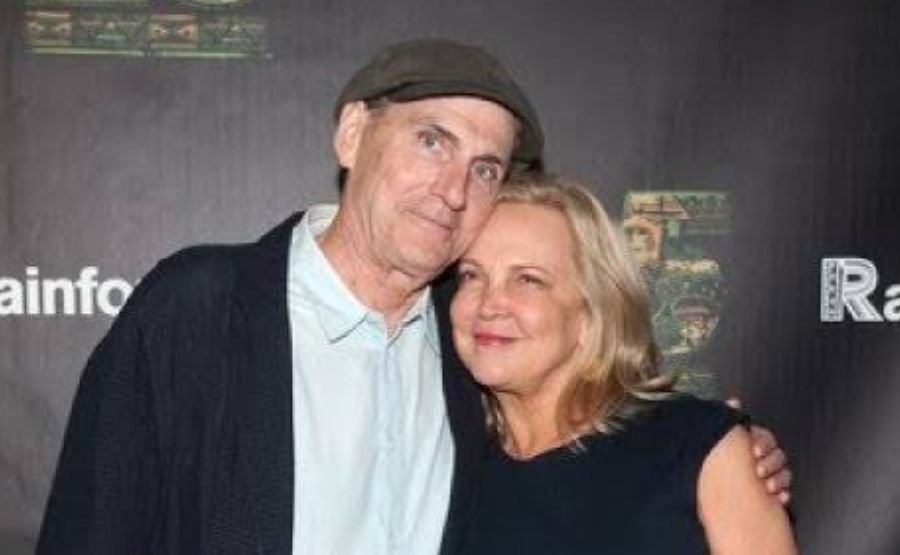
The wedding happened on a Sunday, inside the intimate Lindsey Chapel at Emmanuel Episcopal Church in Boston. Fifty guests attended — close family and friends only. No public spectacle, no media invitation, no People magazine exclusive.
The detail that most people linger on is this: John Williams gave the bride away. The same John Williams who had conducted that Boston Pops concert eight years earlier where James and Caroline met. The same John Williams who is arguably the most commercially successful film composer alive, the man behind Star Wars, Schindler’s List, Jaws, Jurassic Park, E.T. That John Williams. He walked Caroline down the aisle. Yo-Yo Ma and André Previn performed at the reception.
That’s a staggering thing to absorb as a casual fact. But in the world Caroline had spent twenty-plus years inhabiting, these were people she actually knew. John Williams wasn’t a celebrity to her in the starstruck sense — he was a colleague, a figure she’d worked alongside in the professional ecosystem of Boston’s classical music world. The wedding was a gathering of that community as much as anything else.
Twin Sons, a Surrogate, and Late-Life Motherhood
Two months after the wedding, in April 2001, Rufus and Henry Taylor were born. They came into the world via surrogacy — a family friend volunteered to carry them after in vitro fertilization the year before. The pregnancy news had only become public a month before the boys arrived.
Caroline was forty-seven when they were born. James was fifty-two. Neither of them had expected to become parents together at this stage — James already had two adult children, Sally and Ben, from his marriage to Carly Simon — but both of them have spoken warmly about how central the boys became to their lives.
The twins grew up in Lenox, Massachusetts, the Berkshires town where James and Caroline made their home — not far from Tanglewood, where the BSO runs its famous summer season. Music surrounded them. Their father brought them to concerts. As young men, they’ve both leaned into creative paths, with Henry in particular showing real musical aptitude and performing alongside his father.
Caroline stepped away from the BSO in 2004, three years after the boys were born. She transitioned into a trustee role with the organization — still connected, still committed, but with the full-time professional responsibilities handed off. Family had become the job.
Stability as Its Own Remarkable Achievement
One of the quieter ways Caroline’s story resists easy framing is in what it says about the word “stability.” James Taylor’s history with addiction and mental health struggles is not a secret — he has spoken about it in interviews throughout his career, including time spent in psychiatric hospitals and battles with heroin addiction in his younger years. Both of his initial marriages ended in divorce.
Caroline entered this partnership with open eyes. She was a forty-six-year-old professional with her own history, her own previous marriage, her own understanding of how complicated people’s lives actually are. And something about the combination of her groundedness and his hard-won wisdom — both of them past their most turbulent years — created a foundation solid enough to hold.
As of 2026, they have been married for twenty-five years. That is longer than any other chapter in either of their adult lives. James has spoken in interviews about being happy, about gratitude, about the gift of a family he helped build late in life. The song “On the 4th of July” from his 2002 album October Road is widely understood to be about Caroline — their story worked into the music the way artists inevitably work their lives into their art.
The Money Picture
Caroline’s personal net worth is estimated modestly — most sources put it somewhere around $1 to $2 million, reflecting her two and a half decades of professional work in arts administration and her journalism career before that. These are real earnings from a real career, not celebrity money.
James Taylor’s financial picture is significantly larger — estimates put his net worth around $80 to $100 million, built over five decades of music, six Grammy wins, more than 100 million records sold worldwide, and decades of touring. He is genuinely one of the best-selling artists in American music history.
As his wife and partner in a stable, long-running marriage, Caroline shares in that financial security. The family lives well and comfortably, particularly with their base in Massachusetts. But Caroline’s own story wasn’t built on anyone else’s resources — it was built on twenty-four years of professional work at an institution that demands excellence every single day.
Where She Stands Right Now
As of 2026, Caroline is seventy-two years old, and by most visible accounts, she is living precisely the life she built — quietly, on purpose.
She serves as a trustee for the Boston Symphony Orchestra, keeping her connection to the institution that shaped so much of her professional life. She has been spotted at James’s concerts, occasionally appearing on stage as a backup vocalist. She supports her husband’s career the way people support someone they genuinely love — not because it defines her, but because she wants to be there.
Henry and Rufus are now twenty-five. They grew up in Lenox, in a household shaped by music and by two parents who had already done a great deal of living before they arrived. Henry has pursued music actively, performing alongside his father. The family picture that James posts occasionally on Instagram shows people who look happy together — which is, in the end, its own kind of quiet achievement.
Final Words
What makes Caroline Smedvig genuinely interesting isn’t the famous last name she married into. It’s the whole arc of choices that preceded it.
She came from Albany, went to Smith, started working before she finished her degree, transitioned through journalism into arts administration, spent nearly a quarter century building something real at the BSO, and emerged from one failed marriage intact enough to try again. She became a mother at forty-seven through one of the more demanding routes available to anyone.
She didn’t chase visibility. She didn’t use her proximity to famous people — first Rolf Smedvig, then John Williams as a colleague, then James Taylor as a husband — to amplify herself. She just kept showing up for the work and the life she was building.
What separates her from the typical “famous person’s spouse” story is that her life before the famous spouse was already genuinely full. The BSO years aren’t a footnote — they’re the core of who she professionally is. The marriage is the later chapter, not the whole book.
That’s worth remembering. And honestly, it’s the more interesting story.
FAQs
1. Who is Caroline Smedvig exactly?
She’s an American woman born on May 31, 1953, in Albany, New York. She spent nearly twenty-five years as the Director of Public Relations and Marketing for the Boston Symphony Orchestra, started her career as a newspaper journalist, and is now primarily known as the wife of singer-songwriter James Taylor. She goes by the nickname Kim within their personal circle.
2. How did Caroline Smedvig meet James Taylor?
They met in 1993 at Boston’s Symphony Hall, where Taylor was performing at a Boston Pops concert conducted by John Williams. Caroline was there in her professional capacity as the BSO’s PR and marketing director. They didn’t start dating until 1995, two years later, after Taylor’s second marriage had ended.
3. When and where did they get married?
February 18, 2001, inside the Lindsey Chapel at Emmanuel Episcopal Church in Boston. It was a private ceremony with only about fifty guests. John Williams gave the bride away, and Yo-Yo Ma and André Previn performed at the reception.
4. Does Caroline Smedvig have children?
Yes — twin sons named Rufus and Henry Taylor, born in April 2001. They were conceived via IVF and carried by a surrogate, a family friend who volunteered. Caroline was forty-seven when they were born. She’s also a stepmother to Ben and Sally Taylor, James’s two children from his first marriage to Carly Simon.
5. Was Caroline married before James Taylor?
Yes. Her first husband was Rolf Thorstein Smedvig, the principal trumpeter of the Boston Symphony Orchestra and a founding member of the Empire Brass Quintet. They married in December 1980 and divorced after a few years. Caroline kept the Smedvig surname after the divorce. Rolf passed away suddenly in April 2015 at age sixty-two.
6. Where did Caroline Smedvig go to school?
Albany Academy for Girls in Albany, New York, graduating in 1971. Then Smith College in Northampton, Massachusetts, graduating in 1975. While still at Smith, she worked as a part-time reporter for the Knickerbocker News in Albany.
7. What exactly did she do at the Boston Symphony Orchestra?
She joined in 1980 as a publicist and eventually rose to Director of Public Relations and Marketing, the position she held for over two decades. She was responsible for how the BSO presented itself publicly — press relations, marketing, reputation management. She left the full-time role in 2004 and transitioned to a trustee position, which she still holds.
8. Why is she sometimes called “Kim” Taylor?
Kim appears to be a nickname used within James Taylor’s personal and professional circle. Some sources list her full name as Caroline Elisabeth Hessberg, but Kim Taylor is how she’s often introduced in her husband’s world. It’s a nickname, not a legal name change.
9. Did James Taylor write a song about Caroline?
Yes — “On the 4th of July” from the 2002 album October Road is widely understood to draw on their relationship. James has described the album as reflecting the period of his life that included meeting and building a life with Caroline.
10. What is Caroline’s net worth?
On her own, her net worth is estimated at around $1 to $2 million — earned over her journalism and BSO career. James Taylor’s net worth is vastly larger, estimated between $80 and $100 million, built over five decades of recording and touring. As his wife, Caroline shares in that financial stability.
11. What is she doing now?
As of 2026, she’s seventy-two and living primarily in Massachusetts. She remains connected to the BSO as a trustee, supports her husband’s ongoing touring career, occasionally appears on stage as a backup vocalist, and by all visible accounts focuses on family life with James and their twin sons, now in their mid-twenties.
12. What makes their marriage notable?
Mostly the longevity. This is James Taylor’s third marriage, and it has already outlasted both previous ones combined. Taylor has been open in his career about addiction, mental health struggles, and the painful ends of his earlier relationships. Twenty-five years into this one, the stability speaks for itself — and much of that stability traces back to who Caroline is as a person.
Explore new ideas and rising trends with Trend Rise.