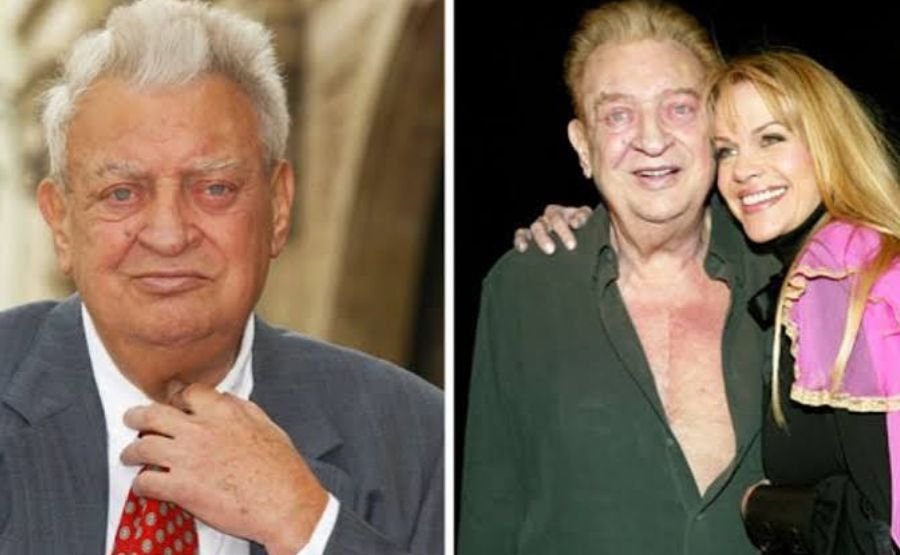
Joyce Indig: The Singer Who Came Before the Punchline
Quick Bio
| Detail | Info |
| Full Name | Joyce E. Indig |
| Born | April 6, 1927 — The Bronx, New York, USA |
| Died | Approximately 1977–1979 (aged approximately 50–52) |
| Nationality | American |
| What She Did | Professional singer, nightclub performer, television entertainer |
| Biggest Accomplishments | Professional television debut on The Art Ford Show on WPIX New York (1949); recorded for Mercury Records, including “Lilac Wine” and “The Best Thing for You”; built a nightclub singing career during the golden era of American live music |
| Other Key Facts | Was married twice to comedian Rodney Dangerfield — the first marriage approximately 1949–1962, then briefly remarried before final separation; mother of two children: son Brian Roy and daughter Melanie Roy-Friedman; died before Dangerfield reached the peak of his film fame; her parents were Max and Rhea Indig; she had one sister, Carole |
Why People Search Her Name
When most people search for Joyce Indig, Rodney Dangerfield comes up first. They’re watching Caddyshack or Back to School, or reading a biography of one of American comedy’s most beloved figures, and they hit a reference to a first wife. A singer. Someone named Joyce. And the natural question follows: who was she, really, before she became a footnote in someone else’s story?
The honest answer is that Joyce Indig was something specific and interesting all on her own. She was a professional singer in New York during one of the most vibrant eras in American popular music. She appeared on television when television was brand new and electrifying. She recorded for Mercury Records — an actual label, not a vanity project — and her voice reached people who had never heard of Rodney Dangerfield and wouldn’t for another two decades.
The fact that she is primarily remembered through the prism of a comedian’s biography says more about how history tends to work than it says about who she was. She was his contemporary. She was his creative peer. She understood the risks of entertainment from the inside out. And she died before she ever had the chance to be remembered for anything other than the marriage.
That deserves a fuller telling.
See also “Kris Tyson Wife: The Truth About His Marriage, Family, and Personal Life“
The Bronx, 1927: Where She Started
Joyce E. Indig was born on April 6, 1927, in the Bronx, New York — one of the five boroughs, the one that in the 1920s was filling up with working-class immigrant families building new American lives on crowded streets.
Her parents were Max and Rhea Indig. The surname Indig suggests Central or Eastern European Jewish roots — a family, like so many in the Bronx of that era, that had come through Ellis Island and was building something in the New World. She had one sister, Carole. By the standards of her time and place, it was a small, tight family.
What the Indig household felt like — whether Max had a trade, whether Rhea kept a musical home, whether Joyce had a piano as a child — isn’t something the available record answers. The 1930 census caught her at approximately three years old. The 1940 census caught her at around thirteen. Between those census snapshots, the record is quiet. What we know is that by her late teens and early twenties, something in her had crystalized into serious musical ambition.
She was going to be a singer.

The Late 1940s: Building a Career in a City That Was Everything
New York in the late 1940s was the center of the entertainment universe in a way that’s almost impossible to fully appreciate from today’s vantage point. Radio was the mass medium that reached into every home. Television was arriving — strange and wonderful and unpredictable, with tiny screens and enormous possibilities. The nightclub circuit was alive in ways that pre-dated recorded music’s dominance of everything. If you could sing — really sing — New York was the place to do it.
Joyce Indig was doing it. By 1949 she was appearing on The Art Ford Show, a television and radio program broadcast on WPIX in New York. This wasn’t amateur hour. Art Ford was a real broadcaster with a real audience, and appearing on his show in 1949 meant you were a professional performer with enough ability and enough industry connections to get in that room. Television in 1949 was still new enough that every appearance was an event.
She was approximately twenty-two years old.
Around this same time — the genealogical records are slightly inconsistent on the precise year, with some giving 1949 and others September 1951 — she met a young man who was also trying to make it in entertainment. His real name was Jacob Cohen. He was performing under various stage names, trying to find one that worked. He was funny. He was struggling. He understood what it meant to want something badly enough to live uncomfortably for it.
They got married. And the two of them tried to do the impossible: build an entertainment life together in New York.
Mercury Records and the Sound She Made
Somewhere in the early 1950s, Joyce made recordings for Mercury Records. This is a significant credential. Mercury wasn’t a vanity label — it was an actual player in the American recording industry, home to artists across jazz, pop, and rhythm and blues. Getting a recording deal with Mercury in that era meant someone with real authority thought your voice was worth pressing to vinyl.
Her recordings included “Lilac Wine” — a song that would eventually be recorded by many artists, most famously Nina Simone decades later. The fact that Joyce Indig cut it speaks to the repertoire she was drawing from: sophisticated, emotionally resonant, the kind of material that nightclub audiences in that era expected from a serious performer. She also recorded “The Best Thing for You,” from Irving Berlin’s Call Me Madam — a Broadway-sourced number that placed her squarely in the mainstream of mid-century American popular song.
Whether these recordings received significant radio play, whether they generated real income, whether they moved the needle on her career — the record doesn’t answer those questions with any precision. What they establish is that Joyce Indig was a professional recording artist, not someone playing at a career. She had a contract. She had studio time. She had wax masters with her name on them.
The Marriage That Became a Legend — Mostly for the Wrong Reasons
The marriage to Jacob Cohen — who had by then adopted the stage name Jack Roy, later becoming Rodney Dangerfield — was the central relationship of Joyce’s adult life. And it was complicated in the specific ways that two ambitious people in a difficult industry make things complicated.
They had two children: Brian Roy and Melanie Roy-Friedman. The family was living in New Jersey, which is what a lot of people in entertainment did when they needed some distance from the city’s expenses and intensity while staying close enough to the work. And Rodney — Jacob — eventually made a decision that significantly disrupted the trajectory of both their lives.
He quit comedy.
The story is famous from his side. He decided the lifestyle was exhausting, that the financial instability was unbearable, that he wanted something more like a normal life. He went to work selling aluminum siding and paint. The entertainer became a salesman in New Jersey. That lasted about twelve years.
What is less often told is what any of this meant for Joyce. She had been building a singing career while also building a family. She was the owner of Mercury recordings. She had performed on New York television. And now her husband had stepped off the professional entertainment treadmill and was selling home improvement products in the suburbs.
Did she keep performing? Did the demands of raising Brian and Melanie in New Jersey make the nightclub circuit impractical? Did she simply decide that the family came first during those years? The record doesn’t say.
What it says is that the first marriage eventually ended — around 1962, by most sources. They separated, legally parted, and went their separate ways. And then, in the specific category of human decisions that look incomprehensible from outside but make complete sense from inside: they got back together. They remarried. And then they separated again, permanently this time.
That double marriage is unusual enough that it invites questions the record can’t answer. What brought them back together the second time? What made the second attempt fail where the second attempt had been supposed to succeed? Only the two of them knew, and one of them is gone and the other never discussed it in a way that reached the public record with any clarity.

Life After Dangerfield
After the second and final split from Rodney, Joyce became Joyce Roy — taking the surname from their shared stage life rather than returning to Indig. She was in her mid-to-late thirties. She had two children who were growing up. She had a former husband who would, within a few years, begin the second chapter of his comedy career that would eventually make him one of the most recognizable comedians in America.
Whether she watched that comeback from a distance, whether she felt pride or bitterness or something more complicated, whether she and the children maintained connection with Rodney as his star rose — none of that is documented in any way the public record preserves.
What is documented, in multiple sources though with slight date variation, is that Joyce died somewhere around 1977 to 1979, when she was approximately fifty to fifty-two years old. The public record does not include the cause of death. The circumstances aren’t detailed anywhere accessible. She died before Dangerfield’s film career peaked — before Caddyshack in 1980, before Easy Money, before he became the household name that his best years eventually made him.
She didn’t live to see the man she had known as Jacob Cohen and Jack Roy become Rodney Dangerfield, the most famous comedian in America who got no respect.
The Financial Picture
Joyce Indig’s net worth is estimated at somewhere between $200,000 and $500,000 — a figure based on what a mid-level recording artist and nightclub performer in the 1950s might have accumulated, plus whatever divorce arrangements came from two marriages to a man who was himself not wealthy during those years. Rodney Dangerfield’s real money came after both marriages had ended and after Joyce had died. The financial legacy she left was modest in any conventional sense.
What she left that matters isn’t measured in dollars: two children, a small catalog of recordings, and a career that was real and professional during one of the most interesting eras in American entertainment history.
Final Words
Joyce Indig’s story sits in a particular shadow that gets cast on women who were contemporaries of famous men. She was not a groupie. She was not an aspiring actress hoping to marry into industry access. She was a working professional who appeared on television the same year she married a struggling comedian, who recorded for a real label, who performed in the same nightclub world where so many mid-century American careers were built and broken.
The fact that Rodney Dangerfield became famous and she didn’t — that he outlived her by decades, that his face is on streaming platforms and his punchlines are still quoted, while her Mercury recordings are obscure and her name generates minimal search results — is partly about talent differential and partly about timing and partly about the specific ways women’s creative careers in that era could be interrupted and derailed by the demands of family life and the financial realities of marriage to someone whose income was unreliable.
She sang “Lilac Wine” for Mercury Records. She appeared on television when television was brand new. She tried twice to make a marriage work with a complicated man she clearly loved enough to try twice. And she died before the curtain call that would have reminded the world she had been in the show at all.
She deserved better footnote placement than she got. This biography is an attempt to fix that, at least a little.
FAQs
1. Who was Joyce Indig?
She was an American professional singer and nightclub performer, born April 6, 1927, in the Bronx, New York. She is primarily known today as the first wife of comedian Rodney Dangerfield, but she had an independent entertainment career that predated and paralleled that relationship.
2. What was her connection to Rodney Dangerfield?
She married him twice — first approximately in 1949 to 1951 (sources vary slightly), separating permanently around 1962, and then briefly remarrying before a final split. Brian Roy, their son, and Melanie Roy-Friedman, their daughter, were their two offspring.
3. Did she have a real singing career?
Yes. She appeared on The Art Ford Show on WPIX New York in 1949, performed on the nightclub circuit, and recorded for Mercury Records, with documented tracks including “Lilac Wine” and “The Best Thing for You.”
4. Where was she born?
The Bronx, New York, on April 6, 1927, to parents Max and Rhea Indig. She had one sister named Carole.
5. When did she die?
Sources give slightly varying dates — approximately 1977 or 1979. She died in her early fifties. The cause of death has not been publicly documented.
6. Did she outlive her marriage to Dangerfield?
She outlived both marriages — the first ending around 1962, the second ending sometime after. She did not outlive Dangerfield himself, who died in 2004 at age 82.
7. Why did Rodney Dangerfield quit comedy during their marriage?
By his own account, he found the lifestyle exhausting and financially unsustainable. He took a job selling aluminum siding and paint in New Jersey for approximately twelve years before returning to stand-up in his forties.
8. Did she witness Dangerfield’s rise to fame?
No. She died before his major film career began. Caddyshack, the film that cemented his mainstream stardom, came out in 1980 — after her death.
9. What name did she use later in life?
After the marriages to Jacob Cohen (Rodney Dangerfield), she went by Joyce Roy, using the shared stage surname rather than returning to Indig.
10. Were her recordings widely heard?
Not widely by modern standards. She recorded for Mercury Records, but the specific commercial reach of her recordings isn’t well documented. They were professional releases by a real label, not vanity productions.
11. What is her estimated net worth?
Approximately $200,000 to $500,000 at the time of her death — reflecting a mid-level entertainment career during an era when recording artists without major hits rarely accumulated significant wealth.
12. Why is so little known about her?
Several factors contributed: she died relatively young, before the digital age preserved records more completely; her ex-husband’s fame overshadowed her independent career in historical accounts; and the mid-century nightclub and recording scene left sparse documentation compared to what later decades would generate.
Explore new ideas and rising trends with Trend Rise.



One Comment