
Marissa Shankar: The Filmmaker Who Walked in Front of the Camera
Quick Bio
| Detail | Info |
| Full Name | Marissa Shankar |
| Born | Los Angeles, California (exact date not publicly disclosed) |
| Nationality | American |
| What She Does | Actress, Director, Writer |
| Biggest Accomplishments | Role of Sarah in Peacock’s Ted (Seth MacFarlane’s series); signed with Luber Roklin Entertainment; starring role in Nighthawk (2021); two feature film releases in 2022 |
| Also Known For | Scare Tactics (produced by Jordan Peele’s Monkeypaw Productions); self-directed short Suraj; degree in Cinematic Arts from Cal State Monterey Bay |
| Key Facts | She booked her first feature film just six months after taking her very first acting class. She went behind the camera before she ever stood in front of one. She believes storytellers are, genuinely, the rulers of society. |
Why People Keep Googling Her Name
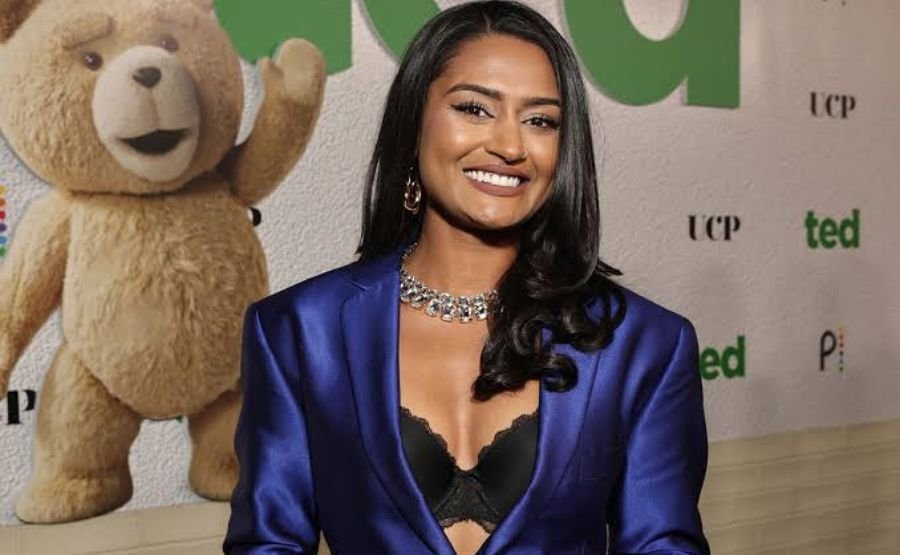
Here’s the thing about Marissa Shankar — she showed up in a Peacock show that a lot of people were watching, played a character who made a real impression, and then folks started asking: wait, who is that?
That’s actually a pretty good place to be in Hollywood. You don’t always need a red carpet moment or a viral tweet. Sometimes you just need one role in the right show, at the right time, in front of the right audience. For Marissa, that role was Sarah in the Ted prequel series — Seth MacFarlane’s foul-mouthed teddy bear franchise reimagined as a coming-of-age story set in the 1990s. It’s on Peacock. It got people talking. And her performance got people wondering what she was going to do next.
What makes her interesting isn’t just that she can act. It’s that she came at the whole thing sideways — through a camera lens, not an acting conservatory. Her path to the screen was genuinely unconventional, and honestly, it makes her story a lot more compelling than your standard “moved to LA and got headshots” narrative.
See also “Billie Early: The Woman Who Made Cameron Diaz Possible“
Growing Up in Los Angeles
Marissa grew up in Los Angeles, which is one of those facts that sounds unremarkable until you think about what it actually means. LA is a city where the entertainment industry isn’t some faraway dream — it’s just… the backdrop. It’s billboards and production trucks and the occasional film crew setting up on your street. For a kid who was clearly wired to tell stories, that environment matters.
She hasn’t shared a lot publicly about her family or her early home life, which is totally her right, and honestly refreshing in a culture where everyone over-shares everything. What we do know is that something in her childhood lit the creative fuse. Whether it was a movie she watched too many times, a teacher who pushed her, or just that restless need some people have to make things — she ended up chasing storytelling from a pretty young age.
She wasn’t one of those kids who grew up doing community theater and school plays, angling for the spotlight. Her instinct ran in a different direction entirely. She wanted to understand how stories were built, not just how to perform them. That’s a different kind of kid. And it shaped everything that came after.
School Years and the Moment Everything Clicked
Marissa ended up studying Cinematic Arts at Cal State Monterey Bay. That’s not the flashiest film school name you’ll hear — it’s not USC or NYU — but it gave her something real: a genuine foundation in visual storytelling. The kind where you’re thinking about framing, pacing, narrative structure, how a scene breathes. The nuts and bolts of it.
But before that, before college even, there was a summer that probably changed her life more than she realized at the time. She attended a filmmaking program at the New York Film Academy. And something about being there — actually handling the craft, being around other people who cared about it as much as she did — confirmed what she’d probably suspected for a while. This wasn’t a passing interest. This was the thing.
She came out of her formal education not as an actor, but as a filmmaker. She worked on shorts, features, commercials, music videos — getting her hands into all of it, learning how each format operates differently, what it demands from everyone involved. That’s the kind of training that turns into something later, even when you can’t see it yet.
The Career Starts — From Behind the Camera
For a stretch of time, Marissa’s name would have appeared in credits you’d only notice if you were paying close attention. She was working behind the monitor, as she puts it — the production side, the directing side, the making-it-happen side. That’s hard, unglamorous, often thankless work, and she was doing it because she loved the craft, not because she was waiting for her big break.
She also wrote and directed her own short film called Suraj. That project matters because it’s the kind of thing you make when nobody’s asking you to make it — when you have something you want to say and you go find a way to say it. It shows a creative confidence that isn’t learned in a classroom. You either have that drive or you don’t.
And then, in January 2020 — right before the world got very strange very fast — she did something that might seem small but turned out to be pivotal. She signed up for an acting class. Not because she suddenly wanted to be famous. She did it because she wanted to understand actors better. To direct them more effectively. To communicate in their language.
That’s such a filmmaker way to approach it. Pure practicality. “I want to be better at my job, so let me understand this other job from the inside.”
What she didn’t expect was how good she’d be at it.
Six Months Later, Everything Changed
Six months after that first acting class — six months — she booked her first feature film. Just sit with that for a second. Most people spend years in acting classes, send out thousands of self-tapes, and still don’t get a feature credit within their first year. She did it in half a year.
Three months after that first booking, she booked a second feature. So within nine months of taking her very first acting class, she had two feature films on her résumé. That’s not luck. That’s a combination of real talent, a filmmaker’s instinct for what a scene needs, and probably a certain lack of ego that comes from not having spent years being told “you’re the star.” She just showed up and did the work.
Those two features came out in 2022. She was building something, even if the wider world hadn’t caught on yet.

Getting Signed and Landing Ted
The momentum was real. Within two years of that January 2020 acting class, Marissa had signed with Luber Roklin Entertainment — a legitimate, respected talent management company. That’s not nothing. Getting signed isn’t automatic. Someone saw what she was doing and decided to bet on her career.
And then came Ted.
The Ted prequel series on Peacock is built around Seth MacFarlane’s universe — the talking, crude, loveable teddy bear, but this time as a story set in the ’90s following a teenager navigating high school with his unusual best friend. It’s produced by MacFarlane’s own Fuzzy Door Productions. It had a built-in audience from the films, and it found a new one.
Marissa plays Sarah — Blaire’s friend who ends up stranded at the Bennett house after a flight cancellation and proceeds to leave an impression on basically everyone there. It’s a role that requires comedic timing and genuine warmth, and she brought both. Audiences noticed. The character felt real in a way that supporting characters don’t always manage to feel.
She also appeared in Scare Tactics, the rebooted version produced by Jordan Peele’s Monkeypaw Productions. Two shows, two respected production houses. The trajectory is hard to argue with.
Private Life: What She’s Kept to Herself
Here’s where the biography gets honest about its limits. Marissa Shankar has been very intentional about keeping her personal life out of the public conversation. There’s no relationship gossip, no tabloid presence, no carefully managed Instagram reveal of a partner or a home or a life beyond the work. She’s chosen to let the work speak for itself.
That’s genuinely rare in 2024 and beyond. The pressure on young actors to perform their personal lives for an audience is intense, and resisting it takes a certain backbone. She seems to have that.
What comes through in the professional record is a person who is serious about craft, who reads the room in a scene, who has the discipline to go from behind the camera to in front of it and make the transition look almost effortless. Whatever her personal life looks like, it doesn’t appear to be interfering with the work — and the work keeps improving.
Hard Times: The Industry Doesn’t Make It Easy
Let’s be real about something: the timeline sounds clean in retrospect, but living it wasn’t. She started taking acting classes in January 2020. January 2020. Two months later, the entire world shut down. Production halted across the industry. Auditions moved to self-tapes in living rooms. The energy of a physical space — of a casting room, of a stage, of a crew — evaporated.
Starting a new career in the middle of a global pandemic is not a small thing. The fact that she booked work anyway, that she kept taping, kept refining, kept showing up — that says something about what she’s made of.
There’s also the simple reality of being an actor who isn’t immediately recognizable, navigating a town where connections and credits compound on each other. She wasn’t coming in with a famous parent, a pre-existing fan base, or a viral moment. She built it incrementally. Independent films first. Small roles. Self-directed projects. A management deal earned through consistent work. Then the bigger stage.
That grind is real, and it doesn’t get talked about enough when people see someone in a Peacock show and assume the path was easy.
Money and Where She Stands Financially
There’s no publicly verified net worth figure for Marissa Shankar, and honestly, inventing one would be doing her a disservice. She’s early in her career. She’s working with a legitimate management company on real productions. She’s booking work with producers like Seth MacFarlane and Jordan Peele’s teams — people whose projects don’t exactly pay scale and disappear.
The realistic picture: she’s not a household name yet, which means she’s probably not at the level of the massive paydays. But she’s working, she’s building credits, and she’s doing it with momentum. The industry rewards consistency. She has it.
What’s probably more valuable than any current number is where the trajectory points. Two features in her first year. A streaming role in a major Peacock series. A second appearance in a Jordan Peele-adjacent production. A management deal with a respected firm. That’s a résumé that builds into something.
Where She Is Right Now
As of 2026, Marissa Shankar has Ted Season 2 on her list of recent credits. She’s still acting, still directing, still managing her own creative output in the way someone does when they genuinely care about the work beyond just the exposure it brings.
She’s at that interesting moment in a career where she’s past the “nobody knows who she is” phase but hasn’t quite crossed into “everybody knows her name.” That middle stretch is actually where a lot of the most important decisions get made. The roles she picks from here, the projects she chooses to attach herself to, the creative risks she takes — they’ll shape the next chapter more than any one credit could.
If the previous five years are any indication, she’ll make smart choices.
Final Words
What’s genuinely interesting about Marissa Shankar — more than any single credit — is the intellectual honesty behind her pivot. She didn’t come to acting because she needed to be seen. She came to it because she wanted to understand it. That’s a filmmaker’s approach. A writer’s approach. It suggests someone who’s building toward something larger than just a list of roles — maybe a body of work where she controls the lens as often as she steps in front of it.
In a town full of people performing ambition, she seems to actually have a plan. And in Hollywood, a plan quietly executed almost always outlasts a splash loudly made.
FAQs
1. What is Marissa Shankar best known for?
Her role as Sarah in Peacock’s Ted, the Seth MacFarlane prequel series. That’s the credit that got her on most people’s radar.
2. When did she start acting?
Her first formal acting class was in January 2020. She’d worked in film before then, but on the production and directing side.
3. Where did she grow up?
Los Angeles. She’s an LA native through and through.
4. Where did she go to school?
She studied Cinematic Arts at Cal State Monterey Bay and attended a filmmaking program at the New York Film Academy.
5. Has she directed anything?
Yes — she wrote and directed the short film Suraj, among other projects. Directing and writing are both part of her creative identity.
6. Who represents her?
She’s signed with Luber Roklin Entertainment, a respected talent management company in Hollywood.
7. What other shows has she appeared in?
Scare Tactics (produced by Jordan Peele’s Monkeypaw Productions) and House on Haunted Hill: Nighthawk Manor, among others.
8. How fast did her acting career take off?
Unusually fast. Six months after her first acting class, she booked her first feature. Three months after that, a second.
9. Is she on social media?
She maintains a public presence, but she’s deliberately private about her personal life.
10. What is her net worth?
No verified figure has been published. She’s early-career but working with major production companies, so the trajectory is positive.
11. Is she in Ted Season 2?
Yes — her credits include Season 2 of the Peacock series.
12. What makes her different from other rising actors?
She came up through filmmaking first. She understands storytelling from the other side of the camera, which gives her a perspective most performers don’t have this early in a career.
Explore new ideas and rising trends with Trend Rise.


One Comment