
Phil Spector: The Genius Who Destroyed Everything He Touched
Quick Bio
| Detail | Info |
| Full Name | Harvey Phillip Spector |
| Born | December 26, 1939 — The Bronx, New York City, USA |
| Died | January 16, 2021 — Stockton, California (in prison, from COVID-19 complications; age 81) |
| Nationality | American |
| What He Did | Music entrepreneur, songwriter, record producer, and inventor of the Wall of Sound method |
| Biggest Accomplishments | Produced “Be My Baby,” “You’ve Lost That Lovin’ Feelin’,” “River Deep Mountain High,” “Da Doo Ron Ron,” and dozens more top-ten records; produced The Beatles’ Let It Be; produced George Harrison’s All Things Must Pass and John Lennon’s Imagine; inducted into the Rock and Roll Hall of Fame in 1989; Songwriters Hall of Fame in 1997 |
| Other Key Facts | Convicted of second-degree murder of actress Lana Clarkson in 2009; sentenced to 19 years to life; died in prison; described his Wall of Sound as “a Wagnerian approach to rock and roll — little symphonies for the kids”; his ex-wife Ronnie Spector called him “a brilliant producer but a lousy husband” |
Why His Story Never Gets Old
Phil Spector’s name keeps coming up because his story is genuinely two stories, and they’re both extraordinary, and they’re completely incompatible with each other. One story is about a teenage kid from the Bronx who taught himself guitar after his father’s suicide, moved to Los Angeles, and before he was old enough to legally drink in a bar had transformed how recorded music sounds. The other story is about a man who kept guns in his recording sessions, terrorized women for decades, and ended his life in a prison cell after being convicted of murder.
You can’t reconcile those stories. You’re not supposed to. The genius is real and the monster is real and both of them lived in the same five-foot-five body wearing an increasingly elaborate series of wigs.
What makes him particularly fascinating — and particularly difficult to process — is that the darkness and the genius weren’t separate. They came from the same place. The obsessive control that made the Wall of Sound work was the same obsessive control that destroyed his marriages, endangered his collaborators, and ultimately killed Lana Clarkson.
He was not a good person who did terrible things. And he was not a bad person who happened to make great art. He was a complicated human catastrophe who left some of the most beautiful music ever recorded and a trail of genuine human damage that has to be reckoned with.
See also “Kirsten Barlow: The Woman Who Chose Her Own Kind of Life“
The Bronx, Death, and the Beginning
Harvey Phillip Spector was born on December 26, 1939, in the Bronx, New York — a Jewish kid born the day after Christmas in a borough that was already producing more than its share of people who would reshape American culture. His father, Ben Spector, killed himself when Harvey was nine years old. The suicide left a wound that his family carried for years and that Harvey carried for decades in ways he never fully articulated publicly.
The inscription on Ben Spector’s gravestone read: “To know him was to love him.” His daughter Shirley had it put there. That phrase — in its shortened form, “to know him was to love him” — became the title of Phil Spector’s first major hit record, by his high school group The Teddy Bears, in 1958.
He was seventeen years old. He’d taught himself guitar in the years after his father’s death, used music the way a lot of young people use it — as the place where the feelings that don’t have words can go. And then he turned his grief into a pop song. That’s genuinely something.

Los Angeles and the Speed of a Prodigy
The family moved to Los Angeles when Phil was a teenager. He enrolled at Fairfax High School — the same school that would later produce a remarkable number of musicians — and became obsessed with the possibilities of recorded sound. He soaked up the emerging West Coast rock and roll scene, started playing in groups, started writing songs.
The Teddy Bears’ “To Know Him Is to Love Him” went to number one in 1958. Spector was seventeen. The song featured his high school friends and his own acoustic guitar, and it hit the top of the charts with a sweetness that completely belied what was going on inside its writer.
By the time he was twenty-one, he had studied production at the knee of Leiber and Stoller in New York — the songwriting and producing duo behind much of the best early rock and roll — and had come back to Los Angeles with a head full of ideas about what recorded music could sound like if you pushed it further than anyone had pushed it.
He was a millionaire at twenty-one.
Gold Star Studios and the Wall of Sound
The Wall of Sound wasn’t a single invention — it was a philosophy built over sessions at Gold Star Studios in Hollywood, working with engineer Larry Levine, arranger Jack Nitzsche, and a revolving group of session musicians that would later be referred to as the Wrecking Crew.
Here’s what it actually involved: instead of recording with a small, clean band and letting individual instruments have their space, Spector crammed rooms full of musicians. Multiple pianos playing the same part. Multiple guitarists. Multiple drummers. Strings. Horns. Percussion of every kind. Everything reverberating off the same walls at the same time, captured in mono on tape, mixed into a dense wall of orchestral sound that felt physically overwhelming when it came through a speaker.
He called it “a Wagnerian approach to rock and roll.” Little symphonies for the kids. The ambition was real — he genuinely believed that pop music deserved the same sonic ambition as classical composition, that a three-minute single could have the density and weight of an opera overture.
The results were extraordinary. The Crystals’ “Da Doo Ron Ron” and “Then He Kissed Me.” “Be My Baby” and “Baby, I Love You” with The Ronettes. “You’ve Lost That Lovin’ Feelin’” with the Righteous Brothers — which became the most-played song in radio history at one point, with its massive, slow-building, oceanic sound that felt like it was recorded inside the concept of heartbreak itself. “River Deep Mountain High” with Ike and Tina Turner — a production so ambitious that its commercial failure in America sent Spector into something approaching retirement.
He produced some of the most recognizable songs in popular music. Full stop. That’s not exaggeration. If you’ve heard music from the early 1960s, you’ve heard Phil Spector’s fingerprints on it.
The Beatles and the Final Summit
By the late 1960s, the pop landscape had shifted. Spector’s moment as the dominant commercial producer had passed — not because his abilities had diminished, but because the culture had moved into a different relationship with studio production. The Wall of Sound, once revolutionary, had become a known quantity.
John Lennon brought him back for the abandoned Get Back tapes — the sessions that became Let It Be. Spector added strings and orchestrations to the raw recordings in ways that Paul McCartney hated and has never forgiven, calling the production saccharine and the whole approach a betrayal of what the Beatles were doing.
Then came George Harrison’s All Things Must Pass in 1970 — a collaboration that worked magnificently. The wall of guitars and percussion and voices on “My Sweet Lord” and “What Is Life” is Spector working at full power. And then Lennon’s Imagine in 1971, where the production served the songs rather than overwhelming them, and the results were among the most beautiful pop records ever made.
He worked with Leonard Cohen, with the Ramones — an unlikely collaboration that produced End of the Century in 1980, which the band reportedly had extremely mixed feelings about given Spector’s controlling behavior in the studio (including, by multiple accounts, pulling a gun during sessions).
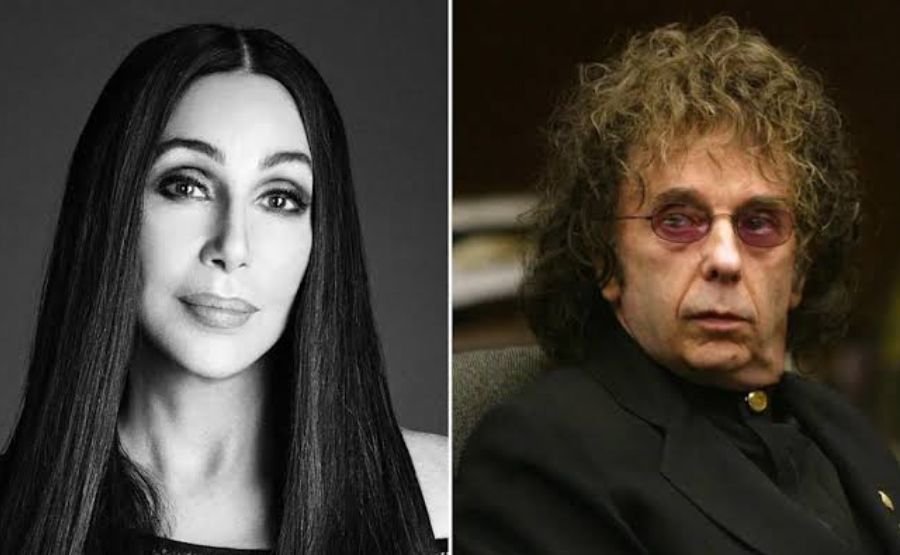
Ronnie and the Marriage That Was a Hostage Situation
He had met Ronnie Bennett — the lead singer of The Ronettes, the voice behind “Be My Baby” — during the early 1960s sessions that produced some of the Wall of Sound’s greatest recordings. They married in 1968.
Ronnie Spector’s subsequent accounts of their marriage are harrowing. She said he kept her a prisoner in his mansion — literally would not let her leave the house without his permission, without bodyguards who reported back to him. She said he threatened to kill her if she ever left. She said there was a glass case in the house containing her coffin — so that he could keep her with him even in death. She described a man whose love for her had curdled into something that looked like possession, control, ownership.
She managed to leave him in 1972, after several years of what she later described as psychological imprisonment. She left barefoot. The divorce was finalized in 1974. For years afterward, she said, he prevented her from recording — the terms of their divorce agreement gave him control over her career.
She eventually rebuilt. She went on to have a genuinely successful solo career. She died in 2022, a year after Spector.
Her assessment of him, issued in a statement after his death: “He was a brilliant producer, but a lousy husband.”
The Guns, the Decline, and the Night Everything Ended
The guns were always there. Multiple people who worked with Spector across different decades have described him producing or brandishing firearms in the studio — using them as a form of intimidation, as a way of asserting control over people who were technically in a position to tell him no. Leonard Cohen said he had a gun pointed at him while recording. Members of the Ramones reported the same. This was not a secret. It was well-documented behavior that the music industry absorbed without meaningful consequence for decades.
He retreated further into his Pyrenees Castle mansion in Alhambra, California — an enormous property where he lived essentially alone, surrounded by security, increasingly isolated. The wigs became more elaborate. The behavior became more erratic.
On February 3, 2003, he brought Lana Clarkson — an actress he had just met that evening while she was working as a hostess at the House of Blues on the Sunset Strip — back to his mansion. At approximately 5 a.m., she was found dead. She had been shot through the mouth. His chauffeur testified that Spector emerged from the mansion and said: “I think I killed somebody.”
Spector’s defense claimed she had shot herself. The first trial in 2007 ended in a hung jury — ten jurors voted to convict, two did not. The second trial in 2008 ended differently. In March 2009, he was convicted of second-degree murder and sentenced to 19 years to life in state prison.
He was sixty-nine years old.
Prison and Death
Phil Spector spent the last twelve years of his life in the California correctional system. He aged in prison. The elaborate wigs were gone. The mansion was gone. The control was gone.
On January 16, 2021, he died at a prison hospital near Stockton, California. The cause was complications from COVID-19. He was eighty-one years old. He died in custody, serving his sentence.
The music outlived him by decades already. It will outlive him by decades more.
The Financial Picture
At his peak, Phil Spector was extraordinarily wealthy — a self-made millionaire before he was old enough to vote, the owner of Philles Records and a substantial catalog of some of the most valuable music ever recorded. He owned a mansion. He accumulated significant assets across his career.
By the time the murder trials were over, the legal costs had been enormous. His estate after death and the value of any remaining catalog holdings were not publicly detailed. His net worth at death is generally estimated between $5 million and $20 million — a wide range that reflects genuine uncertainty about what remained after decades of legal proceedings, lifestyle costs, and the value of his music catalog.
Final Words
Phil Spector is one of the clearest examples of the specific kind of problem that the entertainment industry has never adequately solved: what do you do when someone whose contributions to art are genuinely extraordinary is also genuinely dangerous?
The Wall of Sound changed music. The records he made are still being listened to, still being sampled, still being taught in music production courses, still moving people who weren’t alive when they were recorded. That’s real.
He also terrorized women for decades. He killed a woman. He held a loaded gun on collaborators in recording studios and treated it as a reasonable method of professional negotiation. The industry around him knew. And it largely accommodated because the genius was convenient.
There’s nothing comfortable about that reckoning. But it’s the only honest way to look at Phil Spector: as evidence that genius and cruelty can live in the same person, and that accommodating the genius while ignoring the cruelty has real victims — real women whose lives were damaged or ended.
Ronnie Spector said it best: a brilliant producer. A lousy husband. A man who could not, in the end, live and function outside of the recording studio. And whose darkness eventually consumed everything else.
FAQs
1. Who was Phil Spector?
Harvey Phillip Spector (December 26, 1939 — January 16, 2021) was an American record producer and songwriter who created the Wall of Sound production technique and produced some of the most commercially successful pop music of the 1960s. In 2009, he was found guilty of second-degree murder; he passed away in prison in 2021.
2. What was the Wall of Sound?
It was a recording philosophy Spector developed at Gold Star Studios in Hollywood — layering dozens of instruments playing the same parts, surrounded by heavy reverb, mixed into a dense, orchestral mono recording. He called it “a Wagnerian approach to rock and roll.”
3. What are his most famous productions?
“Be My Baby” and “Baby I Love You” with The Ronettes; “You’ve Lost That Lovin’ Feelin’” and “Unchained Melody” with The Righteous Brothers; “Da Doo Ron Ron” with The Crystals; “River Deep Mountain High” with Ike and Tina Turner; “My Sweet Lord” on George Harrison’s All Things Must Pass; John Lennon’s Imagine album.
4. What was his connection to The Beatles?
He was hired to salvage the abandoned Get Back recordings, which became the Let It Be album. He added orchestrations that Paul McCartney objected to strongly and has never forgiven. He also produced George Harrison’s All Things Must Pass (1970), widely considered one of the greatest albums ever made.
5. Who was Lana Clarkson and what happened?
Lana Clarkson was an American actress working as a hostess at the House of Blues in Los Angeles. Spector took her to his Alhambra estate on the evening of February 2-3, 2003. She was found dead from a gunshot wound to the mouth. His chauffeur testified Spector said “I think I killed somebody” when he emerged from the house.
6. What was the penalty and when was he found guilty?
A second trial in 2008–2009 led to a conviction for second-degree murder after the first trial in 2007 ended in a hung jury. He was sentenced to 19 years to life in state prison.
7. What happened with Ronnie Spector?
He married Ronette lead singer Ronnie Bennett in 1968. She has described the marriage as a form of imprisonment — he allegedly would not let her leave the mansion, threatened to kill her if she left, and kept a coffin with her likeness in a display case. She escaped barefoot in 1972. Their divorce was finalized in 1974. She died in January 2022.
8. Did he actually threaten people with guns in the studio?
Yes. Multiple credible accounts from multiple artists — including Leonard Cohen and members of the Ramones — describe Spector brandishing or pointing firearms during recording sessions. This behavior was widely known and went largely unaddressed by the industry for decades.
9. Was he in the Rock and Roll Hall of Fame?
Yes — inducted in 1989 as a nonperformer. He was also inducted into the Songwriters Hall of Fame in 1997.
10. How did he die?
He died on January 16, 2021, at a prison hospital near Stockton, California, from complications related to COVID-19. He was 81 years old and still serving his murder sentence.
11. What was his first big hit?
“To Know Him Is to Love Him,” recorded with his high school group The Teddy Bears in 1958 when Spector was 17. The title was taken from the inscription on his father’s gravestone. It went to number one.
12. What is his legacy?
Musically, enormous — his production innovations shaped decades of recorded music and influenced virtually every major producer who followed. Personally and ethically, his legacy is inseparable from his violence against women, his conviction for murder, and an industry that enabled his behavior for far too long.
Explore new ideas and rising trends with Trend Rise.




One Comment