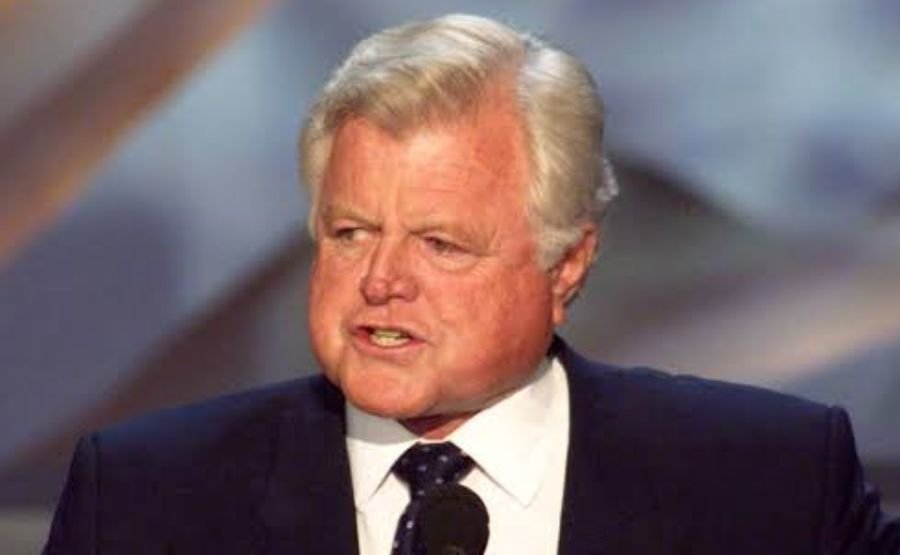
Ted Kennedy: The Lion Who Outlasted the Camelot Myth
Quick Bio
| Detail | Info |
| Full Name | Edward Moore Kennedy |
| Born | February 22, 1932, Boston, Massachusetts |
| Died | August 25, 2009, Hyannis Port, Massachusetts (age 77) |
| Nationality | American |
| What He Did | U.S. Senator from Massachusetts for 47 years; progressive champion; called “The Lion of the Senate” |
| Biggest Accomplishments | Helped pass 300+ bills; shaped the ADA, COBRA, S-CHIP, Ryan White AIDS Care Act, Civil Rights Act of 1991, Mental Health Parity Act, and more |
| Other Key Facts | Youngest of nine Kennedy children; survived his three brothers; his 1980 concession speech at the Democratic Convention is considered one of the finest in American political history |
Why People Still Can’t Stop Talking About Him
Here’s the thing about Ted Kennedy: most people remember the scandal before they remember the senator. And that is, in a sense, the story’s tragedy. Because when you actually sit down and look at what the guy accomplished — the laws he pushed through, the lives he quietly touched — you realize you’re looking at one of the most productive legislators in American history.
He was simultaneously the most famous failure in U.S. presidential politics and the most consequential Senate career you could make a case for. That tension never really resolved itself. To be honest, that’s one of the reasons he continues to be intriguing. He wasn’t a saint. He wasn’t a villain. He was this enormous, complex person who, for almost fifty years, came up to work every day and refused to give up.
See also “Muammar Gaddafi: The Colonel Who Turned a Country Into His Personal Experiment“
Born Into a Dynasty With No Room at the Top
Okay, imagine being born into the Kennedy family — not at the front of the line, but at the very back of it. Ted came into the world on February 22, 1932, the ninth child of Joe and Rose Kennedy, a Catholic dynasty so competitive it was practically its own contact sport. His brother Joe Jr. was supposed to be president. John was the backup. Bobby was the conscience. All of the leading parts had already been cast by the time Ted got there.
His dad, Joseph Kennedy Sr., was one of the most forceful personalities in 20th-century America — a man who had made a fortune, served as FDR’s ambassador to the UK, and basically treated life like a tournament that his children were obligated to win. The family moved constantly: New York, Boston, London, back again. Ted bounced through something like a dozen schools before he was a teenager. It wasn’t exactly a warm, steady childhood. It was more akin to growing up in an ambition machine.
And the losses started young. His sister Rosemary had a catastrophic lobotomy forced on her that left her institutionalized for life. His brother Joe Jr. died in a World War II plane explosion in 1944. His sister Kathleen died in a separate plane crash not long after. Ted was still just a kid absorbing all of it, carrying the grief alongside the family’s relentless push to keep performing, keep succeeding, keep moving forward.
School Years: Bumps, Comebacks, and a Very Useful Charm
Ted was no academic star. He had the Kennedy work ethic but not always the discipline to apply it. The story that defined his Harvard years — and frankly shadowed the beginning of his public life — was getting caught having a friend take a Spanish exam for him. He got booted. He went into the Army for a couple of years, came back, and finished his degree in 1956. Not exactly the smoothest start.
What he did have was an almost supernatural ability to connect with people on a personal level. He was warm, funny, physically imposing (the man was built like a football player — the Green Bay Packers actually recruited him after college), and genuinely seemed to enjoy other human beings. His father spotted this early and recognized that of all his sons, Teddy was actually the most naturally gifted politician. It’s one of the great ironies of the Kennedy story.
He went to the University of Virginia for law school, graduated in 1959, and quietly started managing his brother John’s 1958 Senate re-election campaign in Massachusetts. He was in his mid-twenties, totally unknown, running ground-level operations — and he was excellent at it.
How the Career Started: A Seat That Was Basically Handed Down
When JFK won the presidency in 1960 and vacated his Massachusetts Senate seat, there was a temporary placeholder put in. The plan was always for Ted to run when he turned 30 — the constitutional minimum age for a senator. He did exactly that in 1962, won the special election, and walked into the same chamber his brother had just left.
Washington didn’t exactly welcome him with open arms. Plenty of people thought he was just a pretty face riding on the family name — too young, too inexperienced, too dependent on a last name that had opened every door. And to be fair, those critics weren’t entirely wrong. He had enormous advantages he didn’t earn.
But he got to work. He was attentive to his constituents in a way that surprised people. He took the junior senator role seriously, studied the rules of the Senate, learned how legislation actually moved, and started building relationships across the aisle.
Then November 1963 happened, and everything changed.
Loss After Loss, and the Weight of a Name
When JFK was shot in Dallas, Ted was 31 years old. The family had just lost its first president. Its brightest star. And the name for it all now belonged to Ted.
He himself nearly died in 1964 when a small plane he was in crashed in Massachusetts during a storm. He broke several vertebrae, was in the hospital for six months, and dealt with back pain for the rest of his life. He recovered, returned to the Senate, kept going.
Then in June 1968, Bobby Kennedy — his closest brother, the one he was tightest with emotionally — was shot and killed after winning the California presidential primary. Ted gave one of the most grief-stricken eulogies anyone had ever heard. He became the last surviving brother in an instant. The family patriarch at age 36. Suddenly responsible, in a way nobody had planned for, for Bobby’s 11 children on top of his own family.
People genuinely expected him to run for president in 1972. He was the obvious choice. The only remaining Kennedy. The heir apparent.
Then came Chappaquiddick.
The Night That Never Went Away
July 18, 1969. A summer party on Chappaquiddick Island, a tiny place off the coast of Martha’s Vineyard. The guests included several women who had worked on Bobby’s presidential campaign — sharp, capable political operatives in their twenties.
Around 11:15 in the evening, Ted left the party to give one of those women, Mary Jo Kopechne, a 28-year-old former campaign staffer, a ride toward the ferry. He drove off a narrow wooden bridge called Dike Bridge. The car went into the dark water of Poucha Pond, upside down. Ted escaped. Mary Jo didn’t.
What happened next — that’s what destroyed him politically and haunted him personally forever after. It wasn’t until the following morning that he called the police. More than ten hours passed while Mary Jo Kopechne’s body was still in the water. Divers found it before Kennedy reported anything to authorities.
He later said that after repeatedly diving back into the ocean in an attempt to locate her, he strolled back to the party, persuaded two companions to try as well, and ultimately made his way back to his hotel — apparently in shock. He was found guilty of fleeing an accident scene. His license was suspended. He gave a nationally televised address that felt rehearsed and incomplete to millions of viewers.
What actually transpired? Was he intoxicated? Was there more to the relationship? Why the silence? — never stopped. Not in 1972, when he chose not to run for president. Not in 1976. Not ever. Even decades later, whenever his name came up, Chappaquiddick came with it.
He called his own behavior inexcusable. Said the memory of that night followed him every day of his life. That sounds like truth.
Finding His Footing: The Senator Who Outlasted the Scandal
He didn’t run in ‘72 or ‘76. He rebuilt. He buried himself in Senate work, sponsored legislation, built relationships. He was reelected in 1970 despite everything, then again in ‘76, then again and again and again.
By 1980, he finally did it. He challenged incumbent president Jimmy Carter for the Democratic nomination. Carter was politically wounded — inflation was brutal, the Iran hostage crisis was dragging on — and Kennedy seemed like the man the moment demanded. Except the campaign stumbled almost immediately. He gave a notoriously halting interview to Roger Mudd where he couldn’t articulate a clear reason why he wanted to be president. Chappaquiddick questions followed him everywhere, every day, like a shadow that could speak.
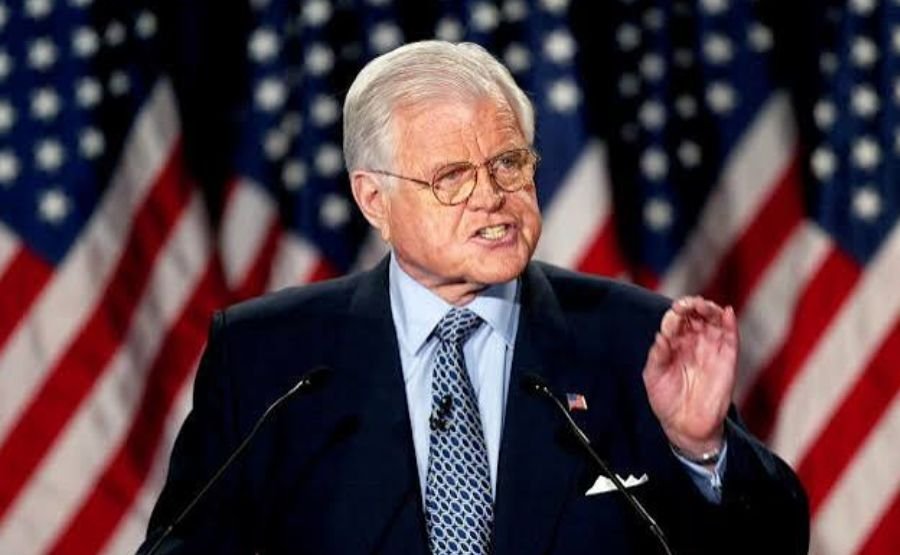
He lost. Carter won the nomination. But at Madison Square Garden, the night of the Democratic National Convention, Ted Kennedy gave the speech of his life. A concession speech that didn’t sound like defeat. It sounded like a manifesto. He closed with a line that became one of the most repeated in modern political history — about how the work goes on and the cause endures and the The dream will always endure, and hope is still alive. The crowd lost itself completely. Some people were weeping. Carter won the nomination and then lost the general to Ronald Reagan. Many Democrats blamed Kennedy’s lukewarm support in the final months.
But the speech? That speech lives forever.
Private Life: Two Marriages, One Transformation
Ted married Joan Bennett in 1958. They had three children — Kara, Ted Jr., and Patrick — but the marriage was troubled from early on. Ted’s drinking and infidelity became worse over the years, not better. Joan struggled with alcoholism herself. They divorced in 1982 after a long separation.
Through the 1980s, Ted’s personal life was a mess. The tabloids were not kind. His behavior at times was genuinely embarrassing. He was not, during this stretch, the version of himself that admirers like to remember.
That changed when he met Victoria Reggie at a dinner party in 1991. She was a Louisiana-born lawyer, sharp and steady, the daughter of a man who had worked Kennedy campaigns going back to JFK’s time. They married in 1992. Almost everyone who knew Ted said the same thing afterward: Vicki changed him. He stopped drinking heavily. He settled down. He became, by most accounts, a genuinely happy person for the first time. The chaos that had defined his private life for thirty years just… quieted.
They were together 17 years. She was with him at the very end.
The Late Greatness: Laws That Touched Millions
Here’s the number that actually matters: Ted Kennedy’s Senate staff helped write over 300 bills that became law. Not symbolic gestures — actual laws that changed actual lives.
He was behind the Americans with Disabilities Act, which opened employment and public access to millions of people with physical and cognitive disabilities. He helped create COBRA, which let workers keep their health insurance between jobs instead of going uninsured in the gaps. He was central to S-CHIP, the children’s health insurance program. The Ryan White AIDS Care Act. The Mental Health Parity Act. The 2008 version of that bill, which he passed with Republican senator Pete Domenici after a decade of trying, was a particularly meaningful win — it required insurers to cover mental illness the same way they covered physical illness.
His partnership with Republican Orrin Hatch became something of a political legend. These two men disagreed on almost everything, but they found common ground on children’s health, AIDS funding, and disability rights. Kennedy had a gift — and it was a genuine gift, not a calculated tactic — for separating a person’s ideology from the legislation they might actually support if approached right.
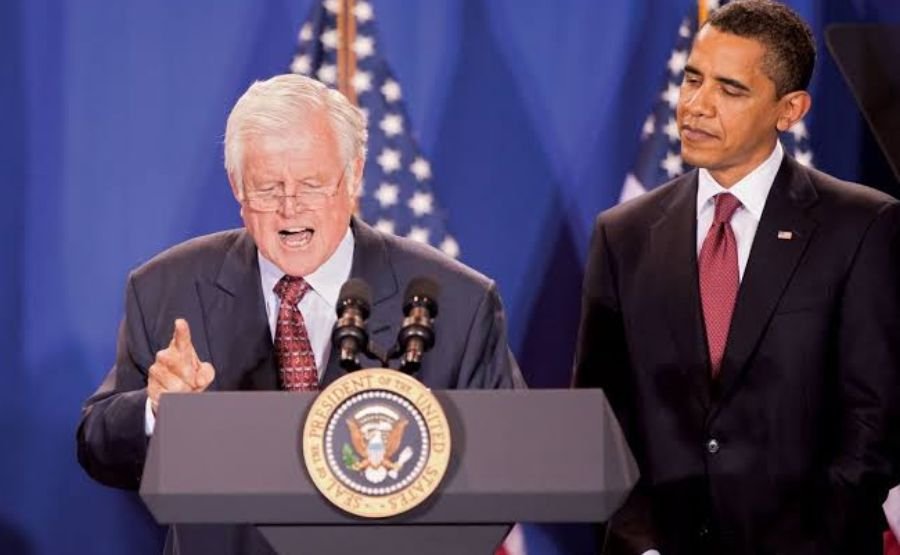
Barack Obama called him the greatest senator of his time. That’s not nostalgia. That’s a body count of legislation that touched nearly every American household in some form.
The Final Chapter
In May 2008, Ted Kennedy collapsed at home and was rushed to the hospital. The diagnosis was glioblastoma — an aggressive brain cancer that doesn’t leave much room for optimism. He was 76 years old.
What he did next tells you everything. He had surgery. He kept working. In July 2008, just weeks after the operation, he walked back onto the Senate floor to cast a tie-breaking vote on a Medicare bill. The place went quiet, then erupted. In August of that year, he appeared at the Democratic National Convention in Denver to speak on behalf of Barack Obama’s candidacy. He was visibly frail, but he brought the house down.
He died at his home in Hyannis Port on August 25, 2009. He was 77.
His memoir, True Compass, was published posthumously that September. Two weeks before he died, President Obama awarded him the Presidential Medal of Freedom. Britain awarded him an honorary knighthood. He was buried at Arlington National Cemetery, a few hundred yards from both of his brothers.
Money: What the Kennedy Fortune Looked Like
Ted was not personally wealthy in the way that comes from building a business from scratch. He came from wealth — the Kennedy family fortune was enormous, built by his father through real estate, film production, and financial markets. Ted had access to trusts, inherited assets, and the kind of financial cushion that insulates certain families from ordinary risk entirely.
At the time of his death, estimates put his personal worth somewhere in the range of $100 million, drawing from family trusts, investments, Senate salary accumulated over decades, and royalties from his writing. That’s real money, but it’s also worth noting that Ted Kennedy never personally enriched himself through his Senate position. He lived well, but he wasn’t flashy about it.
Where He Stands Today
Ted Kennedy died 17 years ago, and his influence on American legislation is still everywhere — in the law, in policy debates, in the fights still being waged over health care and disability rights and immigration. His absence was felt acutely during the passage of the Affordable Care Act in 2010; he had spent the last months of his life pushing for it and didn’t live to see it signed.
His family carries the name forward with mixed success. His son Patrick served in Congress. Others have stayed in public life in various capacities. The Kennedy legacy in American politics is both massive and complicated — a dynasty that produced genuine public servants and genuine tragedies in roughly equal measure.
Ted is remembered simultaneously as the best argument for what the Senate can accomplish and as a cautionary tale about what happens when personal behavior goes catastrophically wrong at the worst possible moment. Both things are true. They coexist. That’s the whole story.
Final Words
What makes Ted Kennedy different from most politicians isn’t the name or the tragedies — though both are staggering. It’s the gap between what he could have been and what he actually became. He had every reason to coast. He had the name, the seat, the family fortune behind him. He could have been a figurehead for forty years and nobody would have been surprised.
Instead, he showed up. He learned the rules of the Senate better than almost anyone else who ever served in it. He built friendships with people who disagreed with him on everything. He kept getting back up after genuinely catastrophic personal failures. And he left behind a body of legislative work that made the country meaningfully more fair, more accessible, and more humane for people who otherwise had almost no voice in that building.
The dream, as he put it, never died. That’s his legacy — not a marble monument to a dynasty, but actual laws in actual books that actual people rely on every single day.
FAQs
1. What was Ted Kennedy’s nickname?
“The Lion of the Senate” — a name that stuck because of his influence, his booming voice, and his sheer staying power in the chamber. He also went by “Teddy” to family and close friends.
2. Why didn’t Ted Kennedy ever become president?
Chappaquiddick was the main barrier. The 1969 accident — and especially his failure to report it promptly — convinced most political analysts that he couldn’t survive the scrutiny of a presidential campaign. He tried in 1980 against Jimmy Carter but lost the nomination. His campaign stumbled early and the Chappaquiddick questions followed him wherever he went.
3. What exactly happened at Chappaquiddick?
Following a party on Chappaquiddick Island in July 1969, Kennedy drove off a small bridge. Mary Jo Kopechne, one of his passengers, perished in the flooded vehicle. Kennedy escaped but didn’t contact police until the following morning — over ten hours later. He was found guilty of abandoning the accident site. He maintained he tried to rescue her and was disoriented by the crash, but many people never accepted that explanation.
4. How long did Ted Kennedy serve in the Senate?
He was first elected in November 1962 and died in office in August 2009 — just under 47 years, making him one of the longest-serving senators in U.S. history.
5. What was his most important piece of legislation?
That’s genuinely hard to answer with just one bill. Most historians point to either the Americans with Disabilities Act or S-CHIP (the children’s health insurance program). He himself called universal health care “the cause of my life,” and while he never achieved that goal, the Affordable Care Act was largely built on the foundation he spent decades laying.
6. How did Ted Kennedy die?
He died of glioblastoma — a malignant brain cancer — on August 25, 2009, at his home in Hyannis Port, Massachusetts. He was diagnosed in May 2008 and lived roughly 15 months after his diagnosis. He was 77 years old.
7. Was Ted Kennedy married twice?
Yes. First to Joan Bennett Kennedy from 1958 to 1982 (they had three children: Kara, Ted Jr., and Patrick). Then to Victoria “Vicki” Reggie in 1992, whom he remained married to until his death. By all accounts, his second marriage was far happier and more stable than his first.
8. What was the “Dream Shall Never Die” speech?
It was the concession address Kennedy gave at the 1980 Democratic National Convention in New York City after losing the presidential nomination to Jimmy Carter. Despite being a loss, it’s widely considered one of the most powerful speeches in modern American political history, closing with an extended riff about how causes and dreams outlast any individual campaign.
9. Did Kennedy have a good relationship with Republicans?
Surprisingly, yes — in a bipartisan era that’s hard to imagine now. His friendship and working partnership with Republican senator Orrin Hatch of Utah is the most famous example. They collaborated on children’s health insurance and AIDS funding legislation. He also worked productively with Pete Domenici on mental health parity. Kennedy was known for being able to separate the political from the personal.
10. Was Ted Kennedy wealthy?
Yes, though it came primarily from the family fortune built by his father. His estimated personal net worth at death was around $100 million, drawn from inherited trusts, investments, and decades of Senate salary and book income. He didn’t accumulate that wealth through his political career.
11. What happened to Ted Kennedy’s siblings?
All three of his older brothers died violently: Joe Jr. in a WWII plane explosion in 1944, JFK by assassination in 1963, and Bobby by assassination in 1968. His sister Rosemary was institutionalized after a failed lobotomy. In 1948, his sister Kathleen perished in an aircraft accident. Ted was the only son of four to survive past 50.
12. Where is Ted Kennedy buried?
At Arlington National Cemetery in Virginia, not far from the graves of his brothers John F. Kennedy and Robert F. Kennedy.
Explore new ideas and rising trends with Trend Rise.



One Comment