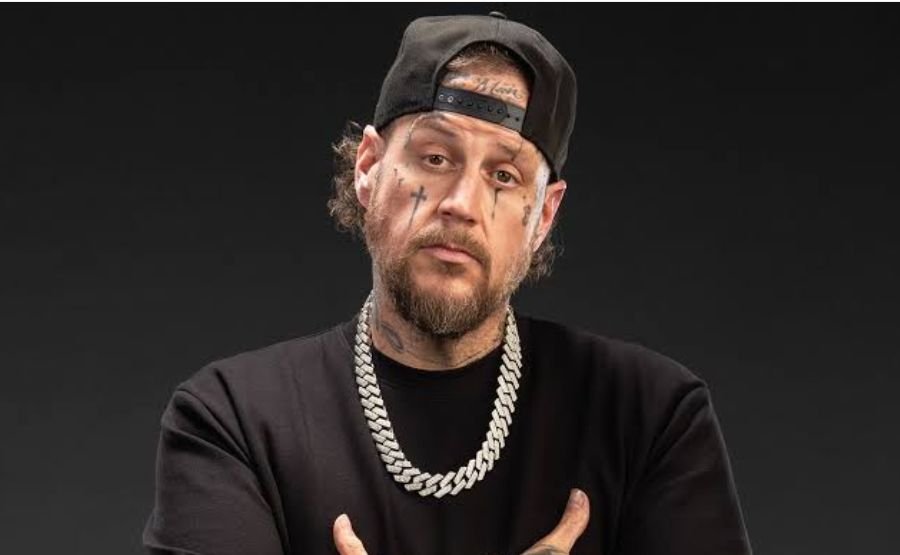
Who Is Jelly Roll? His Real Name, Age, Wife, Net Worth, and Inspiring Life Story
Quick Bio
| Detail | Info |
| Full Name | Jason Bradley DeFord |
| Born | December 4, 1984 — Nashville, Tennessee, USA |
| Nationality | American |
| What He Does | Singer, rapper, songwriter — crosses country, hip-hop, and rock in a way almost nobody else attempts, let alone pulls off |
| Biggest Accomplishments | First number-one on country radio with “Son of a Sinner” (January 2023); won New Artist of the Year at the 57th CMA Awards (November 2023); Whitsitt Chapel peaked at No. 3 on the Billboard 200; first-ever No. 1 on the Billboard Hot 100 with “Beautifully Broken” (2025); won Grammy for Best Contemporary Country Album for Beautifully Broken (2026); testified before the U.S. Senate about the fentanyl crisis; donated over $200,000 to build a music studio at the juvenile detention facility where he once served time |
| Other Key Facts | Spent nearly a decade in and out of prison, arrested approximately 40 times before age 25; mother gave him his nickname as a child because he loved doughnuts; testified before Congress as a former drug distributor turned advocate for addiction treatment |
Why This Man Has the Whole Country Paying Attention
You hear a Jelly Roll song and something lands in your chest before you’ve even registered what he’s saying. There’s a rawness to it that doesn’t feel performed. And when you find out who this person actually is — where he came from, what he did, what was done to him, how long he waited for anyone to care — the songs hit differently all over again.
He’s not supposed to be here. That’s genuinely true, not in the marketing-copy way that biography sites overuse, but in the concrete, documented sense. He spent most of his teens and his early twenties cycling in and out of Tennessee jails. He was arrested around forty times. He has a felony on his record that he can’t erase because of Tennessee law. He couldn’t legally vote in some elections. He found out he was a father on the day he was released from one of his stints. He sold mixtapes out of his car to people who bought them alongside whatever else they were buying from him.
And then one day he was standing in the Grammy winner’s circle, holding a trophy, crediting his wife with saving his life.
The gap between those two points is the whole story.
See also “Alexis Rodman Height: How Tall Is Dennis Rodman’s Daughter?“
Antioch, Tennessee: A Neighborhood That Doesn’t Get Romanticized
On December 4, 1984, Jason Bradley DeFord was born in Nashville, Tennessee. But Nashville the city and Antioch the neighborhood are not the same thing. Antioch sits on the city’s south side, far enough from the honky-tonks and the tourist-friendly version of Nashville that it might as well be a different place. It’s a community that has been poor in ways that are grinding rather than picturesque — not a place that gets celebrated in country music myths about hard-working towns.
His mother struggled with drug addiction and mental health problems for much of his childhood. He has said she was part of the reason music got under his skin so early — she had a genuine love for it, and she passed it on. She also gave him his nickname. He was a chubby kid who loved doughnuts, and she called him Jelly Roll. The name stuck. Decades later, when a journalist asked him whether he’d ever drop the nickname, he said he’d actually rather just be called Jelly at this point — drop the Roll entirely.
His father ran an illegal bookmaking operation, booking bets. He’s described growing up in a household where this kind of activity was just what you did, so normal it barely registered as unusual until he was old enough to understand what the law thought about it.
He has half-siblings — brothers Roger and Scott, a sister Shelby — though the family dynamics of his childhood were complicated enough that the specifics don’t map onto anything tidy.
The Kid Who Wrote His First Rap at Nine
Jason was writing raps before he was ten years old. By the eighth grade he was sharing mixtapes. This is a crucial detail that gets underemphasized: the music wasn’t something he discovered later in prison, though prison deepened it. It was native. It was there from the beginning, woven into the same years when everything else was going sideways.
He didn’t stay in school long enough for school to leave much of a mark. What he got instead was the street — and the specific education that comes from a neighborhood where the fastest available path to anything looks like the one his father modeled. He was fourteen years old when he was first arrested. Fourteen. Just a kid. The charge was drug-related. It would not be the last time.
In and Out, In and Out: A Decade of Arrests
Here’s the shape of those years. Between fourteen and roughly his mid-twenties, Jason DeFord was arrested approximately forty times. That figure seems unbelievable until you realize that this wasn’t a single major crime but rather an ongoing, low-level conflict with police enforcement over drug possession, drug sales, shoplifting, and eventually something that crossed into much more serious territory.
At sixteen, he was part of a robbery. A gun was involved. The target was marijuana. He was charged as an adult and faced up to twenty years in prison. The sentence he received was eight years, plus seven years of probation. He actually served around eighteen months — just over a year — before being released. However, the felony conviction was genuine and irreversible, and it has followed him ever since in ways that are sometimes still made public.f
He served time again at twenty-three, this time for drug dealing. And during one of those periods of incarceration — he’s described it as being transferred to the education unit — he earned his GED behind bars. That piece of paper, gotten in a prison classroom, is his highest formal academic credential. It’s also one of his proudest possessions.
Music was how he survived psychologically through all of it. He was writing in jail. He was mentally composing things he’d record when he got out. He has said that even his drug dealing was always, in his mind, a means to music — that the money he made went toward equipment, toward studio time, toward mixtapes. The music and the crime were running on parallel tracks, and for a long time it wasn’t clear which one would win.
The YouTube Freestyle That Started Everything
When he was released from prison — one of those releases that happened in 2008 — he found out on that same day that he was a father. His daughter, Bailee Ann, had been born while he was locked up. He met her when she was two years old. He’s said this completely rearranged his interior. It can be heard in the subsequent song.
He posted a video to YouTube called “10 Minute Freestyle.” It was raw, unpolished, exactly what the title said — ten minutes of him rapping about drug dealing, prison, life in Antioch. It caught the attention of Lil Wyte, a Nashville rapper who was starting his own label and saw something in the young man freestyling into a camera about things most rappers only pretend to have lived through.
Lil Wyte became one of the first artists to take him seriously as a collaborator. They worked together on a project with another rapper called BPZ, releasing under the name SNO.Strictly Business, Jello Roll’s 2011 album with Haystak, another Nashville veteran, peaked at number sixty-seven on the Billboard R&B/Hip-Hop Albums chart. It was a modest showing by any mainstream measure. But it was the first sign that someone outside Tennessee might be listening.
The Long Middle: Grinding While Nobody Was Watching
The decade between that first chart placement and his eventual mainstream breakthrough is worth understanding, because it’s where the real character of Jelly Roll’s career took shape. He kept going. Not because he was signed to a major label that believed in him, not because he had a hit song that was funding the next project. He kept going because stopping wasn’t something he was capable of doing.
He self-released albums constantly. He put things on YouTube. He sold his music directly to fans. He collaborated with other independent artists across the country rap and rock world — Yelawolf, Tech N9ne, among others — people who operated in the same DIY space and respected what he was building even when the numbers were small.
His 2020 album A Beautiful Disaster was a genuine step forward, cracking the Billboard 200 at number ninety-seven. But “Save Me” — the song that really started shifting things — was the one that broke containment. It found listeners who had never encountered Southern hip-hop before, people who responded to its combination of honest confession and musical accessibility. It was somewhere between a country ballad and a recovery anthem and a hip-hop track, and it didn’t apologize for being all three things simultaneously.
Las Vegas, August 2016: The Wedding That Wasn’t Planned
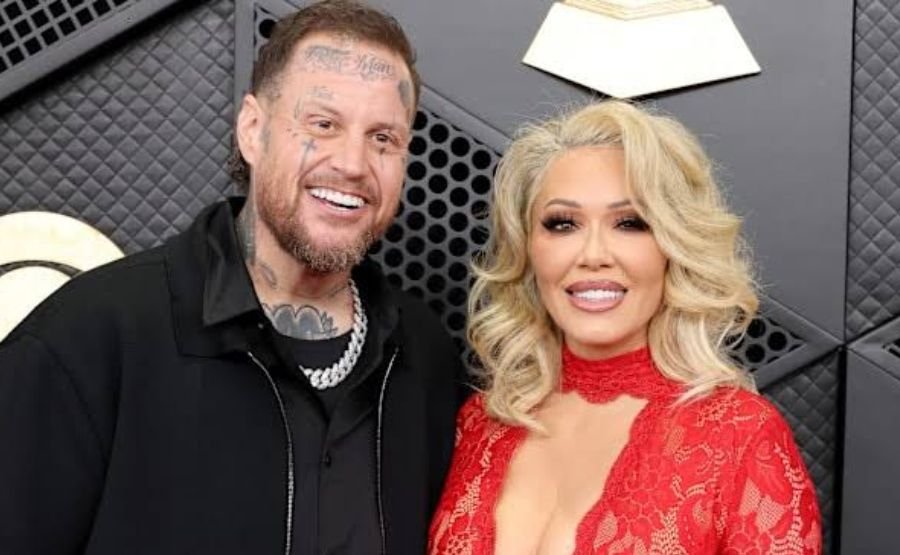
Somewhere around 2015, Jason DeFord met Alyssa, known publicly as Bunnie XO. She was living in Las Vegas. They met, hit it off, and about a year later attended a friend’s wedding in Vegas together. On that same night, August 2016, they decided to get married themselves. Same night, same city, spontaneous. That’s the story.
Bunnie XO is the host of a popular podcast called Dumb Blonde and has her own public platform and following. She’s outspoken, funny, direct, and has been by every visible measure the stabilizing human force in her husband’s life since the day they met. She helped him fight for and gain full custody of Bailee Ann. She’s stepmother to his son Noah from another relationship. She has been consistently, publicly, loudly in his corner through every stage of the career.
They renewed their vows in 2023, seven years after that Las Vegas night. It was a proper ceremony this time, the one they didn’t quite manage the first time.
In 2025, he admitted publicly to having been unfaithful during a period of their marriage — a brief separation in 2018. He called it the worst moment of his life. She chose to stay, work through it, and rebuild. Both of them have been remarkably open about all of it, which is either deeply unusual for public figures or exactly what you’d expect from two people who built their entire platform on radical honesty.
There were also reports in 2026 of a separation, though the details and permanence of that situation were still unclear in the available record at the time of writing.
The Breakthrough That Had Been Building for Twenty Years
In January 2023, “Son of a Sinner” became his first number-one on country radio. He had debuted at the Grand Ole Opry in November 2021 — invited by Craig Morgan, who surprised him with a gift that made Jelly Roll cry on stage, saying it was proof that God was real. He had his first number-one on rock radio in May 2022 with “Dead Man Walking.” Then country radio fell in January 2023.
In November 2023, he stood on the CMA Awards stage to accept New Artist of the Year. He was thirty-nine years old. Someone pointed out the mathematical absurdity of a thirty-nine-year-old winning New Artist of the Year. He embraced it completely, even made it part of the speech.
He testified before the U.S. Senate about the fentanyl crisis, speaking from personal experience as a former drug dealer and as someone who had lost people he loved to the epidemic. He didn’t read from prepared remarks. He spoke from memory and from his chest. It was one of the more unusual Senate appearances in recent memory.
In 2025 he achieved his first-ever number-one on the Hot 100. Beautifully Broken won Best Contemporary Country Album at the 2026 Grammys, where he made a moving speech crediting his wife with saving his life.
He has also embarked on a serious physical transformation, losing hundreds of pounds over several years and speaking publicly about its challenges — including setting his sights on running the New York City Marathon.
The Money Side of Things
Jelly Roll’s net worth is estimated at somewhere in the range of five to seven million dollars by most credible estimates, though some sources place it higher given the pace of his recent success. This is not old money or inherited wealth — it’s what gets built when you spend twenty years releasing music independently and then suddenly find yourself headlining major festivals and selling out arenas.
He donated over two hundred thousand dollars to build a music studio at the Davidson County Juvenile Detention Center in Nashville — the facility where he served time as a teenager. He went back to walk those halls on CBS Sunday Morning and barely held it together on camera.
Where He Stands Now
As of 2026, Jelly Roll is forty-one years old, a Grammy winner, a country music figure, a rap figure, a Senate witness, a weight-loss story, a father, a recovering addict, and one of the more complicated and human presences in American popular music.
His personal life has had real turbulence recently, as noted above. His professional trajectory continues upward by every metric. His headquarters are still in the Nashville region. Bailee Ann is a young adult now. He keeps working.
Final Words
What separates Jelly Roll from the crowd of musicians who mine their difficult pasts for material is that you never get the sense he’s using the pain — he’s just reporting it. He came up in a tradition of Southern hip-hop that valued blunt autobiography, and he carried that value into country music, a genre that loves stories of struggle but sometimes sanitizes them on the way to radio. He didn’t sanitize anything.
Twenty years of releasing music to small audiences, grinding without institutional support, doing it because he literally could not stop — and then the world finally looked up. What makes him different isn’t the redemption arc, though it’s real. It’s the fact that the music was always good, even when nobody was listening. The audience eventually caught up to something that had been there all along.
FAQs
1. Who is Jelly Roll?
He’s a singer, rapper, and songwriter from Antioch, Tennessee, born Jason Bradley DeFord on December 4, 1984. He makes music that blends country, hip-hop, and rock, and he’s one of the most compelling stories in American music right now — a former drug dealer and convicted felon who became a Grammy winner and country music star.
2. What is the origin of the term “Jelly Roll”?
His mother gave him the nickname as a kid because he was chubby and loved doughnuts. It stuck, became his stage name, and is now one of the more recognizable monikers in modern country music. He’s said recently he’d actually prefer people just call him “Jelly” — drop the Roll.
3. What did he go to prison for?
He was first arrested at fourteen for a drug-related offense. At sixteen, he was charged as an adult for aggravated robbery involving a gun and marijuana, sentenced to eight years, and served about eighteen months. At twenty-three, he was incarcerated again for drug dealing. All told, he was arrested approximately forty times before his mid-twenties.
4. Does his felony affect him today?
Yes. Because of Tennessee’s laws around violent offenders, his felony conviction stays on his record permanently. It has affected his ability to vote and created other legal complications. He’s spoken about this publicly and advocates for criminal justice reform as a result.
5. When did he find out he was a father?
He found out he had a daughter — Bailee Ann — on the day he was released from one of his prison stints. She had been born while he was incarcerated. He met her when she was two years old.
6. Who is Bunnie XO?
She’s his wife, born Alyssa DeFord, known publicly as Bunnie XO. She hosts the podcast Dumb Blonde and has her own substantial following. They met around 2015 and married spontaneously in Las Vegas in August 2016. They renewed their vows in 2023. She’s been credited by Jelly Roll himself with saving his life.
7. What is “Son of a Sinner”?
His debut country single, released in 2022. It became his first number-one on country radio in January 2023. Written by him, fellow Nashville artist Ernest, and David Ray Stevens. It’s the song that introduced him to the mainstream country audience.
8. What awards has he won?
New Artist of the Year at the 57th CMA Awards (2023), multiple CMT Music Awards, and the Grammy for Best Contemporary Country Album for Beautifully Broken (2026), among others. Additionally, he has received numerous Grammy nominations.
9. Did he really testify before the Senate?
Yes. He testified before a U.S. Senate committee about the fentanyl crisis, speaking as a former drug distributor and someone with firsthand knowledge of addiction’s impact on communities. His testimony was widely covered and he has continued to advocate for expanded addiction treatment funding.
10. What is his net worth?
Estimates vary, but most credible sources put him in the five to seven million dollar range, reflecting his independent grind over twenty years plus his recent major-label and festival success. He’s also a noted philanthropist, having donated over two hundred thousand dollars to build a music studio at the Nashville juvenile detention facility where he served time.
11. Is he still making music?
Very much so. Beautifully Broken won him a Grammy in 2026 and reached number one on the Hot 100. He continues touring, recording, and collaborating across genres.
12. Is Jelly Roll still with Bunnie XO?
Their relationship has had documented turbulence — he publicly admitted to infidelity during a 2018 separation, and 2026 brought reports of another separation. The full picture of their current status was still developing at the time this was written. What is clearly documented is a long, complicated, deeply honest partnership that both of them have discussed more publicly than almost any other couple in their tier of celebrity.
Explore new ideas and rising trends with Trend Rise.

One Comment