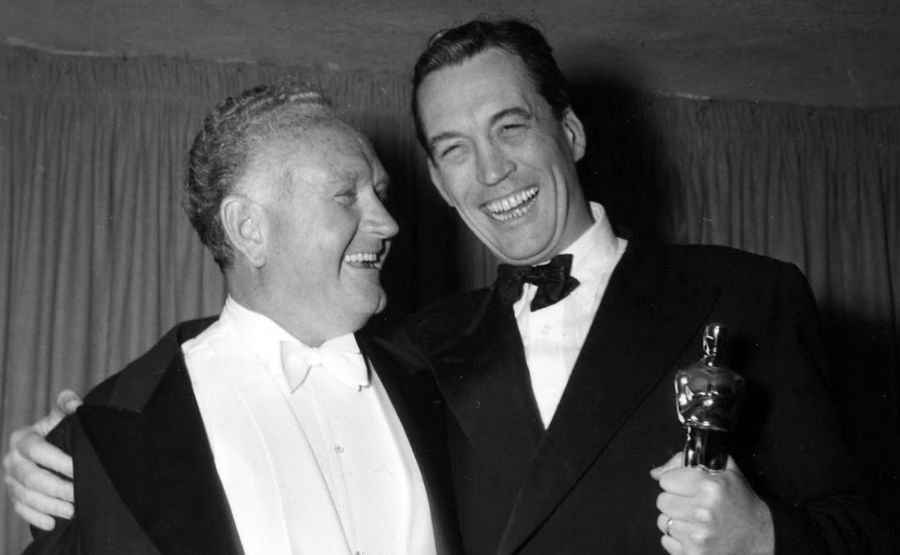
Pablo Huston: The Boy Who Came in From the Desert
Quick Bio
| Detail | Info |
| Full Name | Pablo Albarran Huston (born Pablo Albarran) |
| Born | Approximately 1935–1937, Mexico (precise date unrecorded) |
| Nationality | Mexican-born; raised as American |
| What He Did | Lived a private life; educated in the United States; married and had children; later returned to Mexico City and worked as a used-car dealer |
| Key Facts About His Story | Discovered as a homeless orphan on the set of The Treasure of the Sierra Madre in Mexico in 1946–1947; adopted by filmmaker John Huston and brought to the United States; introduced to his adoptive mother Evelyn Keyes at the airport as a fait accompli — she had no prior warning; eventually married an Irish woman, had three children, then abandoned the family and returned to Mexico |
| Other Key Facts | His grandfather by adoption was Walter Huston, Academy Award winner; his adoptive siblings include Anjelica, Danny, Tony, and Allegra Huston; the Encyclopedia of World Biography notes that he and John Huston became estranged in later years; almost nothing about his private life is in the public record beyond what John Huston and Evelyn Keyes wrote in their respective memoirs |
Why This Story Still Finds an Audience
Nobody searches “Pablo Huston” expecting to find a famous person. They search it because they’re reading about John Huston — one of Hollywood’s most towering and genuinely eccentric figures — and they keep bumping into this name tucked inside the biography. An orphan boy in Mexico. A spontaneous adoption. A wife surprised at an airport. A story that reads almost like something from one of John’s own films.
And then the ending, when you find it, is something else entirely. A man who married, had children, and then walked away. Went back to Mexico City. Sold used cars. became unfamiliar with his own family.
It’s not a story with a clean moral. That’s probably why it stays in people’s heads.
See also “Erica Levy Rivera: The Woman Who Built Her Own Career and Then Chose Something Bigger“
Mexico, Sometime in the 1940s
The facts of Pablo’s origin are thin in the way that the origins of children without documentation tend to be. He was born in Mexico, most likely in the mid-1930s, probably around 1935 to 1937 based on his apparent age when John Huston encountered him during filming in 1946 and 1947. His birth surname appears to have been Albarran. Some sources connect him loosely to a location in the state of Michoacán — the small town of Jungapeo specifically appears in a few accounts — though this detail is not independently verified.
What is clear is that by the time John Huston was filming The Treasure of the Sierra Madre in Mexico, Pablo Albarran was a child without a stable home. Whether he was fully orphaned in the conventional sense — both parents dead — or whether he had been abandoned or fallen through the gaps of an impoverished family situation isn’t something the record clarifies. What the record says, from John Huston’s own account in his 1980 autobiography An Open Book, is that the boy came to spend the night at Huston’s hotel during production and that when morning came, John learned Pablo had no home to return to.
He was, by Huston’s account, simply there — in that particular place, at that particular moment, in the care of no one.
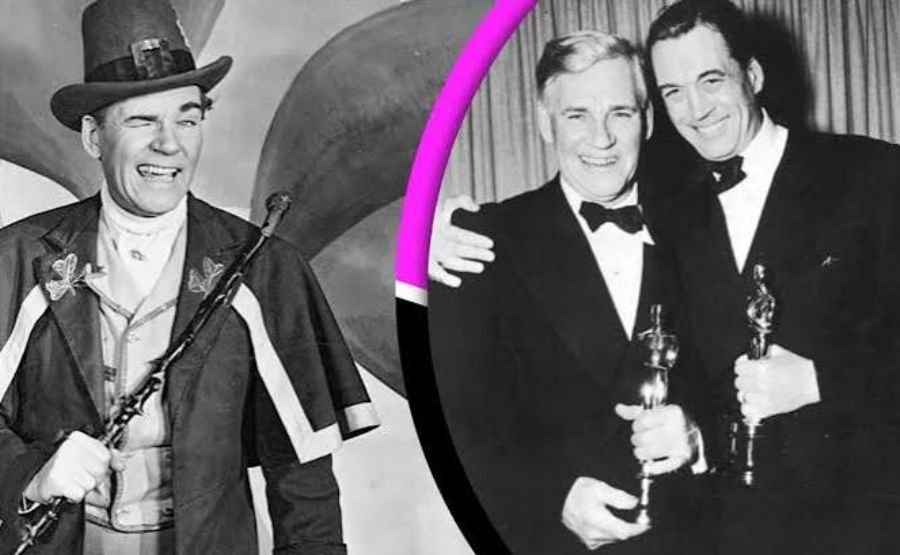
John Huston: The Man Who Decided on the Spot
To understand why John Huston adopted a Mexican orphan without telling his wife, you have to understand something about John Huston. He was not a man who deliberated. He was a man of impulse, of enormous appetites, of a kind of life-devouring curiosity that kept him in near-constant motion across countries and decades and marriages. He had been a teenage boxer, a cavalry officer in Mexico in an earlier chapter of his life, a writer, a painter, a screenwriter, and now one of the most respected directors in Hollywood. He was forty years old in 1946, had just come out of war documentary work, and was making what would become one of the defining films of his career.
He was also, by his own admission and by everyone else’s account, someone who often made major decisions the way other people breathe — quickly and without particular anxiety about the consequences.
He decided to adopt Pablo. He made the arrangements. And then he got on a plane home.
His wife, the actress Evelyn Keyes — she had played Suellen O’Hara in Gone with the Wind, was a recognizable and established star in her own right — first learned she had a new son when John introduced them at the airport. He simply handed her this boy. This is Pablo. We’re adopting him.
She was, by the gentle phrasing of available accounts, not pleased. Evelyn had been clear about her feelings toward motherhood. She had no particular desire to spend her life raising children, and the phrase that has floated through various accounts — that she was “not going to spend her”Life rearing other lives” conveys the impression of a woman who had been adamant about something and was now witnessing it anyhow.
Walter Huston — John’s father, the legendary actor, who had just won an Academy Award under his son’s direction for The Treasure of the Sierra Madre itself — apparently already knew. He had been told. He had not told Evelyn. That, too, was a Huston family decision.
Growing Up Huston
Pablo came to the United States and was educated here. He took the Huston name. He became, formally, Pablo Albarran Huston — adopted into a family that was as close to Hollywood royalty as anything the industry produced.
John Huston was his father. Walter Huston was, until his death in 1950, his grandfather. Anjelica — who would eventually win an Academy Award under her father’s direction for Prizzi’s Honor, mirroring her grandfather’s story — was his sister. Danny Huston, who became an actor and director of his own, was a sibling. Tony Huston, the screenwriter. Allegra Huston, the author, born years later.
What Pablo’s childhood actually looked like inside that family is not something any source has fully reconstructed. John was not a present father in the conventional sense for any of his children — he was perpetually in motion, perpetually on location, perpetually involved in the next project or the next adventure. The Huston children, across his various marriages and relationships, were raised largely by their mothers or in boarding school environments while John did what John Huston did, which was make films and live loudly.
Evelyn and John’s marriage didn’t survive long after Pablo’s adoption. They divorced in 1950, four years after they’d married. Evelyn had described the marriage as eccentric at the most generous reading — John had come home from one shoot with a pet chimpanzee, a gift from Jennifer Jones — and the airport surprise of a Mexican orphan was simply one entry in a long list of things that had made the marriage difficult to sustain.
What happened to Pablo in the immediate aftermath of that divorce isn’t recorded. Whether he stayed with Evelyn, whether he was sent somewhere, whether John took any practical responsibility for his upbringing through those years — the record is quiet.
The Marriage, the Children, the Desertion
At some point in his adult life, Pablo married. His wife was Irish, which is one of the more specific biographical facts in his record and one of the stranger details — a Mexican-born boy adopted by a man whose most stable adult years were spent in Ireland, marrying a woman from that same island. Whether the Irish connection was coincidence or some pull of the world he’d been raised in during John’s Ireland years isn’t clear.
They had three children together.
And then Pablo left. He abandoned his family. He returned to Mexico City, the country of his birth, the country he had been taken from as a homeless child, and became a used-car dealer.
That is the full account of his adult life that the sources offer, drawn from Evelyn Keyes’s own memoir and from production notes connected to TCM’s record of The Treasure of the Sierra Madre. It’s spare. It raises every question imaginable and answers almost none of them.
What was he running from? What did the Huston family mean to him by adulthood — was it a gift, a burden, something between? Did the estrangement from John Huston come before or after the desertion of his own family? Was there a pattern here — a man who had been abandoned himself as a child, who eventually reproduced that abandonment, whether consciously or not? Was there something in Mexico City that called to him specifically, or was it simply the place where his paper trail ended?
Nobody has answered these questions publicly because nobody who could answer them has spoken about it.
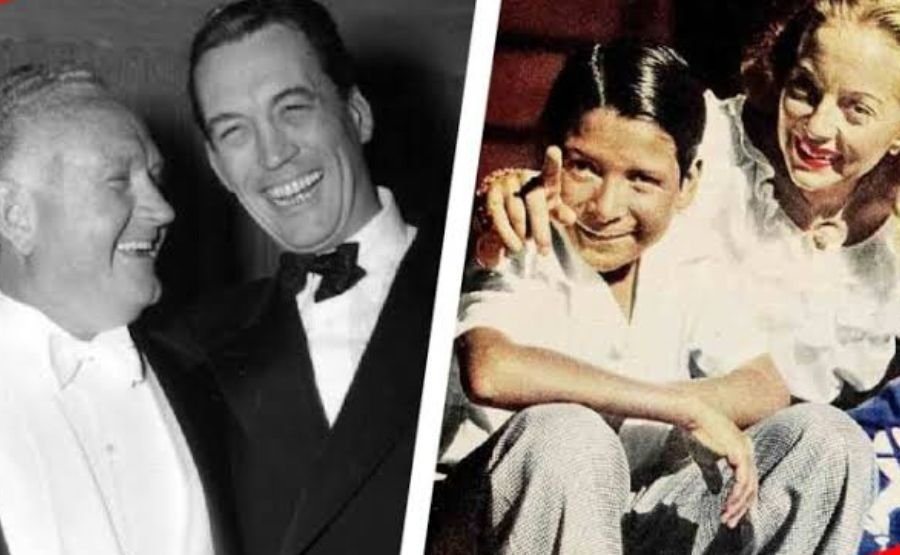
The Estrangement From John
The Encyclopedia of World Biography notes that Pablo and John Huston became estranged in later years. Given John’s own track record as a father — distant, spectacular, unreliable in the ordinary domestic sense — it’s hard to know which direction the estrangement flowed. John had complicated relationships with most of his children. Anjelica has spoken about the difficulty of growing up with a father whose attention was dazzling when present and largely absent the rest of the time. Tony and Danny had their own complicated paths through that shadow.
Pablo had no biological claim on the Huston name, no shared blood with any of them, and had been brought into the family through an act of pure Hustonesque impulse that hadn’t even been discussed with his adoptive mother. Whatever foundation that created for a lasting father-son bond, it apparently wasn’t strong enough to survive the long years of John’s later career and life.
John Huston died on August 28, 1987, in Middletown, Rhode Island, while on location. He was eighty-one. Whether Pablo was present, whether there was any contact in his final years, isn’t on the record.
Evelyn Keyes died in 2008, at ninety-one, having outlived her famous husband by two decades.
The Three Children He Left Behind
Perhaps the heaviest part of this story, if you sit with it, is not Pablo’s abandonment of the Huston family or his estrangement from John. It’s the three children in Ireland — or wherever they were — whose father walked back to Mexico City and didn’t come back. They carry the inheritance of this story too: a grandfather who was a legendary Hollywood director, a great-grandmother who appeared in Gone with the Wind, a family tree that reads like a syllabus for a film studies course. And a father who left.
None of them have entered the public record.
The Financial Picture
There is no documented wealth connected to Pablo Huston. He worked as a used-car dealer in Mexico City in his later years — not a profession associated with significant financial accumulation. Any inheritance from John Huston’s estate would have passed primarily through his other children, and Pablo’s estrangement from John makes it unclear whether he was included in whatever arrangements John made.
He did not work in film or television, did not write, did not lecture. He generated no independent income that the record has captured. He lived, and probably lives or lived, quietly — a man whose most famous moment was happening to be in the right place, as a homeless child, at the moment John Huston was feeling generous.
Where the Story Ends
Pablo Huston was alive, by various recent accounts, into old age — which would place him in his late eighties or nineties by 2026, if alive at all. No death date has been publicly recorded. No interview has surfaced. No photograph of him as an adult has entered the public domain in any significant way.
He is one of the more genuinely mysterious figures connected to any major Hollywood family — not because he chose mystery deliberately the way some private people do, but because the world simply lost track of him, and he apparently didn’t mind.
Final Words
What stays with me about Pablo Huston is the circularity of his life and the questions it refuses to answer. A boy without a family stumbles into the orbit of one of Hollywood’s most charismatic men and gets carried across a border into a completely different existence. He grows up among actors and directors and Oscar winners. He marries. He has children. And then — for reasons no public source can tell you — he reverses the journey. Goes back. Becomes nobody again.
You can read tragedy into that, or you can read it as something more complicated: a man who found that the life that was chosen for him wasn’t the one he could sustain, and who eventually went back to the place where his own story began, without the language to explain why.
John Huston made films about men undone by gold fever, by obsession, by the relentless pursuit of things that destroy you when you catch them. Somehow his own adopted son became a different kind of story — quieter, sadder, and entirely without a screenplay to explain it.
FAQs
1. Who is Pablo Huston?
He is the Mexican-born adopted son of filmmaker John Huston and actress Evelyn Keyes. He was born Pablo Albarran in Mexico, likely in the mid-1930s, and adopted in 1946 or 1947 when John Huston was filming The Treasure of the Sierra Madre.
2. How did John Huston find him?
Pablo was hanging around the film’s Mexican production as a homeless orphan. He came to stay the night at John Huston’s hotel during filming, and when morning came, John learned he had no home. John decided on the spot to adopt him and brought him back to the United States.
3. Did Evelyn Keyes know about the adoption?
No. She found out when John introduced Pablo to her at the airport. She had not been consulted and had been clear about not wanting to raise children. The surprise was, by all accounts, not warmly received — though she did accept Pablo into the household.
4. What was his birth name?
Pablo Albarran. He became Pablo Albarran Huston upon adoption, though he is generally referred to simply as Pablo Huston in most sources.
5. Who are his adoptive siblings?
Through John Huston’s various marriages, his adoptive and half-siblings include Anjelica Huston (actress, Academy Award winner), Danny Huston (actor and director), Tony Huston (screenwriter), and Allegra Huston (author).
6. Did Pablo have a career in Hollywood?
No. He did not pursue work in film, television, or any documented creative field. He is one of the very few members of the extended Huston family who did not enter entertainment in any capacity.
7. What do we know about his adult life?
He married an Irish woman and had three children. At some point he left his family, returned to Mexico City, and worked as a used-car dealer. This information comes from Evelyn Keyes’s autobiography and from production records associated with The Treasure of the Sierra Madre.
8. Did he and John Huston stay close?
No. The Encyclopedia of World Biography records that they became estranged in later years. The specifics of that estrangement — when it happened and why — are not in the public record.
9. Who were his grandparents by adoption?
His adoptive paternal grandfather was Walter Huston — the celebrated actor who won the Academy Award for Best Supporting Actor for The Treasure of the Sierra Madre, directed by his son John. The Hustons became the first father-son duo to win Oscars for the same film.
10. Is Pablo Huston still alive?
Unknown. No death date has been publicly recorded, and no recent information about him has entered the public record. If alive in 2026, he would be in his late eighties or early nineties.
11. Where did he end up?
The last verifiable information places him in Mexico City, working as a used-car dealer after leaving his family in Ireland. Whether he remained there or what his life looked like in later decades is not documented.
12. Why is so little known about him?
Pablo never sought public attention, never gave interviews, and never published anything about his extraordinary and painful story. The family didn’t speak extensively about him either. Most of what we know comes from second-hand accounts in John Huston’s and Evelyn Keyes’s respective memoirs, which offer only glimpses.
Explore new ideas and rising trends with Trend Rise.


One Comment