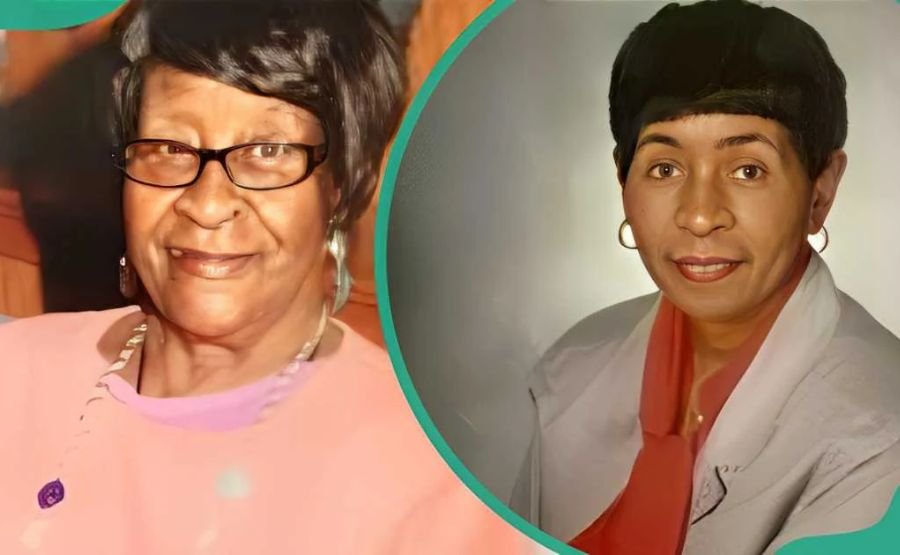
Elease Johnson: Growing Up in Harlem’s Shadow
Quick Bio
| Detail | Info |
| Full Name | Elease Johnson (also spelled Elise Johnson in some records) |
| Born | Approximately 1931 — Harlem, New York, USA |
| Nationality | American |
| What She Did | Private individual; daughter of one of Harlem’s most notorious and complicated figures; community presence in her own right; worked to preserve and defend her father’s legacy |
| Biggest Accomplishments | Survived an extraordinarily complicated upbringing as the child of Ellsworth “Bumpy” Johnson; raised her daughter Margaret largely outside the public eye; earned the colorful nickname “Annie Oakley of Harlem”; maintained a presence in the community that honored her father’s complicated legacy |
| Other Key Facts | Daughter — biological or adopted, sources disagree — of Bumpy Johnson and Mayme Hatcher Johnson; had a half-sister named Ruthie who died in 2006; her daughter Margaret is Bumpy Johnson’s granddaughter; struggled with drug addiction during significant periods of her life; reportedly had a romantic connection to Malcolm X, though this remains unverified in primary sources |
Why People Search Her Name
The search for Elease Johnson almost always begins with her father. Ellsworth “Bumpy” Johnson is one of the most mythologized figures in American urban history — a Harlem crime boss who ran numbers, controlled territory, spent years in Alcatraz, and somehow cultivated a reputation as a neighborhood protector who gave turkeys to the poor at Thanksgiving. The mythology has only grown with time. Hoodlum (1997), American Gangster (2007) — which opens with Bumpy’s death scene — and the television series Godfather of Harlem have kept his name circulating in every generation that discovers him.
And every time someone digs into Bumpy’s story, they hit the question of his family. His wife Mayme. His daughters. What happened to them. What it was like to grow up inside that particular life.
Elease is the most documented of his children, which isn’t saying much. The documentation is sparse and sometimes contradictory. But she’s real, her story is real, and she deserves better than the AI-generated fiction that most search results serve up when her name appears. What follows is built only from what can actually be traced.
See aslo “Bryan Spies Net Worth: How Much Does He Earn and What Is His Source of Wealth?“
Harlem, 1931: The World She Was Born Into
Elease Johnson was born around 1931 in Harlem, New York. The decade matters enormously for context. Harlem in the early 1930s was a neighborhood in complex transition — the Harlem Renaissance had crested and was beginning to fade as the Depression hit, but the cultural energy, the community density, and the specific social hierarchies of Black New York were still fully in force.
The question of whether Elease was Bumpy and Mayme’s biological daughter or their adopted daughter runs through every serious account of the family. Mayme Hatcher Johnson’s memoir Harlem Godfather — the most direct primary source available on this family — describes Elease as their adopted daughter. Some other accounts suggest she may have been Bumpy’s biological child from another relationship, raised by the couple. The confusion is genuine and hasn’t been resolved definitively in any public record.
What is clear is this: Elease grew up in the household of Ellsworth “Bumpy” Johnson and his wife Mayme. Whatever the precise legal or biological relationship, that’s the family that formed her.
Bumpy Johnson was, by the time Elease was developing any real awareness of the world, a figure of enormous power and complicated reputation in Harlem. He had already done time in prison. He had fought and negotiated his way into control of the Harlem numbers racket, an arrangement brokered with the Italian organized crime figures who wanted a piece of that business. He was feared. He was respected. He had a genuine relationship with the community he lived in — giving money to families in need, knowing everyone by name, operating according to a code that made him, in the eyes of many in Harlem, something other than a simple criminal.
That’s the household Elease grew up in. That’s the father whose name she carried.
A Childhood in the Eye of the Storm
Growing up as Bumpy Johnson’s daughter was not like growing up in an ordinary Harlem family. The power her father wielded was real and visible. People treated the family differently. The household had resources that most families in the neighborhood didn’t have. And there were also the absences — the years when Bumpy was in prison, the constant awareness of danger, the specific social position of being known as the crime boss’s daughter.
For Elease, all of this landed during the most formative years of her life. The Depression. World War II. The postwar reshaping of Harlem. Through all of it, she was Bumpy’s girl — which meant something specific and complicated in a neighborhood where his name meant something specific and complicated.
The nickname “Annie Oakley of Harlem” that attaches to Elease in some historical accounts is intriguing precisely because it suggests she was not a passive figure in this environment. Annie Oakley was a sharpshooter, a woman of practical skills and direct action. The nickname implies that Elease had a reputation for being capable, perhaps formidable, in some way that went beyond simply being her father’s daughter. The specifics behind the nickname aren’t documented anywhere accessible. But it stuck, which means it reflected something real about how people saw her.
Bumpy’s World and What It Cost the Family
Ellsworth “Bumpy” Johnson served multiple stretches in federal prison across his lifetime — including years at Alcatraz, the country’s most notorious maximum security facility. The periodic absences of a father who was simultaneously the household’s source of income, protection, and status created a specific kind of instability that no amount of money fully compensates for.
Mayme Hatcher Johnson held the family together during these years. She was a remarkable woman in her own right — sharp, resilient, deeply connected to the community and to the Catholic Church, someone who understood that being married to Bumpy required her to be extraordinary in ways that had nothing to do with glamour. She managed the household, managed the social relationships, and managed whatever the children needed during the years when Bumpy was away.
For Elease, these dynamics — the absent-present father, the steadfast mother, the community weight of the Johnson name — shaped who she was. She grew up knowing that the name she carried opened doors and created risks simultaneously. She grew up in a world where the police were not allies, where survival required a specific kind of awareness, and where the community’s rules operated on a different logic than the official rules of American society.
The Malcolm X Connection
One of the more historically tantalizing threads in Elease’s story is the reported romantic connection to Malcolm X. This detail appears in several accounts of both figures, suggesting that at some point in the 1950s or early 1960s, Elease Johnson and Malcolm X had a relationship that went beyond acquaintance.
It’s not impossible. Malcolm X was deeply embedded in Harlem during this period — first as a street hustler and petty criminal before his conversion and transformation, then as a minister and spokesman for the Nation of Islam, then in his final independent period. Bumpy Johnson and Malcolm X operated in overlapping social and geographic spaces. They were known to each other. The idea that Elease, the daughter of one of Harlem’s most powerful figures, and Malcolm, one of Harlem’s most magnetic personalities, would have intersected is not surprising.
What can’t be confirmed from primary sources is the precise nature of that connection. Accounts vary — some describe it as a serious romantic involvement, others as something more passing. Malcolm X left no documented account of Elease in any of his speeches, letters, or interviews that have been published. The claim exists in the oral and secondary historical record but hasn’t been nailed down by documentary evidence.
What it does suggest is that Elease moved in circles that intersected with the most consequential figures in mid-century Black New York. She wasn’t only a supporting role in someone person’s narrative. She was present, she was known, and she made impressions on people who mattered.
Margaret and the Next Generation
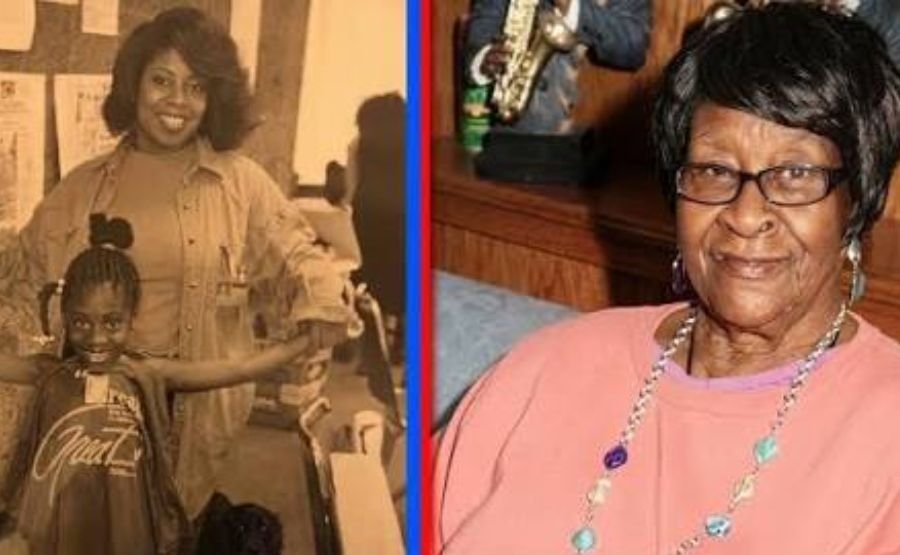
Elease had a daughter named Margaret. Margaret is Bumpy Johnson’s granddaughter — a generational link to one of Harlem’s most complicated legacies.
The specifics of Margaret’s father, of when and how she was born, of what her life has looked like — none of that is documented in any public record that’s accessible. What the mention of Margaret in accounts of the Johnson family suggests is that Elease built her own family, that she tried to create something forward-looking within the specific constraints of the life she had inherited.
The Struggle That Found Her
Multiple reliable sources reference drug addiction as a significant chapter in Elease Johnson’s life. This isn’t something to gloss over or frame delicately beyond what the facts warrant. Drug addiction devastated enormous numbers of people in Harlem and in Black communities across America during the postwar decades — the heroin epidemic that swept through urban Black neighborhoods in the 1950s and beyond was one of the most catastrophic public health crises that most mainstream American history largely ignored.
For someone who had grown up with the specific stresses of Elease’s childhood and young adulthood — the instability of her father’s criminal life, the absences, the social weight of the Johnson name — addiction was a comprehensible if devastating outcome. It was also an outcome that her father, with all his power and all his connections, could not simply fix or buy away.
How she navigated that chapter — whether and how she recovered, what her life looked like on the other side of it — isn’t documented with any clarity in the sources available.
Defending the Legacy
What is documented clearly is Elease’s commitment to defending and preserving her father’s reputation. After Bumpy Johnson died in 1968 — collapsing in a Harlem restaurant, reportedly mid-conversation — the mythologizing of his story accelerated. Films, books, and eventually television took his life and shaped it into entertainment, sometimes accurately and often not.
Elease, alongside her mother Mayme, was vocal about correcting the record when she felt it was being distorted. She challenged negative portrayals. She insisted on the complexity of who her father actually was — not simply a criminal, but a man who operated by a code, who was embedded in his community, who was in many respects a product of a society that gave Black men with his abilities very few legal paths to power.
That advocacy wasn’t always successful in shaping what made it to screens. But it reflected a genuine commitment to something beyond herself — a sense that the story mattered and deserved to be told truthfully.
Ruthie and the Half-Sister She Shared a Father With
Elease had a half-sister named Ruthie Johnson. The specifics of Ruthie’s parentage — whether she was Bumpy’s biological daughter from another relationship or another adoption — aren’t clearly established in the sources. What is established is that Ruthie died in 2006, and that her death marked another loss in a family that had seen considerable loss.
Where the Story Ends — or Doesn’t
The public record on Elease Johnson goes quiet after the mid-to-late twentieth century. There is no documented death date, no obituary that’s widely accessible, no final chapter that closes the story cleanly. She may have died. She may still be alive in extreme old age — she would be in her early-to-mid nineties if born around 1931. The historical record simply doesn’t follow her to a conclusion.
What she left behind is a life that existed at one of the most dramatic intersections in American urban history — the overlap of organized crime, Black community life, the civil rights era, and the specific pressures that fell on the children of men who built power outside the law.
Final Words
Elease Johnson’s story is one that American history hasn’t known quite what to do with. She wasn’t a gangster herself. She wasn’t a civil rights hero. She wasn’t a celebrity. She was a daughter — of a man whose legend has only grown with time — who tried to build her own life in the specific shadow he cast.
The nickname “Annie Oakley of Harlem” is what stays with me. Someone gave her that name, and someone else remembered it, which means it reflected something real about how she moved through the world. Not passive. Not diminished by the name she carried. Something sharper than that.
She was Bumpy Johnson’s daughter. She was also Elease, with her own complexity and her own choices. The full story of who she was deserves more careful historical attention than it has received — and deserves far better than the AI-generated fiction that most search results currently provide.
FAQs
1. Who was Elease Johnson?
She was the daughter — biological or adopted, sources disagree — of Ellsworth “Bumpy” Johnson, the infamous Harlem crime boss, and his wife Mayme Hatcher Johnson. She grew up in Harlem in the 1930s through the 1960s and became known for defending her father’s legacy after his death in 1968.
2. Was Elease Johnson Bumpy Johnson’s biological or adopted daughter?
This is genuinely disputed. Mayme Hatcher Johnson’s memoir Harlem Godfather describes Elease as their adopted daughter. Other accounts suggest she may have been Bumpy’s biological child from another relationship. No primary document has definitively resolved the question.
3. What is the “Annie Oakley of Harlem” nickname about?
Elease earned this nickname among people who knew her in Harlem, suggesting she was capable, direct, and formidable in ways that went beyond simply being her father’s daughter. The specific origin of the nickname isn’t documented in any accessible primary source.
4. Did Elease Johnson have children?
Yes. She had a daughter named Margaret, who is Bumpy Johnson’s granddaughter. Details about Margaret’s life are not part of the public record.
5. Was Elease Johnson romantically linked to Malcolm X?
Some historical accounts suggest a romantic connection between Elease and Malcolm X, who both moved in Harlem circles during the 1950s and 1960s. This hasn’t been confirmed in any primary documentary source from Malcolm X’s side.
6. Did Elease struggle with addiction?
Multiple credible sources reference drug addiction as a significant challenge in her life. The specifics of when this occurred and how it was resolved aren’t clearly documented.
7. Did she have a sister?
Yes. She had a half-sister named Ruthie Johnson, who died in 2006.
8. What was Bumpy Johnson actually like?
He was an enormously complex figure — a numbers racket boss who also gave turkeys to poor families, a man who did years in Alcatraz, someone the Harlem community regarded with genuine affection as well as fear. His story is told most credibly in Mayme Hatcher Johnson’s memoir Harlem Godfather.
9. What films have depicted the Johnson family?
Hoodlum (1997) with Laurence Fishburne, American Gangster (2007) which opens with Bumpy’s death, and the television series Godfather of Harlem starting in 2019 have all drawn on Bumpy Johnson’s story. Elease is not a central character in any of these.
10. When did Bumpy Johnson die?
July 7, 1968. He collapsed in a Harlem restaurant — Wells’ Chicken and Waffle House — and died of heart failure. He was sixty-two.
11. Is Elease Johnson still alive?
Unknown. No death date has been publicly documented. If born around 1931 as most sources suggest, she would be in her early-to-mid nineties in 2026. The public record goes quiet on her after the mid-twentieth century.
12. Where can I learn more about the Johnson family?
The most reliable primary source is Harlem Godfather: The Rap on My Husband, Ellsworth “Bumpy” Johnson by Mayme Hatcher Johnson — the memoir written by his wife, which is the closest thing to a firsthand family account that exists in the public record.
Explore new ideas and rising trends with Trend Rise.




One Comment