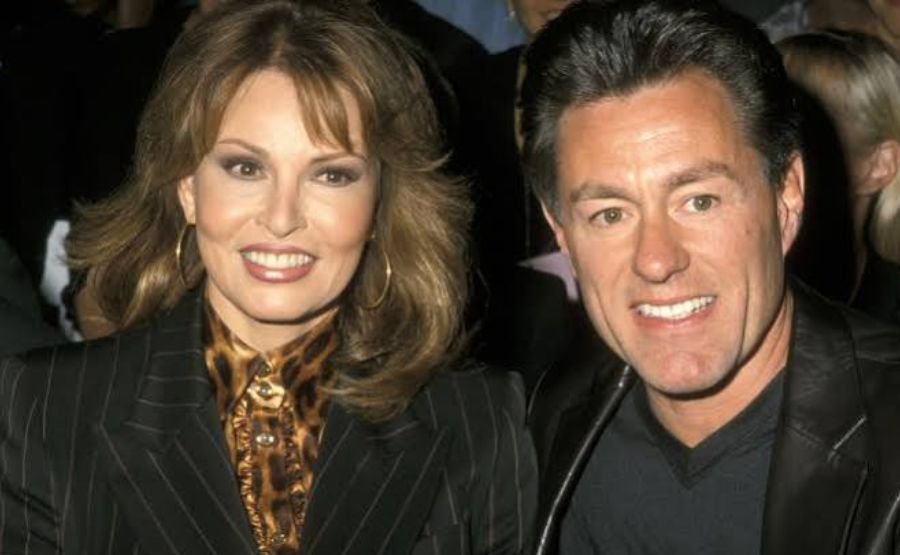
Raquel Welch Spouse: Who She Married and the Story Behind Her Relationships
Quick Bio
| Detail | Info |
| Full Name | Jo Raquel Tejada (stage name: Raquel Welch) |
| Born | September 5, 1940 — Chicago, Illinois |
| Died | February 15, 2023 — Los Angeles, California (age 82) |
| Nationality | American |
| What she did | Actress, singer, model, fitness entrepreneur, author |
| Biggest accomplishments | Golden Globe winner for The Three Musketeers (1974); starred in over 30 films and 50 TV productions; one of cinema’s most recognizable sex symbols; Hollywood Walk of Fame honoree |
| Key fact 1 | The famous picture of her in a fur bikini from a million years ago. (1966) became one of the best-selling posters in film history |
| Key fact 2 | Born with Bolivian heritage on her father’s side; kept her first husband’s surname to avoid being typecast as a Latina |
| Key fact 3 | Was married four times; had two children; her wig line became a major business success in her later years |
Why People Are Still Talking About Her
Raquel Welch passed away in February 2023 and the internet just… stopped for a moment. Tributes flooded in from actors, directors, fans who’d had her poster on their bedroom wall in 1967, and younger people who’d just discovered her through a film class or a meme. She was 82. She’d been quietly battling Alzheimer’s disease, though that was never made public until her death certificate surfaced afterward.
The thing about Raquel is that she was always more than the image that made her famous. That fur bikini poster from One Million Years B.C. — the one that turned into a pinup poster bought by millions of people around the world — actually came from a movie where she had maybe three lines of dialogue. Three lines. And yet that single image launched one of Hollywood’s most enduring careers. She spent the rest of her life trying to step out from under its shadow, and in many ways, she succeeded. In other ways, she knew she never fully could.
She was funny, self-aware, ambitious, twice divorced before she was 35, and remarkably candid about the cost of being a sex symbol in an era that wasn’t ready to let beautiful women also be taken seriously. Her story is genuinely worth telling.
See also “Gracie Frances Penner — Finding the Frame“
Growing Up Between Two Worlds
Start at the beginning. Jo Raquel Tejada was born in Chicago on September 5, 1940, to a Bolivian-born father and an American mother. When she was barely two, the family moved west to San Diego, California, and that’s really where her story took shape. She grew up in La Jolla, a beachside community where she attended Sunday church services with her mother every week and started taking ballet classes at age seven.
She was beautiful from a young age — the kind of obvious, striking beauty that made other people notice even when she wasn’t trying — and she was also restless and driven. She wanted to perform. She participated in beauty pageants as a teenager and won Miss San Diego and Miss La Jolla, which gave her early experience being in front of crowds and cameras. But her father, a conservative Bolivian-American man, wasn’t exactly thrilled about his daughter pursuing a career in entertainment. He wanted something more conventional for her.
She didn’t listen. She rarely did when it came to what others wanted for her life.
School, Ambitions, and a Wedding at 18
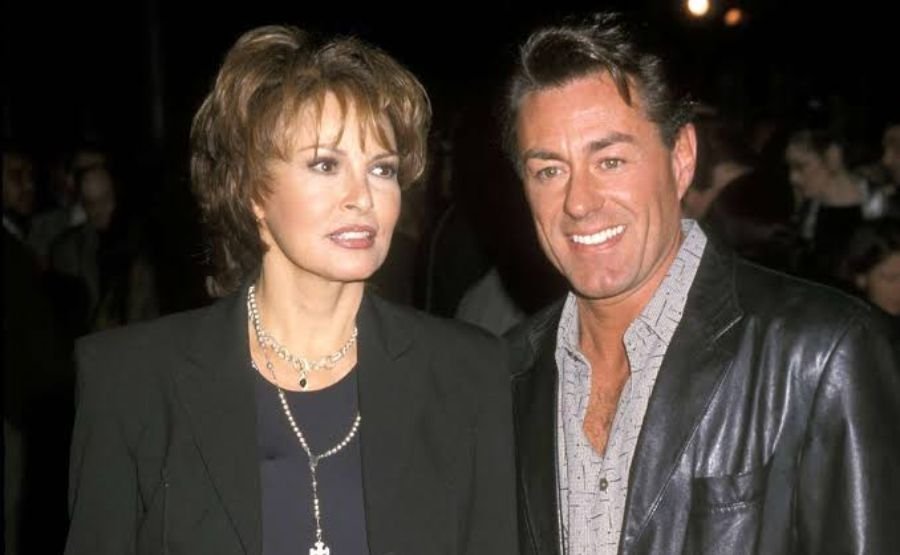
Raquel graduated from La Jolla High School in 1958. That same year she won a scholarship in drama — proof that her talent was genuine, not just her face. She enrolled at San Diego State College to study theater. She even landed the lead role in the annual Ramona Pageant, a large outdoor theatrical production in Hemet, California, in 1959. That was a real achievement for a teenager just starting out.
However, this is where the narrative takes its first unexpected turn. She got pregnant. She was 18 years old, still technically in college, and she was expecting a baby with her high school sweetheart, James Welch. Her father had never approved of the relationship. None of that mattered. She and James got married on May 8, 1959, in Las Vegas. He was her first love, and she was walking into adulthood at a dead run.
First Husband: James Welch — The Man Who Gave Her the Name
James Welch was the kind of guy you meet in high school and believe, with full teenage conviction, that you’ll be with forever. He and Raquel had known each other for years before they married. He wasn’t a Hollywood type — he worked in more practical fields, including real estate at various points — and their relationship had been built before any of the fame or glamour entered the picture.
Their first child, Damon Welch, arrived in November 1959. Their daughter, Latanne — who later went by Tahnee — was born in December 1961. So by the time Raquel was 21, she was a wife, a mother of two, and already feeling the pull of something bigger than the domestic life she’d stepped into so young.
They separated in 1962 and officially divorced in 1964. The split was relatively quiet — neither of them made much noise about it publicly. But here’s the thing that endures from this marriage: the name. Raquel kept it. She was no longer Jo Raquel Tejada once she entered Hollywood. She was Raquel Welch. That name, borrowed from a marriage that didn’t last, became one of the most recognizable names in the history of cinema.
The Career That Almost Didn’t Happen
After her divorce from James, Raquel packed up her two young kids and headed to Los Angeles with very little beyond ambition and determination. The early years were genuinely hard. She used to work as a cocktail waitress. She modeled. She took whatever small TV parts she could find — bit roles, walk-ons, nothing that was going to make anyone call her a star. She appeared briefly in the Elvis Presley musical Roustabout in 1964 in a tiny uncredited role. Raquel was one of countless attempting to avoid being consumed by Hollywood, a machine that devoured attractive women on a daily basis.
Then she met Patrick Curtis. And everything shifted.
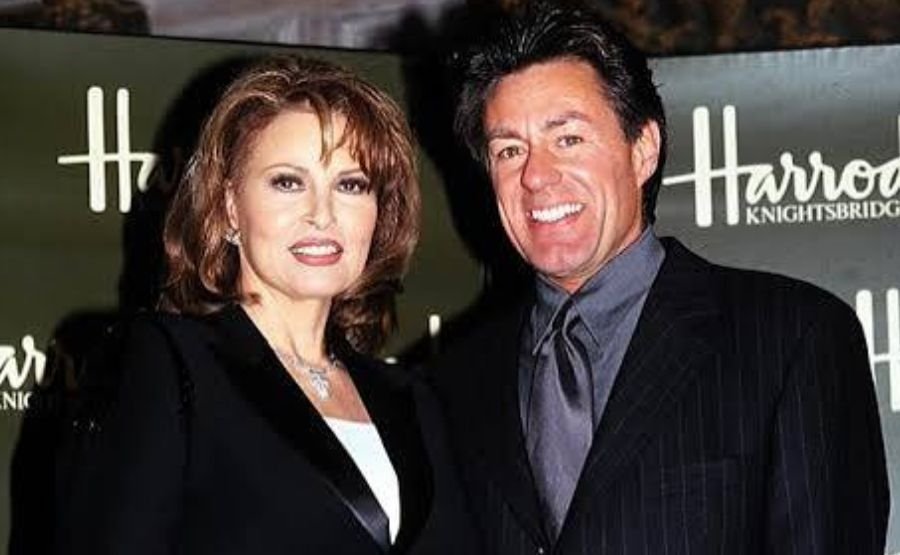
Patrick Curtis, a second husband and the creator of an icon
Patrick Curtis was a former child actor who’d moved into producing and talent management by the time Raquel crossed his path. He spotted her potential immediately — not just her looks, but her drive, her hunger, the way she carried herself. He became her manager and, eventually, her second husband.
The partnership was strategic from the start, and both of them knew it. Curtis had a clear vision: he wanted to build Raquel Welch into an international glamour figure, and he set about doing exactly that. One of his most calculated moves was persuading her to keep the last name Welch rather than her birth name Tejada. The reasoning was purely practical and a little sad — he believed that being openly Latina would limit the roles she’d be offered. This was Hollywood in the mid-1960s, and he wasn’t entirely wrong about the bias, even if the solution was a kind of erasure.
The couple married in 1967, by which point Raquel was already a worldwide phenomenon. They tied the knot in Paris — in a white crochet mini-dress, fur coat, and gloves, because it was the 1960s and Raquel Welch was not going to do anything quietly. Some of her films were produced by Curtis and his joint production business, Curtwel. They also churned out magazine covers at an extraordinary rate — Raquel was everywhere, launching the full “bombshell” package to the world.
But working with your husband is complicated, and having your husband also be the person who controls your career is even more so. By 1972 they had separated. Curtis passed away in November 2022, just months before Raquel herself died. He was 83. Their time together had been brief by any measure, but the machine he built around her name lasted for decades.
The Breakthrough: From Three Lines to Global Icon
Let’s talk about how she actually became famous, because it’s a wild story. In 1966, Raquel appeared in Fantastic Voyage, the science fiction film where a team of scientists gets miniaturized and injected into a human body. It was a proper Hollywood production with a real budget and a full cast. That got her noticed.
Then, almost simultaneously, she was loaned to a British studio called Hammer Film Productions for a prehistoric adventure called One Million Years B.C. The film itself was campy and ridiculous in the best possible way — a caveman adventure with dinosaurs. Raquel played Loana, a cavewoman. She wore a deerskin two-piece bikini. She had roughly three lines of dialogue across the entire film.
Raquel emerged in that animal-skin bikini, her hair wild, her look furious, and the resulting poster image went on to become one of the best-selling posters ever. It hung in bedrooms, dorm rooms, barracks, and garages around the world. It made her an international sex symbol almost overnight.
She was smart enough to build on it. She worked relentlessly through the late 1960s and 1970s: Bandolero! opposite Dean Martin and James Stewart, 100 Rifles alongside Jim Brown and Burt Reynolds, the controversial Myra Breckinridge in 1970, and then the role that finally got her taken seriously as a performer — The Three Musketeers in 1973, where she played Constance, the queen’s dressmaker, with warmth and genuine comic timing. That performance won her a Golden Globe in 1974. It was the industry finally, formally acknowledging what she’d been doing all along.
She also did a TV special called Raquel! in 1970 alongside Tom Jones that became a beloved piece of that era. She toured, she performed live, she proved she could sing and dance. She was, by any measure, a complete entertainer.
Third Husband: André Weinfeld — A Decade of Something Real
In 1977, Raquel was in Paris. She met a French filmmaker named André Weinfeld at some point during that visit, and something clicked in a way that her previous relationships apparently hadn’t quite managed. Weinfeld was a serious creative person — he’d studied at one of France’s most prestigious film schools, had a master’s degree from the Sorbonne in psychology and French literature, and has done a lot of work in television and cinema journalism throughout Europe. He was smart, cultured, and utterly outside the Hollywood machine that had defined so much of Raquel’s world.
He packed up and moved to Hollywood to be with her. In 1980, they married in Cabo San Lucas, Mexico — a destination wedding that felt fitting for a couple who’d met between continents. That same year, Weinfeld directed and produced a TV special called From Raquel With Love, featuring her alongside Mickey Rooney and Douglas Fairbanks Jr. He became a collaborator, producing her national concert tours and various projects.
Their marriage lasted a decade, which made it the longest of Raquel’s four unions. Weinfeld later described it as a genuinely happy relationship. When it ended in 1990, the reason given was largely practical — she had built her life in Los Angeles, he was based in New York, and the geography eventually won. It was the most civilized of her splits, which perhaps says something about what that marriage had been at its core.
Weinfeld went on to have a son, Zachary, and continued working in film and television until his death in 2024.
The 1980s and Beyond: Reinvention After Reinvention
After the Hollywood-bombshell phase wound down, Raquel didn’t slow down. She just changed lanes.
Her book, The Raquel Welch Total Beauty and Fitness Program, was published in 1984 and was inspired by her sincere love of yoga and physical health. It was a hit. She did fitness videos. She was ahead of the celebrity wellness curve by roughly two decades. In 1987 she was nominated for a Golden Globe again, this time for Right to Die, a TV film. The nomination confirmed what anyone paying attention already knew — the woman could actually act.
She continued taking roles through the 1990s and 2000s, including a memorable appearance in Legally Blonde in 2001 as a snobbish socialite. She was 60 years old and still commanding every scene she walked into. Later she appeared in How to Be a Latin Lover in 2017, a film that let her reclaim the Latina heritage that had been strategically minimized for so much of her career.
Her biggest late-career business success was her wig line. Raquel Welch Wigs became genuinely popular, particularly among women dealing with hair loss for medical reasons. It was a thoughtful, practical extension of her brand and one that connected her to a new audience entirely.
She also published a memoir in 2010 called Beyond the Cleavage, where she wrote with surprising frankness about what it had been like to carry the weight of that image all her life.
Fourth Husband: Richard Palmer — The Final Chapter
In 1996, Raquel Welch met a man named Richard Palmer at a party. He wasn’t a film producer or a director or an agent. In addition to numerous locations throughout Southern California, he operated the Mulberry Street Pizzeria in Beverly Hills. He was a civilian, more or less. Someone outside the whole industry that had consumed her existence for thirty years.
They dated for about two years before getting married in July 1999 at her Beverly Hills home in a small, private ceremony. Raquel was 58. She’d been single since her divorce from Weinfeld nearly a decade earlier. Palmer later described her as remarkable. By all accounts, it started warmly.
But it didn’t last. The divorce was formalized in 2004 after they parted ways in 2003. The statement released by both parties was notably gracious — no third party involved, they said, just two people whose lives no longer fit together. It was the fourth time Raquel had tried and the fourth time it had ended.
After that, she made a promise to herself that she kept: she was done getting married. She said it openly in multiple interviews over the following years, including a candid conversation with Piers Morgan in 2015 where she reflected that she’d never quite figured out the marriage thing, even though she’d loved all four of her husbands in their own ways.
What Her Life Actually Cost Her
This is the component that is often overlooked. Being Raquel Welch — the icon, the sex symbol, the poster — was genuinely hard. She talked about it in her memoir and in interviews over the years. The image followed her everywhere. Casting directors saw the bikini poster before they saw her acting reel. Studios wanted to put her in scenes that showed off her body rather than her range. She fought for serious roles constantly, and often lost that fight.
Her marriages suffered too. In interview after interview, she connected the failure of her relationships to the pressure of being so publicly, overwhelmingly famous. How can a husband deal with that? What kind of marriage survives that level of attention and scrutiny? She said she never found out.
She also dealt with Alzheimer’s in her final years, quietly and privately. Nobody knew. Her children, Damon and Tahnee, were there at the end. She died on February 15, 2023, from cardiac arrest. The disease had been working in the background, listed on the death certificate as an underlying cause, but kept entirely out of the public eye until after she was gone. It was one of the most private things she’d ever done.
Money — The Simple Version
Raquel Welch’s net worth at the time of her death was estimated at around $40 million. That’s a serious number, built over more than five decades of steady work — film roles, TV appearances, concert tours, endorsements, her fitness program, her wig line, her books, and smart real estate investments in Beverly Hills and Bel-Air. She wasn’t just a star; she was a businesswoman who understood that a name like hers had commercial value beyond any single movie.
Her Bel-Air home was listed for sale by her heirs in 2024 for just under $4 million. She lived well, invested intelligently, and left behind a genuinely substantial legacy.
Final Words
What makes Raquel Welch different from most people who reach her level of fame is this: she was always fighting. Fighting to be seen as more than a body. Fighting for roles that challenged her. Fighting to build businesses that had nothing to do with how she looked in a bikini in 1966. She could have coasted on that image forever. Instead she kept pushing — toward fitness, toward writing, toward comedy, toward whatever came next.
She said she never got marriage right. That’s her own assessment, not mine. But she stayed curious, she stayed working, and she kept showing up. Four marriages, two children, two Golden Globe nominations, a wig empire, a best-selling memoir, and one of the most recognizable faces in the history of cinema. That’s not a life that got it wrong. That’s a life that never stopped trying.
FAQs
1. What was Raquel Welch’s real name?
Jo Raquel Tejada was born in Chicago on September 5, 1940. She took the last name Welch from her first husband James Welch when they married in 1959, and kept it as her professional name for the rest of her life.
2. What was she most famous for?
The image that made her globally famous was a promotional still from the 1966 film One Million Years B.C., where she appeared in a deerskin bikini. Millions of copies of that poster were sold all over the world. Her most critically acclaimed work was The Three Musketeers (1973), which earned her a Golden Globe.
3. How many times was she married?
Four times. Her husbands were: James Welch (1959–1964), Patrick Curtis (1967–1972), André Weinfeld (1980–1990), and Richard Palmer (1999–2004).
4. Did she have children?
Yes — two, both with her first husband James Welch. Her son Damon Welch was born in November 1959, and her daughter Latanne “Tahnee” Welch was born in December 1961. Tahnee also pursued an acting career.
5. Why did she keep the name Welch instead of using Tejada?
Her manager and second husband Patrick Curtis advised her to use the name Welch to avoid being typecast as a Latina actress in Hollywood, where ethnic minorities faced significant discrimination in casting at the time. It was a career strategy that worked, though she later reconnected publicly with her Latin heritage.
6. What happened with Patrick Curtis?
Curtis became both her manager and husband. He was instrumental in creating the “Raquel Welch” brand — the global sex symbol, the magazine covers, the early film deals. They separated in 1972 after getting married in 1967. He passed away in November 2022, just three months before Raquel herself died.
7. What was André Weinfeld like?
Weinfeld was a French-American filmmaker with a serious academic background — he studied at the Sorbonne and one of France’s top film schools. He directed and produced several of Raquel’s projects, including the TV special From Raquel With Love in 1980. Their marriage lasted ten years, her longest, and Weinfeld later described it as genuinely happy. He died in 2024.
8. Who was her final husband?
Richard Palmer, owner of the Mulberry Street Pizzeria chain in Southern California. They met in 1996, married in 1999, and separated in 2003. The divorce was finalized in 2004. After that, Raquel declared she was finished getting married — and kept that promise.
9. What awards did she win?
She won the Golden Globe for Best Actress in a Musical or Comedy for The Three Musketeers in 1974. She received a second Golden Globe nomination in 1987 for her work in the TV film Right to Die. The Hollywood Walk of Fame features a star for her as well.
10. What did she do outside of acting?
Quite a lot. She published a fitness book in 1984, did workout videos, was a dedicated yoga practitioner, wrote a memoir called Beyond the Cleavage in 2010, and built a very successful wig and hairpiece business — the Raquel Welch Wigs line — that became particularly well-regarded among women experiencing hair loss.
11. How did she die?
At her Los Angeles residence, Raquel Welch suffered a heart arrest on February 15, 2023. Her death certificate also listed Alzheimer’s disease as an underlying cause — something she had kept entirely private. She was 82.
12. What was her net worth at the time of her death?
Approximately $40 million, built through five decades of film and TV work, concert performances, her fitness programs, her wig line, book deals, and real estate investments. Her Bel-Air home was listed for sale by her heirs in 2024 for around $3.95 million.
Explore new ideas and rising trends with Trend Rise.




One Comment